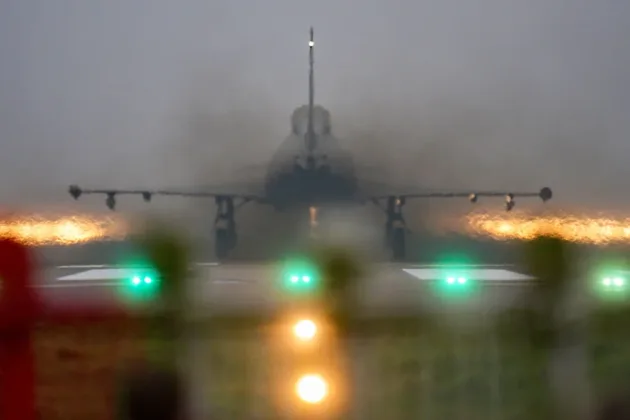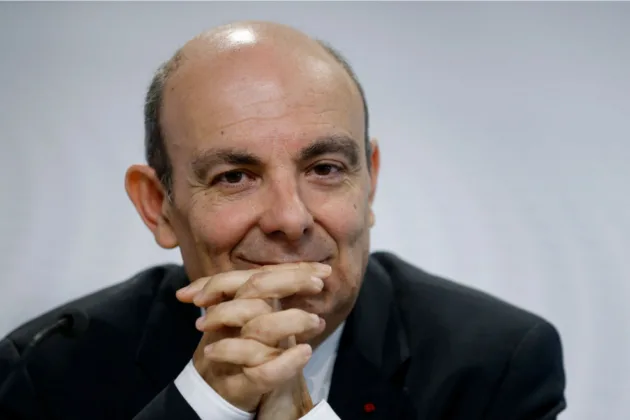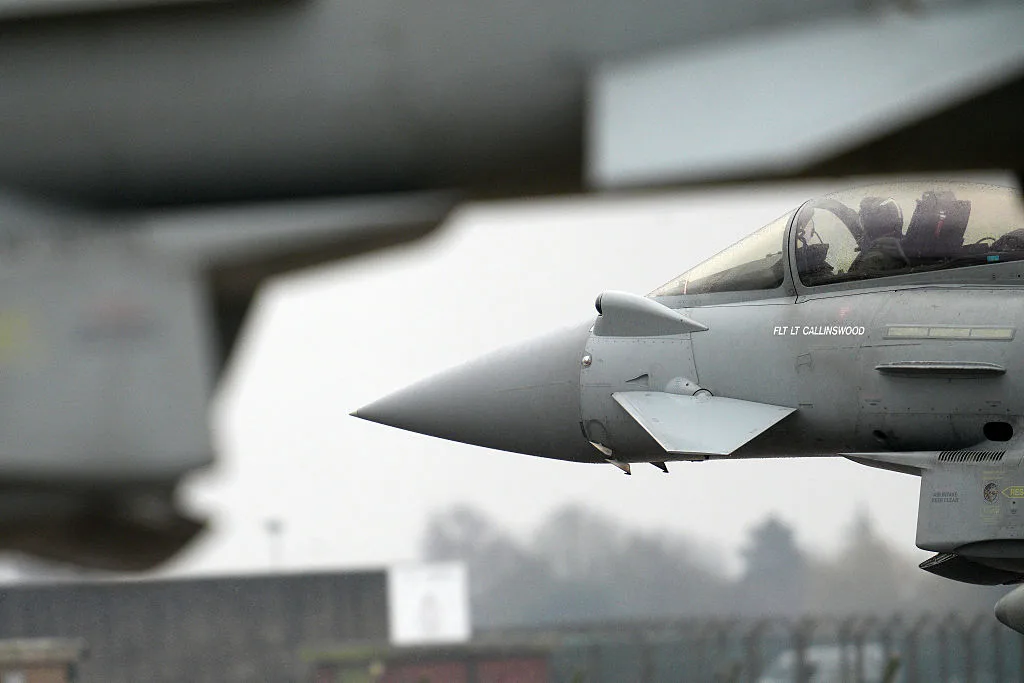



For years, European Union federalists have hoped that one particular project would take flight: A Franco-German jet fighter. The ambitious project, planned between two major companies – Airbus, on Germany’s (and Spain’s) side, and Dassault Aviation on France’s – would have been a proof-in-concept approach to a European Union army.
Those dreams crashed to the ground this week when it was revealed that Airbus and Dassault Aviation could not come to an agreement on who would lead the project and who would follow. In 2017, French President Emmanuel Macron declared the plan “a revolution”; last week, he met with German Chancellor Friedrich Merz and confirmed that the project was not moving forward.
The collapse of the plane’s development reveals plenty about the state of European Union affairs. But it also reveals something about Europe’s future.
For the past thirty-four years, the European Union has been able to act as something of a paradise. The equation of high taxes, low defence spending (thanks to America), and low energy costs (thanks to Russia) allowed for high social spending – meaning free healthcare, generous vacations, and strong pensions. Societal cohesion generally meant safety within countries, and – due to America’s umbrella casting a very wide shadow – geopolitical tensions could be funnelled into competition for various European Commission jobs.
But it is not a coincidence that the European Union was declared a year after the Cold War was ended and the unipolar moment – America’s unipolar moment – had begun. Nor is it a coincidence that every single European Union member state, other than Sweden and Finland, joined the North Atlantic Treaty Organisation before joining the European Union. Sometimes it would be by months – the Baltics joined NATO in March 2004, and joined the EU in May of that same year – but member states first ensured that they were under America’s umbrella before they brought themselves under Brussels’.
But that umbrella is closing quickly. After years of warning Europe to start spending more, frustration in Washington has boiled over. Thousands of American troops are scheduled to depart Germany, and the Pentagon has announced that the United States will soon be lessening the number of troops and materiel that they will be committing to NATO were a crisis to break out.
Essentially, the master of Europe will now be departing. And that will create a power vacuum – which will in turn bring old geopolitical realities to the surface.
There are broad reasons why Europe, historically, has had great periods of conflict: Because European countries have separate national interests. There is no intrinsic reason why Spain would ever have a similar foreign policy to Estonia, or Romania to France. America’s umbrella removed that concern; there was no need, or ability, to fight with one another when hundreds of thousands of American troops were spread around the continent.
When there has been prolonged peace in multipolarity, it has been after great struggle and was achieved only through careful, careful balance. The (mostly) peaceful period of 1815 to 1870 was achieved through a series of balancing acts, many of which were predicated entirely upon the efforts of the Austrian, Klemens von Metternich, who was determined to save his multi-ethnic and wobbly empire.
Those balancing acts were balanced entirely on force and national interest. The European Union, meanwhile, is balanced upon feel-good dogmas and liberal internationalism, which has no teeth whatsoever, and certainly has no ability to keep the continent together.
This will affect France and Germany in particular. Macron has long made clear his desire for France to be a true world power; he has offered to spread France’s rather small nuclear umbrella as far as Poland, and has aggressively sought to increase the popularity of the French language in Africa. The notion that he will subvert France’s interests to Germany’s – as indicated by the jet fighter plan collapse – is farcical.
But Macron will not be in charge for much longer. And his likely successor, Jordan Bardella, is a nationalist who will definitively not be eager to give Germany a leg-up in global competition.
Germany, meanwhile, is stumbling from one weak government to the next. Merz is the most disliked democratic leader in the world, and there are no indications that his standing will be improving any time soon. The nationalist Alternative for Germany (AfD) is on the upswing and keeping them out of government may soon prove to be totally impossible task. If they somehow join a future German government – even as a junior partner – there is no chance that they will subvert Germany’s interests for France’s.
Even if they cannot take power, the threat of the AfD surging will ultimately force Merz – or whoever his “conservative” successor is – to at least look in their direction, meaning they will not be able to subvert Germany’s interests either. Perhaps France and Germany will be able peacefully to split Europe in some sort of accord. But they have literally never been able to do so, outside of the period of America’s umbrella.
And none of this even takes into account the other 25 members of the European Union, all of whom have their own desires. Some, particularly the smaller nations, will likely hope the EU project perpetuates. The leader of one such small nation, Prime Minister Bart De Wever of Belgium, called the collapse of the jet fighter project “pure stupidity” and lambasted the “arrogance” of those who allowed it to collapse.
It’s not arrogance, of course. It’s national interest. And while it never really left Europe – instead being just obfuscated by American power – it is now coming back with a vengeance. Everyone in the European Union, from the small to the mighty, will soon have to wrestle with that fact.