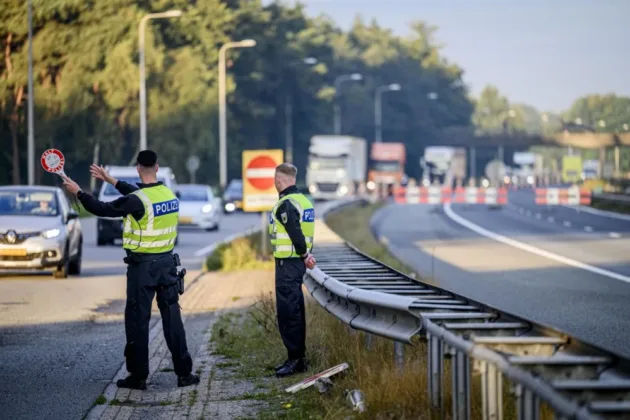






The European Commission has urged nine Schengen countries to phase out internal border controls, arguing that measures introduced in response to migration and security challenges over the past decade should not become a permanent feature of Europe’s passport-free travel area.
In recommendations published on June 2, the Commission called on Austria, Denmark, France, Germany, Italy, the Netherlands, Norway, Slovenia and Sweden to work towards lifting checks that have been repeatedly extended under exceptional provisions of the Schengen Borders Code.
While the reintroduction of internal border controls is permitted under EU law in exceptional circumstances, the Commission stressed that such measures must remain temporary and proportionate.
In its opinions, the executive acknowledged what it described as “genuine and legitimate concerns” related to security threats and migration pressures, but warned that prolonged controls risk undermining the functioning of the border-free zone.
European Commissioner for Internal Affairs and Migration Magnus Brunner said member states were now in a position to begin winding down the measures, telling AFP they could “work towards phasing out controls at internal borders”.
The recommendations come as Brussels seeks to reinforce one of the European Union’s most visible achievements, after years of disruptions linked to migration pressures, terrorism concerns,. Commission officials also pointed to a decline in irregular crossings at the EU’s external borders compared with previous years, arguing that the circumstances that justified many emergency measures have evolved.
Several governments continue to defend internal border checks as necessary responses to irregular migration, cross-border crime and terrorism risks.
Although the Commission’s recommendations are not legally binding, they increase pressure on national governments to justify the continued use of controls that, in several cases, have remained in place for years through successive renewals.
Austria has maintained controls along its borders with Hungary and Slovenia since the height of the 2015 migration crisis, arguing that irregular migration continues to pose a threat to public order and security.
Denmark continues to carry out checks at its border with Germany. The measures were first introduced in January 2016 in response to migration pressures and security concerns and have been repeatedly extended.
France has maintained internal border controls continuously since the November 2015 Paris terrorist attacks, citing the ongoing threat of terrorism and broader public security concerns.
Germany has reintroduced controls at several land borders and expanded them in September 2024 to cover all of its land crossings, particularly in response to irregular migration and concerns over migrant smuggling networks.
Italy reintroduced controls at its border with Slovenia in October 2023, citing security concerns linked to developments in the Middle East, the risk of terrorist infiltration and migration flows along the Western Balkans route.
The Netherlands introduced temporary internal border checks in 2024 as part of government efforts to curb irregular migration and strengthen border security.
Norway, a Schengen member but not part of the European Union, has maintained and periodically renewed controls at ports and ferry connections since 2015, citing migration and security concerns.
Slovenia reinstated controls at its borders with Hungary and Croatia in October 2023, pointing to regional security developments and concerns related to irregular migration.
Sweden has maintained various forms of internal border controls since November 2015, arguing that migration pressures and security threats continue to warrant exceptional measures.
The Commission is expected to continue reviewing the necessity and proportionality of these measures in the coming months, as governments face growing pressure to demonstrate that long-running border checks remain justified under Schengen rules.
Following the European Commission’s recommendations, there is no immediate legal obligation for the Schengen states concerned to remove internal border controls, as the Commission’s opinions are not binding.
The countries maintaining such checks, though, must continue to justify them by showing they are necessary, proportionate and strictly temporary under the Schengen Borders Code, and they must notify the Commission of any extensions with updated reasoning.
While the Commission cannot directly force their removal, its assessment increases political and legal pressure on member states to gradually phase out these controls or replace them with less intrusive security measures such as non-systematic police checks or mobile biometric identification and vehicle-tracking technologies, in line with the objective of preserving free movement within the Schengen area.