




An investigating judge at Spain’s National Court (Audiencia Nacional) has signalled he may charge the governing Spanish Socialist Workers’ Party (PSOE) as a criminal organisation, a move that could in theory lead to the party’s dissolution.
Santiago Pedraz is examining whether the PSOE, led by Prime Minister Pedro Sánchez, can be held criminally liable as a legal person in the so-called Ferraz cloacas (“sewers”) case. The inquiry centres on an alleged network said to have worked to derail judicial proceedings affecting the party or the Spanish Government.
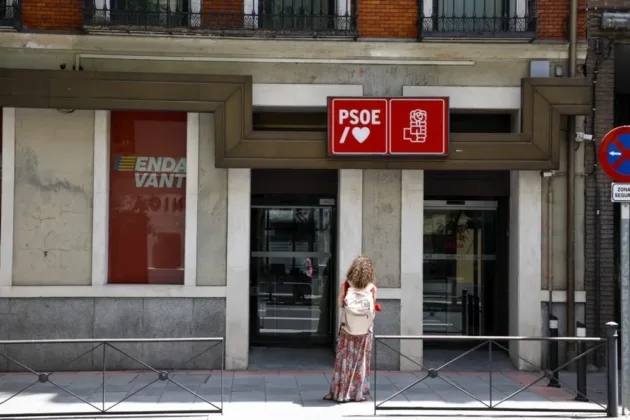
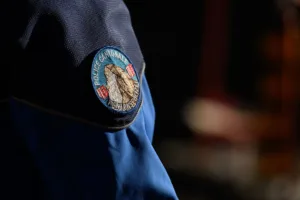
On May 27 the Civil Guard’s Central Operative Unit (UCO) entered the PSOE’s national headquarters on Calle Ferraz in Madrid to seize documents. Officers also searched the homes of former organisation secretary Santos Cerdán in Milagro, northern Spain, and of the veteran Andalusian Socialist Gaspar Zarrías.
During the operation the UCO took the party’s regulatory-compliance programme for 2024 and 2025 and asked who had overseen it. Legal sources cited by Libertad Digital described the request as the customary step before a legal entity is charged.
The inquiry grew out of the wider corruption cluster around Sánchez’s former inner circle. Cerdán, once the party’s number three, resigned and gave up his seat in June 2025 and spent nearly five months in pre-trial detention in the related Koldo case before his conditional release that November.
PAYMENTS AND THE ‘FIXER’
At the heart of the case are payments of €4,000 a month allegedly made to Leire Díez, a former Socialist official described as the party’s “fixer”. Investigators believe the sums were disguised through false invoices issued by Ana María Fuentes, manager of the organisation secretariat.
On June 1 Pedraz partially lifted the secrecy order on the case. In his account the PSOE is said to have financed the network with at least €188,000, money allegedly used to dig up compromising material on prosecutors, Civil Guard officers and judges, according to Libertad Digital.
Among the named targets were the chief anti-corruption prosecutor, Alejandro Luzón, and judges handling cases close to Sánchez, including the proceedings against his wife, Begoña Gómez, and his brother, David Sánchez. Investigators say the UCO logged 22 meetings between Díez and Cerdán at the party’s Madrid base.
PARTY STRUCTURE ‘AT ITS DISPOSAL’
In his ruling Pedraz wrote that Cerdán, as organisation secretary, would have placed the party’s own structure at the disposal of the alleged criminal group, which he said had relied on PSOE premises, staff and logistics from the outset.
Pedraz is investigating Cerdán, Díez, Zarrías, businessman Javier Pérez Dolset and lawyer Ismael Oliver on suspicion of criminal organisation, bribery, revealing secrets, influence peddling, falsifying commercial documents and crimes against State institutions, among other offences.
Cerdán has rejected the accusations, saying the aim of the inquiry is to destroy people the authorities find inconvenient.
A SECOND FRONT
The party could face a parallel threat. Another National Court judge, Ismael Moreno, is examining alleged illegal financing, raising the prospect of separate proceedings against the PSOE.
Under Spain’s penal code, legal persons may be held criminally responsible when an offence is committed on their behalf and for their benefit. Penalties range from fines to the suspension of activities for up to five years, exclusion from public contracts and subsidies and, in the gravest cases, dissolution.
It would not be the first time the courts have approached the question of the party’s own liability, although no Spanish party of government has been dissolved on such grounds.
PRESSURE IN BRUSSELS
The cluster of investigations has begun to weigh on Sánchez’s standing among Europe’s centre-left, where he leads one of the few remaining progressive governments seated on the European Council. Iratxe García, who heads the Socialists and Democrats (S&D) group in the European Parliament, has so far stayed silent on the affair, according to Escudo Digital.
At home the row has spilled into a confrontation over the courts. Spain’s judicial council protested last week after government figures accused investigating judges of mounting a “judicial coup”.
The PSOE has denied any wrongdoing and has cast the investigations as politically motivated. Party spokeswoman Montse Mínguez said it was not “afraid of justice”, arguing that cases damaging the Socialists advanced faster than those affecting the opposition People’s Party (PP).