

Turkish President Recep Tayyip Erdogan has called on the European Union to stop leaving his country outside Europe’s emerging defence architecture, warning that NATO cannot rely on the United States alone to guarantee Euro-Atlantic security.
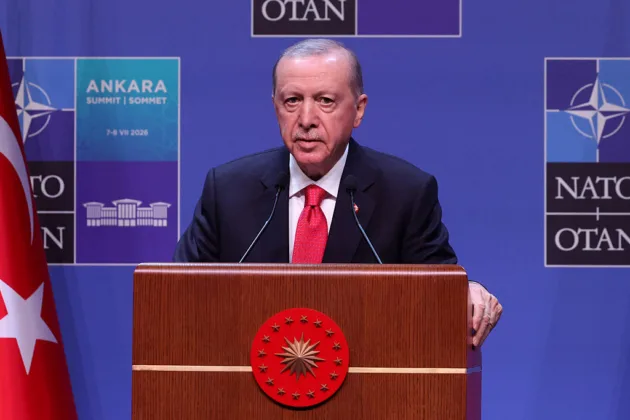
Speaking at the close of the alliance’s summit in Ankara on July 7-8, Erdogan said EU defence efforts should complement NATO rather than duplicate it, and that the point had to be made at every level and on every occasion.
He argued that when allies outside the EU, such as Turkey, are not fully involved in the bloc’s defence plans, those plans end up sharply limited. He urged Brussels to lift the remaining obstacles to defence industry trade between the EU and Turkey as soon as possible.
At issue is Turkish access to the EU’s €150 billion Security Action for Europe (SAFE) instrument, the centrepiece of the bloc’s rearmament drive. Turkey is technically eligible but participation requires the agreement of all 27 member states, and Greece has threatened to withhold it.
Erdogan said the alliance had to be one of allies who “strengthen one another”, not of countries dependent on each other. He also called for closer NATO ties with the defence sector through the Defence Industry Forum that Turkey hosted alongside the summit.
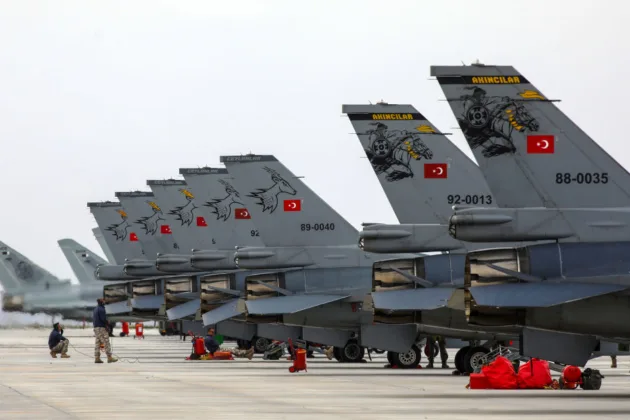
The Turkish leader pointed to what he described as a great leap by his country’s defence industry over the past 23 years, saying Turkey now builds its own warplanes, tanks and ships. He said it ranked among the world’s top three producers of unmanned aerial vehicles, naval drones and warships.
Asked about remarks by Greek Prime Minister Kyriakos Mitsotakis that Aegean disputes should be settled at leader level, Erdogan said he agreed and that resolving the question of those waters was the duty of leaders. He suggested foreign ministers examine the matter first before the two leaders sat down together.
Greece and Turkey remain at odds over maritime jurisdiction in the Aegean and eastern Mediterranean. Tensions peaked in 2020, when the EU imposed sanctions on vessels and individuals linked to Turkish hydrocarbon exploration in disputed waters.
Relations have since thawed. Mitsotakis visited Ankara in February for the sixth Turkey-Greece High-Level Cooperation Council, where both sides agreed to keep talking without settling the delimitation of the continental shelf or exclusive economic zones.
The Greek Prime Minister said after the summit that he would continue working with Erdogan towards a functional relationship, praising Turkey’s hosting of the gathering.