


France will elect a new president on April 18 and May 2, 2027, marking the end of Emmanuel Macron’s decade in power and opening one of the country’s most unpredictable presidential contests in decades.
Under France’s Constitution, President Emmanuel Macron cannot seek a third consecutive term, guaranteeing that, for the first time since 2017, the Élysée Palace will have a new occupant.
With less than a year before the first round, 16 politicians have formally declared their candidacy, while around thirty others have either signalled their intention to run or are widely expected to enter the contest.
If all potential contenders were to stand, the field could approach 50 candidates. Every presidential hopeful must secure the signatures of at least 500 elected officials from across France before being officially validated.
The sponsorship system is designed to prevent unserious candidacies. However, it has been criticised by the National Rally and the French hard left, which see it as a way of favouring mainstream candidates while preventing others from standing for election.
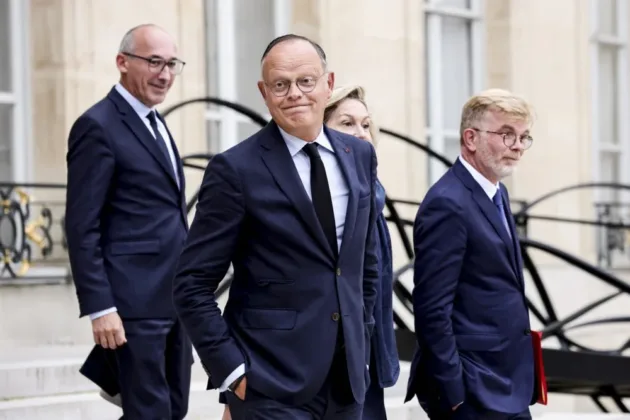
Former prime minister Édouard Philippe, leader of Horizons, was the first major figure to declare his candidacy. He is joined by another former prime minister Gabriel Attal, and leader of Macron’s party Renaissance.
Les Républicains leader Bruno Retailleau is also seeking the presidency, while David Lisnard, the mayor of Cannes, has broken away from the party to launch his own movement, Nouvelle Énergie, arguing that the French Right requires a broader political renewal.
The traditional centre-right is equally fragmented. Les Républicains leader Bruno Retailleau is seeking the presidency, while David Lisnard, the mayor of Cannes, has broken away from the party to launch his own movement, Nouvelle Énergie, arguing that the French Right requires a broader political renewal.
The biggest uncertainty in the campaign is around the right-wing party National Rally.
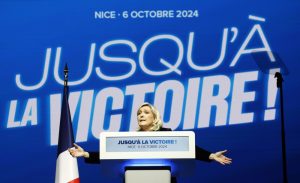
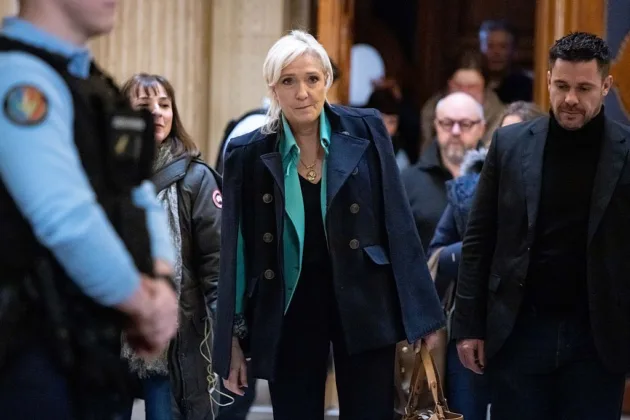
Marine Le Pen, who reached the second round in the last three presidential elections, intends to run once again. However, her candidacy depends on the outcome of an appeal against a court ruling that declared her temporarily ineligible to hold public office. The appeal decision is expected on July 7.
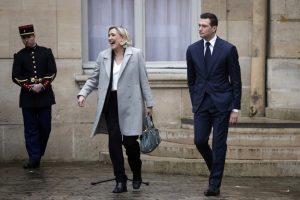
Should the ruling be upheld, National Rally president Jordan Bardella is expected to become the party’s presidential candidate, in what would be his first campaign for France’s highest office.
Elsewhere on the sovereignist Right, Nicolas Dupont-Aignan, Florian Philippot and François Asselineau have all announced bids, competing for anti EU voters and supportive of a stronger national sovereignty.
The French Left once again approaches the election without a unified candidate.
Jean-Luc Mélenchon, founder of La France Insoumise and three-time presidential candidate, has launched another campaign and is now the leader on the Left while the socialist and the Greens face internal division.
Socialist MP Jérôme Guedj and Saint-Ouen mayor Karim Bouamrane have both declared their candidacies, while several other left-wing figures, including François Ruffin, Clémentine Autain and Green leader Marine Tondelier are participating in discussions over a possible primary aimed at avoiding another fragmented first round.
They hope to have one candidate for what they call the moderate Left to take on Jean-Luc Melencon.
As in previous presidential elections, a number of candidates from smaller movements hope to use the campaign to gain national exposure.
Among those who have declared are lawyer Juan Branco, former adviser to Julian Assange; academic Clara Egger; engineer Antoine Mikolajczak; and railway worker, Trotskyist activists Anasse Kazib and Nathalie Artaud.
The campaign is expected to revolve around a relatively narrow set of issues with immigration at the tops with topic such as integration, citizenship, deportations, and the future of France’s model of assimilation.
Many center right parties and candidates are hardening their position on immigration and aligning themselve with the right-wing parties. While on the Left, Jean-Luc Mélenchon continues to have a more lenient approach. He advocates for large-scale regularisation scheme for illegal immigrant-workers.
Public finances are expected to be another central issue with France’s budget deficits well above the European Union’s fiscal limits.
Candidates will face mounting pressure to explain how they intend to reduce spending without further weakening the country’s strained public finances.
Culture war issues are also expected to take center during the presidential debates with questions surrounding secularism (laïcité), national identity, education, Islam, gender ideology, and free speech are now featuring in political debate.
The second round is scheduled for Sunday, May 2, 2027, on the day after France’s annual May Day demonstrations.
That timing has alreadt started generating political controversy in the country.
French electoral law requires a strict “period of republican silence” beginning at midnight on the Friday before voting. During that period, candidates are prohibited from holding rallies, publishing new campaign material or appealing for votes, including on social media.
The May 1 labour marches, however, are exempt because they are not considered campaign events.
Critics argue that demonstrations, political slogans and extensive media coverage on one of France’s most politically charged public holidays have an impact right before voters return to the polls.
“Don’t try to make me believe that there won’t be any political implications in the marches and the stances taken,” Retailleau said today. “This choice is not neutral, and it’s not normal from a democratic standpoint,” he insisted accusing the French governement of pursuing “a strategy of chaos.”