





A new McKinsey analysis has found that productive net investment in Germany has fallen to just 0.2 per cent of GDP in 2024, placing the country near the bottom of a ranking of 34 leading economies.
The management consultancy’s 65-page study shows that Germany is investing almost nothing in additional production capacity.
Most spending is going only towards maintaining existing assets rather than expanding them, the Frankfurter Allgemeine Zeitung first reported on the study.
This contrasts sharply with other major economies: China recorded net investment of 23 per cent of GDP, the United States 4 per cent, and the EU average 2 per cent.
Since the financial crisis of 2008, Germany’s productive net investment has fallen from around 2 per cent of economic output to the current near-zero level.
The authors describe this as a de facto investment boycott in future projects.
McKinsey compared the cost of new investment projects across ten key industries in different countries.
In Germany, total costs over the project lifecycle were between 40 and 250 per cent higher than in the most competitive locations, depending on the sector.
The study examined chemicals, steel, batteries, semiconductors, pharmaceuticals, data centres, new car platforms and biotech.
Labour costs were identified as the single biggest factor.
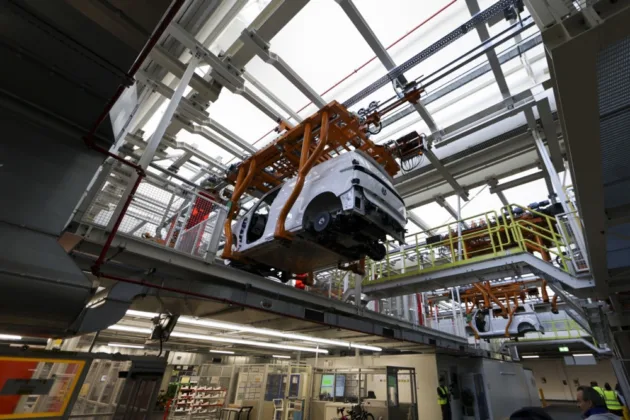
In the German automotive industry, for example, wages are roughly twice as high as in China, while productivity is lower.
Energy prices, lengthy approval procedures and slow innovation cycles were also cited as major disadvantages.
“Productive net investment sounds abstract, but it is one of the most important indicators of a country’s future growth and competitiveness,” said Jan Mischke, partner at the McKinsey Global Institute and one of the study’s authors.
The findings add to a growing body of evidence of structural weakness in the German economy.
There have been many reports on Germany’s industrial decline, including repeated falls in manufacturing output, warnings from industry associations that the business location is in “free fall”, and concerns that deindustrialisation is becoming permanent.
The McKinsey report suggests that without higher net investment, greater innovation and faster approvals, Germany’s growth prospects will remain weak.
The number of bankruptcy cases involving big companies in Germany sharply rose in 2025. https://t.co/VNGLthnm2k
— Brussels Signal (@brusselssignal) January 9, 2026