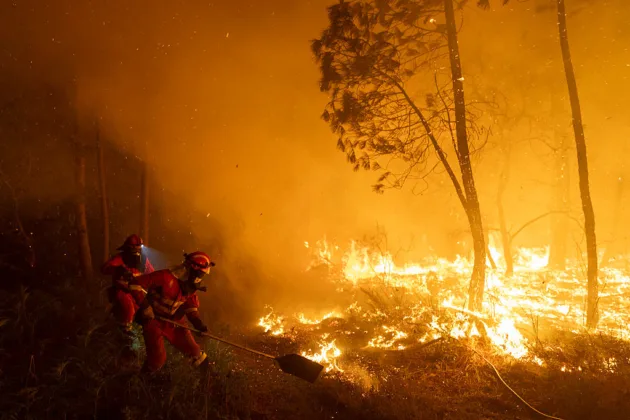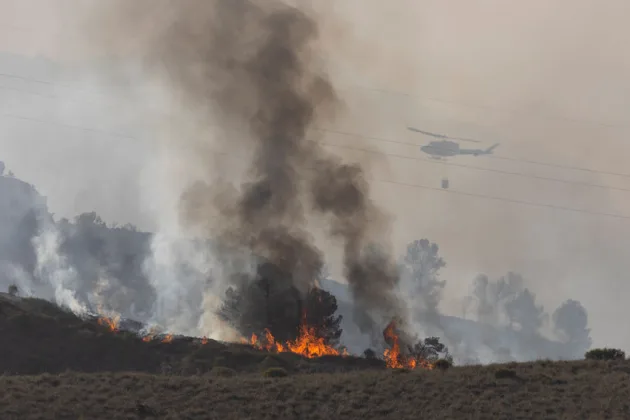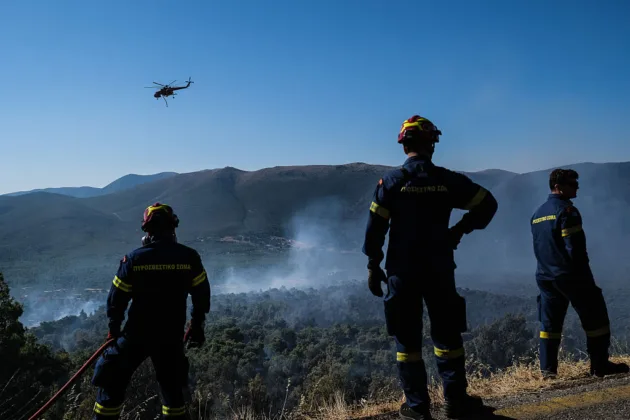






A wildfire in Los Gallardos, in the province of Almería, southeast Spain, has become the deadliest in Andalusia’s recorded history, killing 13 people since it broke out on July 9.
Civil Guard officers have been examining whether a fallen electricity cable sparked the blaze, though investigators have stressed that no official cause has yet been established.
The fire tore through roughly 7,000 hectares of tinder-dry scrubland before crews declared it stabilised on July 12.
By the count of Spanish media, it ranks as the third-deadliest wildfire in the country’s history and by far the deadliest in the southern region.
Around 1,500 residents were evacuated at the height of the emergency, with housing estates and scattered rural hamlets cleared as flames advanced as fast as 100 metres a minute.
The blaze moved through dry esparto grass and semi-arid scrub, driven by westerly gusts, spreading toward the villages of Bédar and Lubrín in the interior of Almería province.
Steep slopes, narrow roads and deep ravines left parts of the front unreachable, and several victims were found in burnt-out vehicles after trying to flee.
The death toll climbed from 11 to 13 over three days as bodies were recovered, and authorities said a number of people remained unaccounted for, a figure expected to overlap with the confirmed dead and those who had reached shelter.
Andalusian emergency chief Antonio Sanz said most of the dead were foreign nationals who had tried to escape by car rather than shelter in place.
POLITICIANS POINT TO THE CLIMATE
Andalusian regional president Juan Manuel Moreno, who heads a Popular Party (PP) administration, described the fire as one of the fastest seen in the region and urged the public to take the effects of climate change seriously.
Moreno said the area scorched in Andalusia so far this summer was already triple that of the previous year, and warned that the months ahead could prove especially harsh.
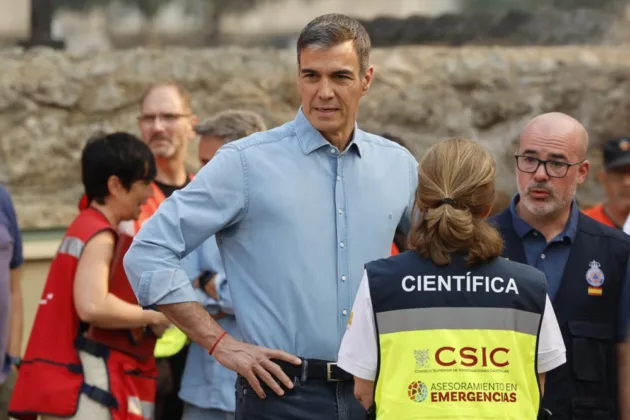
Spanish Prime Minister Pedro Sánchez, who leads a Socialist government and travelled to the area, tied the disaster to a worsening climate emergency and renewed his call for a national pact on the issue.
“The climate emergency kills,” he told reporters in Turre, near the fire zone, insisting that every institution had to be ready for what lay ahead.
He noted that a third of the land burnt across Europe in recent years had been on the Iberian Peninsula, which he attributed to a deepening climate emergency.
Moreno’s appeal carried a political charge: It came days after his PP struck a governing agreement with the right-wing Vox party that commits Andalusia to reviewing its climate rules and adopts Vox’s criticism of the European Green Deal.
THE CABLE AND THE LINE
The utility firm Endesa distanced itself from the suspected cause, saying the line in question was inactive and did not belong to it.
Local reporting has indicated the pole involved was privately owned and in poor repair, a claim that forms part of the open judicial investigation.
The case has drawn fresh scrutiny to the condition of rural power lines, coming after a run of controversies over Spain’s electricity network.
The tragedy unfolded during a prolonged heatwave across southern Europe. The EU’s Copernicus Climate Change Service has recorded June 2026 as western Europe’s hottest June on record, and Spain logged more than 1,000 heat-related deaths that month, a toll that has fuelled debate over the continent’s response.
Spain’s weather agency Aemet had placed the district at its highest fire-danger level, which it had held for weeks as the surrounding vegetation dried out.
The fire came during the third major heatwave to strike the continent in six weeks, part of a run of extreme weather that scientists have linked to a warming climate.
Questions have also been raised over the official response. Spain did not send a cell-broadcast emergency alert to mobiles in the fire’s path, prompting a dispute over whether victims who died while fleeing had received any warning at all.
Several of those killed are believed to be British and Belgian residents, part of a large expatriate community in the area, though formal identification was continuing. Reuters reported that four people who died in one car appeared to be British, its steering wheel on the right-hand side.
Four people remained in a serious condition, while search and identification work continued across the burnt zone.
A minute’s silence was held before Spain’s World Cup quarter-final against Belgium in memory of those who died.
As senior politicians framed the catastrophe around a shifting climate, the practical inquiry has centred on one fallen cable and the upkeep of the line that carried it.