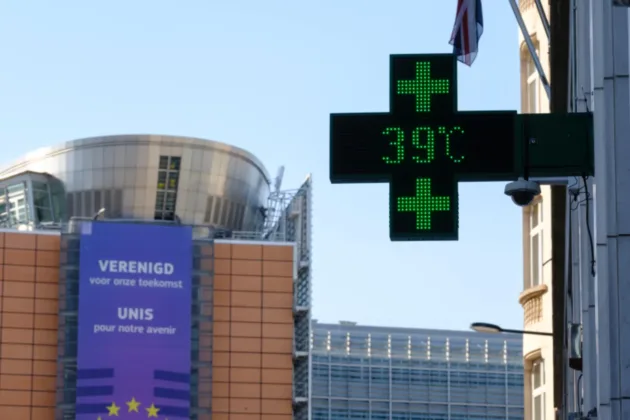












Consumer rights activists are denouncing European regulation and bureaucracy, which they say is blocking the use of air conditioning during high summer temperatures and is leading to excessive deaths.
Their push comes after researchers estimated that more than 62,700 heat-related deaths occurred across Europe during the summer of 2024, according to a study published in Nature Medicine.
The figure, produced by the Barcelona Institute for Global Health (ISGlobal), represents a 23.6 per cent increase on their revised 2023 estimate but remains below their figure for 2022.
Italy is reported to have recorded the highest toll, with over 19,000 deaths.
The study used epidemiological modelling based on daily temperature and mortality data across 32 countries.
It carries a wide confidence interval (36,765–84,379), reflecting the uncertainties inherent in attributing deaths to heat through statistical methods rather than confirmed individual causes on death certificates.
Such modelling approaches have drawn both support and methodological debate in the scientific community.
A multi-decade study by Lancet Public Health, in 2024, found 43,700 heat-related death per year across Europe.
Despite these numbers, Europe continues to have very low rates of residential air conditioning.
Only around one in five households has AC installed, compared with roughly nine in ten in the United States and Japan.
Southern countries have somewhat higher penetration, but northern and central Europe lag significantly.
Zoltán Kész of the Consumer Choice Center criticised the situation: “Europe cannot declare a climate emergency and then make it illegal to run a fan. AC is not decadent, it’s necessary.”
The group is calling on the European Commission to amend the Energy Performance of Buildings Directive to establish a clearer right to install residential cooling, alongside faster permitting systems with automatic approval after 21 days of inaction by authorities.
“The EU has every framework it needs to fix this. What it lacks is the political will to treat consumer access to cooling as the climate adaptation measure it is,” Kesz said.
Installing even a small residential air conditioning unit frequently runs into complex bureaucracy.
Rules originally designed for major building renovations are often applied to modest outdoor condenser units weighing as little as five kilograms.
In the Baltic states, mounting a unit can require majority consent from fellow apartment owners plus municipal approval.
Spain commonly demands a three-fifths supermajority in apartment communities.
Vienna requires sign-off from two separate city departments, while in parts of Croatia, Slovenia and elsewhere, visible external units face effective restrictions or bans.
In Geneva, applicants sometimes need a medical certificate proving a health necessity.
These requirements hit elderly residents, renters and those in apartments particularly hard; the very groups most vulnerable during heatwaves.
When formal processes prove too slow or expensive, some residents install units informally, raising questions about electrical safety, drainage and neighbour disputes.
Critics of widespread AC adoption warn of increased electricity demand, higher emissions in some cases, and exacerbation of urban heat island effects.
Important to note is that almost all serious studies show cold-related deaths still significantly outnumber heat-related deaths in Europe.
These are a factor 5 to 10 higher, with the Lancet finding 363,800 cold-related deaths per year across Europe.
COMMENT:The EU’s moral crusade against aircon is forcing you to bake in your home, writes Jacob Reynoldshttps://t.co/7Q6VNtYxhm
— Brussels Signal (@brusselssignal) June 3, 2026