
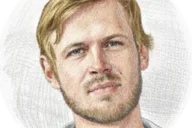
Andrea Pirlo, one of the greatest midfielders of his generation and a key figure in Italy’s 2006 World Cup-winning side, has pulled out of the race to become the next head coach of Italy’s national team after a political controversy over his commercial ties with Russia.
“I learned last night that I am no longer a candidate for the bench of the Italian national team,” he wrote on social media on July 27, a day before the Italian Football Federation (FIGC) was due to confirm him.
Pirlo’s path to the Italy bench was disrupted not by questions over his tactical credentials, but by a trip to Moscow. His appearance in Russia on behalf of one of the country’s largest betting companies triggered a political row, with critics arguing that any commercial association with Russia is incompatible with representing Italy while the war in Ukraine continues.
Pirlo, 47, is widely regarded as one of football’s greatest deep-lying playmakers. During a long playing career, he represented Brescia, Inter Milan, AC Milan, Juventus and New York City FC, winning two UEFA Champions League titles with AC Milan and four consecutive Serie A titles with Juventus. He earned 116 caps for Italy, scored 13 international goals and played a pivotal role in the country’s 2006 World Cup triumph in Germany.
After retiring in 2017, Pirlo moved into coaching. In July 2020, he was appointed head coach of Juventus U23, but just nine days later was promoted to lead the club’s first team following Maurizio Sarri’s dismissal. In his only season in charge, he guided Juventus to the Coppa Italia and the Italian Super Cup before leaving in 2021. He then managed Turkish club Fatih Karagümrük, followed by Sampdoria in Italy’s Serie B. Since 2025, he has been head coach of United FC, also known as Dubai United, in the United Arab Emirates. Although his managerial career has yet to match his achievements as a player, his status within Italian football kept him among the country’s most respected coaching candidates.
Following Italy’s latest football crisis, Pirlo quickly emerged as the leading candidate to take over the national team. Italian media reported that newly appointed FIGC technical director Paolo Maldini identified him as his preferred choice after Pep Guardiola declined the job on July 24. A World Cup winner with strong international credentials, Pirlo was widely considered the federation’s first choice, with his appointment expected to be completed soon.
The controversy centres on Pirlo’s commercial partnership with Fonbet, one of Russia’s largest bookmakers. In October 2025, he became a global ambassador for the company and, in May 2026, travelled to Moscow to participate in its “Football Day” celebrations at Luzhniki Stadium ahead of the Russian Cup final.
During the event, Pirlo appeared alongside fellow 2006 World Cup winner Marco Materazzi. Both were among a group of retired Italian internationals, including Francesco Totti, who took part in Fonbet promotional events in Russia. He took part in autograph sessions, media appearances and promotional activities organised by Fonbet for supporters attending the Russian Cup final.
Pirlo has insisted that his involvement arose from his work in the United Arab Emirates and was “exclusively commercial and sporting” in nature, adding that reading a political meaning into it meant attributing to him beliefs he had never expressed.
The explanation did not satisfy critics. Politicians from across Italy’s political spectrum have questioned whether someone maintaining a commercial partnership with a major Russian company should become the public face of Italy’s national football team. On July 25, European Parliament vice-president Pina Picierno criticised the possibility of Pirlo’s appointment, arguing that someone promoting a Russian betting company while Ukraine remains under attack could not credibly represent Italy’s national team.
Criticism also came from Kyiv. Andriy Shevchenko, president of the Ukrainian Association of Football and Pirlo’s former AC Milan team-mate, said he had spoken directly to several of the Italians involved: “I clearly expressed my opposition and Ukraine’s position.”
The controversy has sent the Italian Football Federation back to the drawing board. The nomination was due to be formalised at the federal council meeting on July 28, and Italian media have reported that Maldini and adviser Leonardo, who backed Pirlo, are now weighing their own positions. Roberto Mancini and Antonio Conte have been named among possible replacements, with the federation needing an answer before Italy return to competitive action in the Nations League in September.