
It is said that in politics there are no coincidences, only carefully planned actions whose impact is precisely calculated. On May 4, 2026, exactly one year after George Simion and the Alliance for the Union of Romanians (AUR) secured a victory in the first round of the presidential elections with 40.96 per cent of the vote, a victory that reverberated throughout Europe and beyond, the “pro-European” government led by Ilie Bolojan served its final day in office with full powers. Just one day later, the executive in Bucharest was dismissed by the Romanian parliament with a score equalling the highest in the country’s post-communist history: 281 votes in favour of the censure motion.
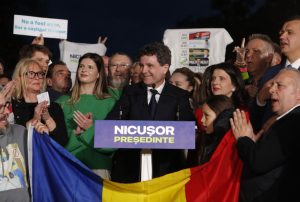
More than 70 days have passed since this event, and Romania still does not have a fully empowered government in place at Victoria Palace, the seat of government in Bucharest. Why? Because mainstream politicians have failed to understand that Romanians have broken through the cordon sanitaire formed against the AUR party, and President Nicușor Dan is incapable of managing this situation.
According to Romania’s Constitution, the president nominates a candidate for the office of prime minister, who is responsible for forming a majority in parliament to approve the government’s composition. In political practice, negotiations are conducted rather informally, and the nomination of a candidate usually assumes that a majority already supports him or her. If the vote fails two times in parliament, and at least 60 days have passed since the first request for a confidence vote, then the president can dissolve it and call snap elections, something which the establishment is deeply afraid of doing because of AUR’s domination.
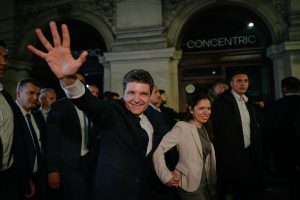
Nicușor Dan has failed two times to nominate a prime minister so far. And only one of them was actually put to a vote and rejected, which means he has only one formal nomination left before we reach the point where parliament can be dissolved and snap elections called. The first time, “technocrat” Eugen Tomac, who is in fact a longtime politician, a member of the European Parliament and even his honorary presidential advisor, didn’t even reach the parliamentary vote. The second time, the failure of Adrian Veștea, the Liberal who did not pass the investiture vote on June 22, when his cabinet won 189 of the 233 votes required, led to two events of particular significance for the current situation. By nominating a political candidate without first consulting his party or its president, who “coincidentally” happens to be Ilie Bolojan himself, Nicușor Dan succeeded in splitting the National Liberal Party (PNL) into two factions that are now fighting for the party leadership. The second effect is that it has demonstrated to everyone that the famous cordon sanitaire against AUR no longer works. George Simion and his party have been declared by their political opponents themselves as the sole winners of today’s political landscape.
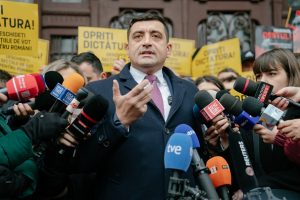
It is clear that without major concessions from the mainstream parties, which could even lead to a stinging defeat for them in the 2028 parliamentary elections, a new government can only be formed with AUR’s vote. And the conditions set by the party led by George Simion are clear: They must be part of that majority and reach consensus on a series of economic measures designed to correct the wrong course Romania is currently on.
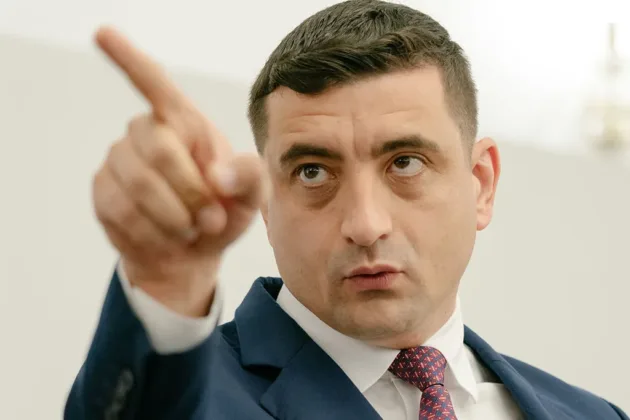
But on June 30, George Simion and AUR made another move that has sent political analysts into a panic: The initiation of procedures to suspend President Nicușor Dan and call for snap elections. And on July 13, George Simion announced that he wants the AUR party to hold the presidency of the Romanian Senate, now held by the National Liberal Party’s Mircea Abrudean, as a first condition for entering into negotiations with the Social Democratic Party (PSD). In Romania, the Senate president is the second-highest-ranking official in the State and in the event of the incumbent president’s resignation or suspension, he assumes the presidency at Cotroceni Palace, the presidential residence, until the next election is held. A prospect that may have received too little public scrutiny, but a chess move… checkmate?!