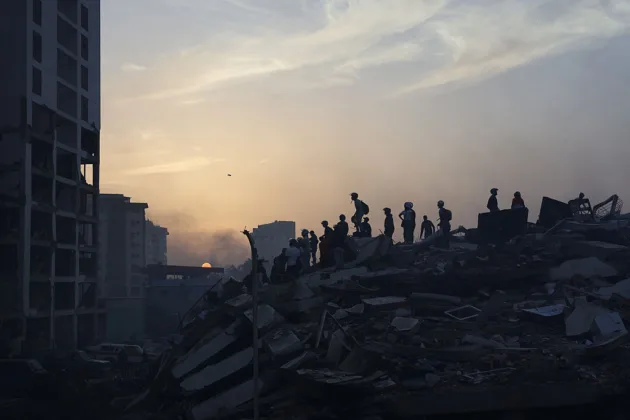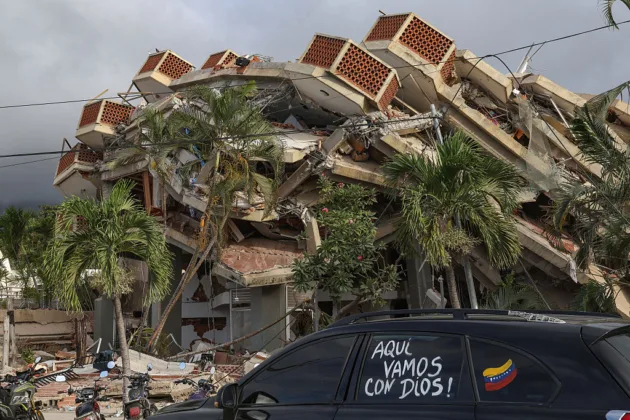






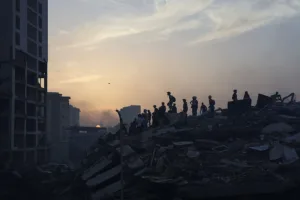
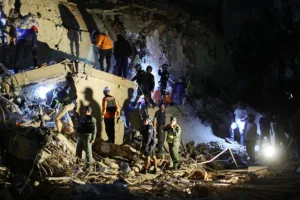


At least 1,943 people have died and more than 10,000 have been injured after two powerful earthquakes struck northern Venezuela, the country’s authorities have said.
Almost 16,000 families had been left homeless and more than 28,000 people were being treated in hospitals or temporary camps, national assembly president Jorge Rodríguez said on June 30. He said aftershocks were easing but had not stopped.
The United States Geological Survey (USGS) recorded a magnitude 7.2 foreshock on June 24, followed 39 seconds later by a stronger 7.5 quake centred in Yaracuy state. It was the country’s most powerful earthquake in more than a century.
The coastal state of La Guaira, north of Caracas, was worst hit and remains under military control, with entry restricted to authorised personnel. Interior Minister Diosdado Cabello said the measure was needed to keep roads clear for ambulances.
Some residents have criticised the government’s response as slow, while opposition leader María Corina Machado has accused it of restricting communications to conceal the scale of the disaster.
The European Union has activated its Civil Protection Mechanism and mobilised €5 million in emergency aid, its foreign policy chief Kaja Kallas said. The bloc’s Copernicus satellites were mapping the damage.
Some 3,660 rescuers from 51 countries were working alongside Venezuelan teams, the authorities said. More than 6,400 people had been pulled out alive and about 13,500 had escaped on their own.
Tens of thousands of people were still reported missing, a figure the authorities have not confirmed.
The United Nations children’s fund estimated that 1.8 million people, among them 680,000 children, needed aid, while the physical damage was put at around $6.7 billion (€5.9 billion).
Acting President Delcy Rodríguez received Brazil’s defence minister, José Múcio Monteiro, in Caracas, where he offered his government’s help with reconstruction.
The United States, which has committed $300 million (€264 million), was repairing the damaged airport serving Caracas, with one runway back in use.
Rodríguez has led the country since United States forces removed former President Nicolás Maduro in January, and the legitimacy of her administration remains widely contested.
The European Union is the largest humanitarian donor to Venezuela, having given more than €572 million since 2016, with Venezuelans the second-largest group of asylum seekers in the bloc after Afghans.