









The European Commission has said Spain’s extraordinary regularisation of illegal migrants sends a poor signal to the rest of the European Union, while denying any direct link between the scheme and the mass crossings into Ceuta.
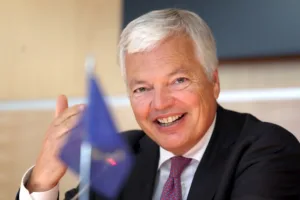
European Commissioner for Internal Affairs and Migration Magnus Brunner spoke in Brussels on August 4 after an emergency videoconference of EU interior ministers called to review the crisis in the north African enclave.
He said the Commission did not currently see a direct connection between regularisations and the events in Ceuta. He added that the policy was “definitely not a good signal for the rest of Europe”.
Brunner said the measure fell within member state competence and that he understood Madrid’s reasoning, given that most beneficiaries were Latin Americans sharing the same language and culture.
The decree, approved in April, opened a six-month window for undocumented migrants already living in Spain to apply for a one-year renewable residence and work permit. It was designed for about 500,000 people though nearly 1.2 million have applied.
Twenty two member states signed a letter organised by Italy and Denmark that described the scheme as a pull factor for illegal migration and demanded the emergency talks. France and Portugal did not sign it.
Spanish interior minister Fernando Grande-Marlaska said about 70,000 of the 72,000 people who entered Ceuta had already left. He called the meeting constructive and said partners had recognised Madrid’s response.
Ceuta authorities have put the death toll from the crossings at 88, with at least 11 more on the Moroccan side of the border. The Spanish Government has given a lower figure of at least 75.
Brunner said the episode had tested the EU’s external border though the situation was now under control, with no onward movement to mainland Spain or the wider Schengen area.
Ministers endorsed a five-point plan set out by European Commission President Ursula von der Leyen, covering stronger external borders, an early-warning system and closer cooperation with countries outside the bloc.
The commissioner declined to criticise Italy’s decision to reintroduce air and sea border checks with Spain for one month, saying he understood the concerns of Italian citizens. Any suspension of Schengen rules had to be proportionate and temporary, he said.
Spanish Prime Minister Pedro Sánchez had earlier attributed such moves to “prejudice, fake news, ignorance and political interest”.
Danish interior minister Morten Bødsko said he was satisfied with Spain’s handling of the crisis though repeated that “uncontrolled immigration is a threat to Europe and Denmark”.
Brunner said the EU’s diplomatic service was examining a possible role for Russian disinformation, adding that it was too early to draw conclusions.