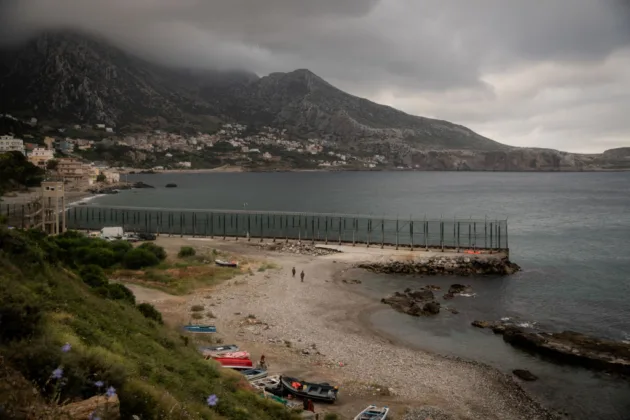







The events of July 30-31 in Ceuta, Spain were an absolute debacle for the legacy media. While it is an open secret that the majority of mainstream journalists would prefer the issue of mass migration not to be solved but to “just go away” and blame all those pesky right-wingers for their habit of continuing to report about it, over the course of a weekend the gaslighting (or attempt thereof) was remarkable. A sovereign European territory is quite literally being invaded, and the reaction of the press was to proclaim how, in fact, everything was just fine and over within 24 hours anyway. That countries like Morocco have figured out a way to blackmail the supposedly mighty European Union was barely mentioned, and neither was the fact that instead of increasing border security, Brussels is planning to transfer even more money to the North African state. Such madness would not be possible without the complicity of the legacy media, which for several decades has decided to ignore the negative consequences of mass migration and unprotected borders, but attack all those who have been drawing attention to those very issues.
The first clear case of this was the 2015 New Year’s Eve in Cologne, where mass sexual assaults were almost swept under the rug. “Ausgelassene Stimmung. Feiern weitgehend friedlich – Exuberant mood, celebrations largely peaceful.” That is how the Cologne police described, in an initial press release of January 1, 2016, a night that eventually produced 1,210 criminal complaints, 511 of them for sexual offences. Despite the obvious existence of hundreds of victims of sexual assault, Germany’s broadcasters and State-funded media needed yet another four days to notice that something extraordinary had happened. Confronted with the facts, Elmar Theveßen, then deputy editor-in-chief of ZDF, conceded that “the news situation was clear enough” and that leaving the assaults out of the regular reporting had been an omission. Alas, omitting facts appears to have become a regular feature of European media outlets whenever a story includes unflattering details about migrants and illegal border crossings.
The newest instalment of this series arrived on the evening of July 31, 36 hours after tens of thousands of people poured into Ceuta, a Spanish exclave in North Africa, in a crossing most likely abetted by the Moroccan government as a form of punishment for Madrid’s warming relations with Algeria, Rabat’s rival in the region, where Prime Minister Pedro Sánchez had been received on July 20. Although rumours about Israel and the US being the main orchestrators immediately started to circulate, the geopolitical interests of Morocco alone were sufficient motivation to teach Spain a lesson, and neither Jerusalem nor Washington needed to be involved. Within less than two days, Spain’s foreign minister José Manuel Albares announced that “virtually all those who entered have now returned to Morocco”, and the interior ministry put the returns at an implausibly precise 48,300 by 6pm that evening, out of the roughly 50,000 it then estimated had crossed, a figure even more doubtful since we now know that the overall number of migrants was closer to 70,000, so either the number 48,300 was wrong or “all those who have entered” did not leave as claimed. A majority of Europe’s press went along with the “all have left and everything is fine” story and moved on to the more congenial question of who was exaggerating and if this story was not somehow about the evils of the “far right” rather than about a city of 84,000 being invaded by 70,000 individuals, most of them military-aged men.
The real culprits were identified within the day, and while the population of Ceuta was still pleading for help, the news circus decided that instead of their suffering the real story is how the “far right” could try to use this to their advantage. NBC News: “Europe’s far right stokes ‘invasion’ fears after mass border crossings in Spanish enclave.” The Conversation: “How the Ceuta border crossing incident immediately played into the hands of Spain’s far right.” On August 3 The Intercept ran Natasha Lennard on liberals ceding ground to the right, mentioning in passing that fewer than 2,000 migrants remained in the city, despite previous claims that “everyone has left”. Ceuta’s president Juan Jesús Vivas told Telecinco the same day that between 3,000 and 5,000 were still there, and that a reception system built for 29 minors was holding 862 of them, an overoccupation the city government put at 2,872 per cent.
Another line of argument was that Ceuta was Africa anyway, and therefore not really Europe. A peculiar argument coming from commentators who hold Ukraine’s 1954 borders to be beyond argument and Spain’s, held since 1580 and recognised by Portugal in the 1668 Treaty of Lisbon, to be a matter of opinion. The actual numbers also kept changing, which makes the idea that one could know if and how many people have truly left even more doubtful. Originally, it was said that 50,000 had crossed, then 60,000, then 72,000 as the final number by the interior minister Fernando Grande-Marlaska’s count on August 4, and 75,000 according to the Spanish press by the evening of the same day. For a city of 84,000 people the final number is tantamount to an arrival of 86 per cent of the resident population inside two days. It beggars belief how a figure gets revised upwards by 22,000 four days after the event it describes was declared solved by both politics and the media and that everyone doubting the official story must be an agent of the “far right”. The dead were counted with the same assurance, from 18 on the Thursday to 67 by Saturday and 88 by Ceuta’s own authorities. By August 5 the Spanish Government’s delegation in Ceuta had recovered 78 bodies from Spanish waters, while the NGO Caminando Fronteras put the toll at 141.
Establishing any of this fell to the few who actually went to Ceuta and talked to the authorities on the ground. Tim Röhn of Axel Springer asked a local police force how many were still in the city, and was told around a fifth of them, which even on the lowest crossing figure puts 10,000 people where the foreign ministry and all the “quality” media outlets in European capitals had put none. Pauline Voss of the German media outlet Nius reported directly from the streets of Ceuta, as did assorted bloggers armed with nothing but their mobile phones and a microphone. In an absurd twist, the very outlets that maintain permanent fact-checking desks stayed at home and fact-checked the people who had gone. When footage showed men marching through Ceuta chanting Allahu Akbar, I could not help a feeling that maybe the legacy media would have preferred those pictures and videos not making their way out of Ceuta. If one considers that Spain plays a key role in the Islamist imagination, such chants become even more salient, as they symbolise that belief held by many Muslims that “Al-Andalus” should be part of the realm of Islam once more.
The most useful finding of the week, though, has the potential to alter the general approach to migration in Europe. After all, it appears to be true that four in five of those who came left again within days but not because the border was sealed but because nothing was waiting for them, which is precisely the recipe for voluntary “remigration” right-wing parties have been suggesting for years: Cut social services and people who have no right to be in your country will leave voluntarily. While getting from Ceuta to Morocco is of course easier than moving from Germany to Syria, nobody expects the 50,000 people to leave Germany (or any other European country) within 24 hours. But it should be possible to reach those numbers over the course of a year. Cut welfare and replace it with a free transfer to the migrants’ country of origin, and it is very likely that a significant number will leave of their own accord. If the final count shows me to have overstated or understated the numbers, I will say so, but as things currently stand there are two lessons to be drawn: You cannot trust the mainstream media’s reporting on migration, and that remigration is more easily achievable than previously imagined.