

German industry associations are pressing Chancellor Friedrich Merz for a tougher trade policy towards China, while the chancellor has now said aloud that business has changed its mind.
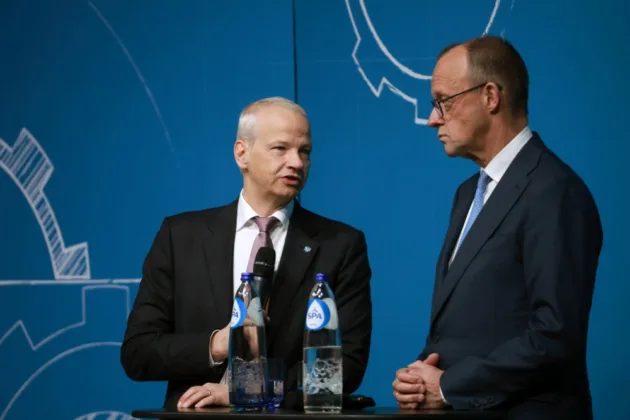
After a cabinet retreat at Neuhardenberg, in Brandenburg, eastern Germany, on August 26 he told reporters that his government “acknowledges that German industry has apparently changed its stance with respect to global trade imbalances”.
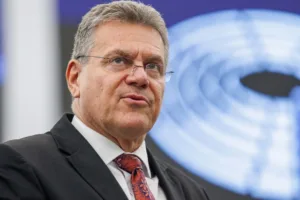
Berlin will set out its position before a European Union summit in October at which the European Commission is expected to table measures to shield European producers. Brussels is weighing import quotas for the chemical, steel, machinery and car sectors, which EU industry commissioner Stéphane Séjourné has said risk destruction by unfair Chinese competition.
As Merz publicly indicated, this shift is recent.
For years the Federation of German Industries (BDI) and the big car, chemical and machinery groups treated China as a market first and a rival second.
That consensus has now cracked under the pressure of Chinese market dominance.
Friedolin Strack, co-head of international affairs at the BDI, told Welt am Sonntag on August 23 that member associations were discussing a harder trade response, including faster anti-dumping and anti-subsidy cases, simpler evidence rules, and a string of smaller EU tools rather than one grand instrument left in a drawer. “China does something similar,” he said.
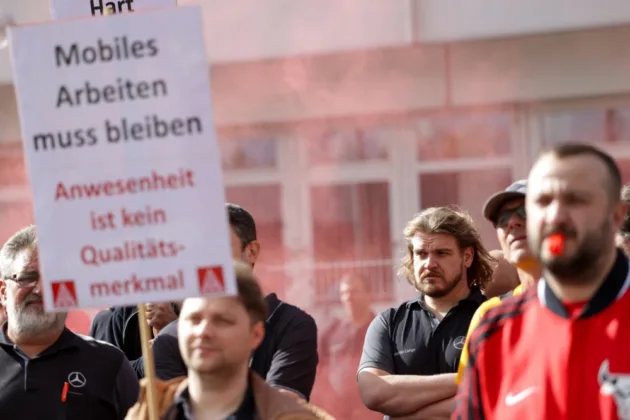
“We are currently being deindustrialised by unfair measures and most companies will no longer put up with that,” said Oliver Richtberg, head of foreign trade at the German Mechanical Engineering Industry Association (VDMA). He urged Brussels to act without fear of retaliation, warning that delay would leave European manufacturers dependent on Chinese machines.
The German Association of the Automotive Industry (VDA) has also said it is reviewing its China line. Calls for duties on Chinese plug-in hybrids have come even from parts of the auto sector that once feared retaliation. Those cars face only the standard 10 per cent import tariff, unlike the anti-subsidy duties of up to 35.3 per cent the EU imposed on Chinese battery-electric vehicles on October 30, 2024.
Germany’s goods trade with China has swung into a large deficit, which reached a record €89.3 billion in 2025, some €22.4 billion wider than a year earlier, while Chinese machinery and vehicles are winning a larger part of the European market and German plants shed jobs.
Imports from China rose 8.8 per cent to €170.6 billion while exports to China fell 9.7 per cent to €81.3 billion, according to the Federal Statistical Office. China returned as Germany’s biggest trading partner in 2025.
Critics in Berlin and Brussels blame State-backed overcapacity, a cheap yuan and export controls on rare earths.
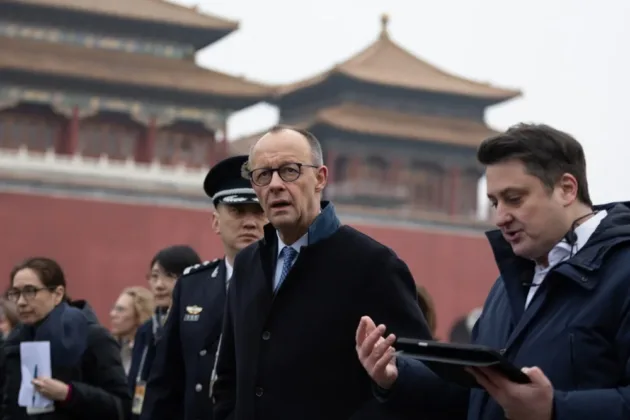
Merz raised subsidies, the currency and raw-material exports on his February visit to Beijing, his first as chancellor, where he met President Xi Jinping and secured an order for 120 Airbus aircraft. China made no structural concessions.
According to the Organisation for Economic Co-operation and Development (OECD), subsidies account for nearly 60 per cent of Chinese manufacturers’ global market-share gains since 2005, against a global average of 22 per cent. A study by the Cologne-based Institut der deutschen Wirtschaft, funded by the Federal Foreign Office, put the yuan’s undervaluation at about 40 per cent and found a fair rate would lift German output by up to 0.3 per cent by 2028.
Paris and Berlin said in July that the EU’s daily deficit with China and an undervalued renminbi threatened European manufacturing. French President Emmanuel Macron and Merz asked for emergency safeguards and agreed to draw up a joint roadmap by September. The bloc’s goods deficit with China reached about €360 billion in 2025.
Germany’s governing coalition of Christian Democrats and Social Democrats is divided on the issue.
Finance minister Lars Klingbeil, the Social Democratic Party (SPD) vice-chancellor, said on August 25 that China was not playing by the rules. “We must not be the fools and we need a different course,” he told broadcasters RTL and ntv, urging local content rules to protect German and European products.
Economy minister Katherina Reiche, of the Christian Democratic Union (CDU), has warned against a fight that would hit firms still deeply tied to the Chinese market.
Volkswagen, BMW, Mercedes-Benz, BASF and Siemens have large plants and sales there. Some still plan to expand even as mid-sized suppliers lose orders at home.
Measures already floated inside the coalition include higher countervailing duties and “Buy European” clauses in public programmes. In Brussels, officials have also weighed requiring non-EU investors to share technology with local partners.
October is the test of whether Germany, long the brake on a harder Brussels line alongside Spain and Greece, will now put its weight behind one.
Merz has asked the cabinet to list options, including possible duties on Chinese hybrids. He has not said which he will back.
Industry’s conversion is incomplete. Large exporters still fear a trade war more than they fear cheap imports.