










Former German foreign intelligence chief August Hanning has been arrested amid allegations that he smuggled classified information out of Germany’s intelligence service and used it to prepare material for an Azerbaijani intelligence contact. German prosecutors accuse him of espionage-related offences, including treasonous espionage and attempted treason, as well as spying out State secrets and intelligence agent activity.
The Azerbaijani connection was first reported by Der Spiegel on October 6, 2026, the same day Hanning was arrested.
The Federal Prosecutor’s Office has confirmed that Hanning allegedly used classified information to prepare an analysis for an employee of a foreign intelligence service, but did not name the country involved. According to the magazine, citing investigative sources, investigators believe the alleged client was an Azerbaijani intelligence officer.
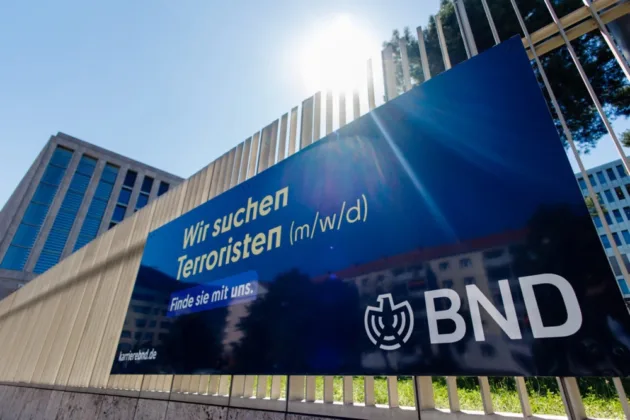
Hanning, 80, headed Germany’s Federal Intelligence Service (BND), the country’s foreign intelligence service, from 1998 to 2005. After leaving the intelligence service, he moved into senior government and private-sector roles.
From 2005 to 2009, he was a state secretary at Germany’s Federal Ministry of the Interior, where he was responsible for areas including domestic security, the federal police, migration and crisis management. He subsequently moved into the private sector, working as a security and intelligence consultant and developing his own consultancy activities.
Hanning was arrested on October 6, 2026, together with his former BND chief of staff, Manfred D., who was also detained on suspicion of aiding and abetting attempted treason and treasonous espionage. D. went on to serve as office manager to successive BND presidents from March 2012 until March 2026, a post that gave him access to the service’s most sensitive leadership papers.
Prosecutors allege that, five years after Hanning left the BND, Manfred D. began supplying him with classified intelligence in exchange for payment. The Federal Prosecutor’s Office dates the start of the alleged arrangement to the spring of 2010.
Over the following years, D. allegedly provided Hanning with around 2,000 BND documents, many of them classified and intended for internal use by the intelligence service, with the latest documents allegedly supplied by June 2022.
The material allegedly included highly sensitive subjects, including Iran’s nuclear programme, the Russian military and intelligence originating from allied foreign services. Investigators believe part of it came from the briefing papers prepared for the intelligence situation reports delivered to the Federal Chancellery.
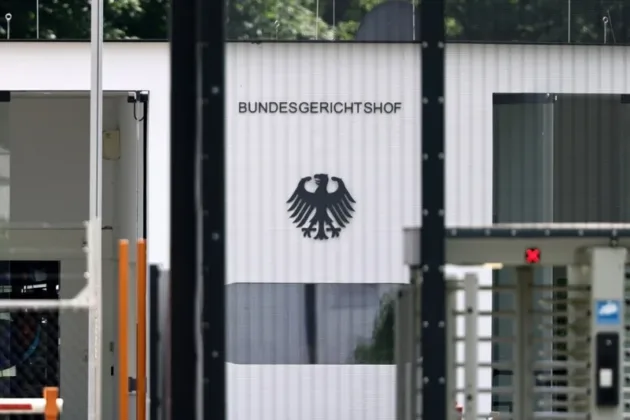
The inquiry grew out of searches carried out in September 2025 in an unrelated matter and was referred to federal prosecutors in early May 2026. An investigating judge at the Federal Court of Justice ordered both men held in custody.
Prosecutors allege that Hanning used the material in his private consultancy work and, in at least one case, used classified information to prepare an analysis for an employee of a foreign intelligence service. According to sources cited by Der Spiegel, investigators believe that the intended recipient may have been an Azerbaijani intelligence officer with whom Hanning was allegedly in contact.
The officer has not been publicly identified. There is no confirmed public information establishing his name, rank, agency or exact position within Azerbaijan’s intelligence apparatus.
Hanning’s Azerbaijan connection predates the espionage investigation. By 2017, he was already a board member of the Deutsch-Aserbaidschanisches Forum, the German-Azerbaijani Forum (DAF), a Berlin-based organisation that promotes political, economic, academic and cultural ties between Germany and Azerbaijan.
The DAF presents itself as a platform for dialogue and cooperation between the two countries. LobbyControl, a German organisation that monitors lobbying and transparency in politics, has described the forum as part of a lobbying network with close ties to the Azerbaijani authorities, while German media have also reported on its connections to Azerbaijani government and business circles.
A forum press release dated August 4, 2025 still listed Hanning as a board member. The organisation drew scrutiny during the so-called Azerbaijan affair, when LobbyControl in 2021 described the network around it as dubious.
There is no public evidence that the DAF is involved in the ongoing investigation, that it facilitated Hanning’s alleged contact with the Azerbaijani intelligence officer, or that it played any role in the alleged transfer of classified information.
Azerbaijan’s Media and Broadcasting Council has denied any involvement, calling the reports unfounded and part of a “smear campaign” aimed at damaging Azerbaijan-Germany relations.
Azerbaijan has also lodged a formal protest with both the German Chancellor’s Office and Foreign Ministry, through diplomatic and intelligence channels, according to Azerbaijani state media.