



The United States Federal Reserve has raised interest rates for the first time in more than three years, lifting its target range by a quarter of a percentage point to between 3.75 and 4 per cent. The decision on September 16 was unanimous and was the first policy move under Kevin Warsh, chosen as chairman by US President Donald Trump.
The Federal Open Market Committee (FOMC) said inflation remained elevated and that the increase would bring it back to the 2 per cent target more promptly. The previous US rate rise was in July 2023.
Warsh told reporters in Washington that the summer’s inflation readings did not show that underlying price trends had “meaningfully improved”. He said the strength of the economy and the labour market, together with tension in the Middle East, had produced a firm and unanimous decision.
Trump responded within hours on his Truth Social platform, writing in capital letters that the Fed should lower American interest rates “and fast”. He argued that borrowing costs should be 1 per cent or less because the United States was the best credit in the world by far.
The president later said he still had confidence in Warsh, whom he picked in January to replace Jerome Powell.
The rise came with the war between the United States and Iran still pushing up energy costs, with West Texas Intermediate crude, the American benchmark, trading above $100 a barrel. US inflation stood at 3.4 per cent in August, unchanged from July, while the core rate eased by a tenth of a point.
Employers added 162,000 jobs in August, well above the 21,000 recorded in July and ahead of expectations. The Fed now forecasts growth of 2.2 to 2.5 per cent this year and unemployment of about 4 per cent.
Updated projections showed 16 of the 18 policymakers expecting at least one further quarter-point increase before the end of the year, four of them two. In June most had expected the rate to finish 2026 between 3.5 and 3.75 per cent.
The move brings Washington into line with Frankfurt, where the European Central Bank (ECB) raised its three key rates for the first time since 2023 in June and lifted its deposit rate again to 2.5 per cent on September 10. Both central banks are trying to stop a war-driven energy shock from feeding into wages and prices.
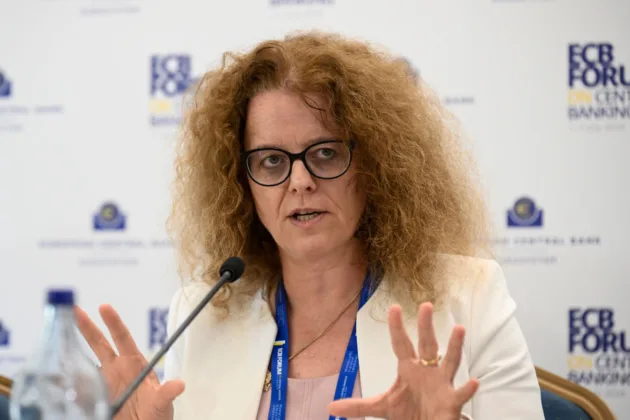
Executive Board member Isabel Schnabel argued in August that euro area inflation would not return to target without further tightening. Eurozone inflation reached 3.3 per cent in August, its highest in three years.
Warsh declined to say how the White House had taken the news, telling reporters he remained committed to the central bank’s independence.