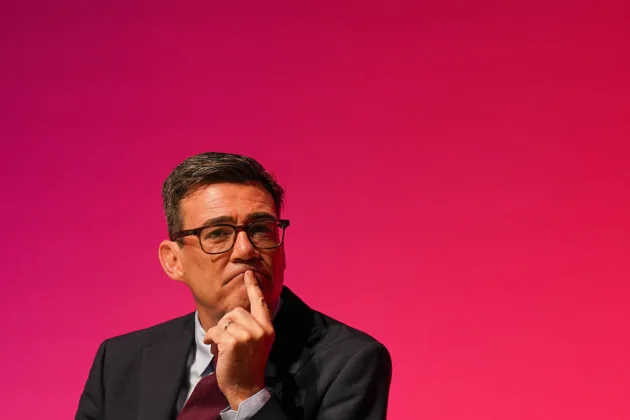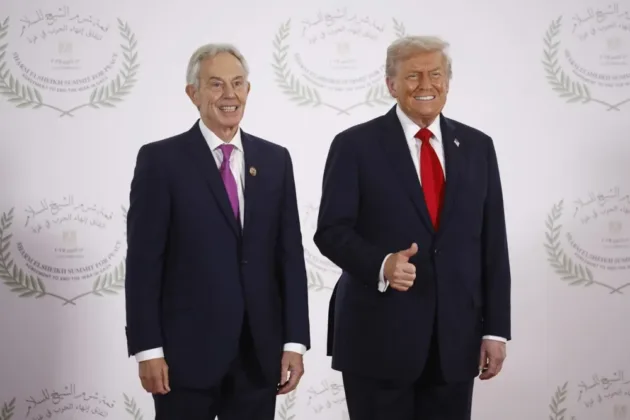


Tony Blair has told Prime Minister Andy Burnham to make a public objective of rejoining a reformed European Union within a decade the “cornerstone” of the government’s 10-year plan, due in November.
In a foreword to a Tony Blair Institute (TBI) paper, Beyond Leave and Remain: A Path to Rejoining a Reformed Europe, published on September 24, the former prime minister wrote that Britain should “signal an intention if the terms are right to enter into a structured formal relationship with Europe and initiate a process of negotiation where everything is on the table, but nothing agreed until everything is agreed”.
The red lines of 2016, he said, “are not the same as 2026”, as he called for a “new approach” to EU-UK relations.
The paper said Europe now faced another inflection point and had to evolve its organising principle in a world increasingly defined by great-power competition.
The paper itself is more specific. Over the next decade Britain should “work towards the ambition of rejoining a significantly reformed EU”, accept free movement and a budget contribution as the price of entry if the terms are right and drop the 2024 Labour manifesto bars on the single market, the customs union and free movement.
Blair wants a Europe “on a credible path to reform, a Europe of nation states, a Europe capable of being a genuine global power”.
If Brussels would not reform, he wrote, London should cooperate where interests aligned and show it “can and is prepared to remain independent”.
The paper noted that Brexit reflected genuine concerns about sovereignty, democratic accountability, immigration and the uneven distribution of the benefits of globalisation. It continued that the EU had become too bureaucratic and slow to act, with blurred responsibility, an asylum system that struggled to control the external border and economic integration that had advanced further than political consent.
It added: “The British public were not unique in raising these concerns. Across Europe, dissatisfaction with uncontrolled migration, economic stagnation and remote institutions has contributed to the rise of populist parties and placed many of the same questions raised during the Brexit debate at the centre of European politics.”
The paper also cited Office for Budget Responsibility (OBR) estimates that the current UK-EU settlement would reduce long-term productivity by about 4 per cent.
He dismissed “inching towards Europe” as public opinion allowed, while the paper stressed that Britain and Europe “need one another”.
Former European Central Bank president Mario Draghi’s 2024 competitiveness report is cited as the reform menu already on the table. That report estimated the EU needed additional investment of €750 billion to €800 billion a year.
Blair wrote that Europe needed change on competitiveness, defence capability and “proper controls on immigration”.
Europe’s openness to “associate membership” for Canada is offered as proof of a “newfound flexibility”.
Joint work on North Sea energy, AI and the EU’s €150 billion Security Action for Europe (SAFE) defence loans is proposed in the meantime. Talks on British participation in SAFE broke down in November 2025.
The paper also proposed a permanent secretariat for the European Political Community to coordinate such projects “without creating new supranational powers”.
The timing is not accidental. Burnham took office in July after Keir Starmer resigned and promised a decade-long plan later this year.
Travelling to the UN General Assembly in New York on September 21, he declined to rule a rejoin pledge out of Labour’s next manifesto, saying it was a question “for another day”.
He met European Commission President Ursula von der Leyen on September 22 and warned that planned EU preference rules for public contracts under the “Made in Europe” scheme could affect British industry and supply chains.
Asked about Canada’s status, Burnham said: “The European Union made it clear that that wasn’t open to us.”
He has said before that he hopes to see Britain back in the EU “in my lifetime”, then that he would not “rerun” the 2016 arguments.
Labour’s annual conference opens in Liverpool on September 27.
Reform UK has built its vote on the claim that Brexit is being quietly undone, while Tory MPs called the Blair paper a “betrayal”. Conservative MP Mike Wood told the Daily Express Labour should “stop trying to turn back the clock”.
Some 17.4 million people, 51.9 per cent of those voting, backed Leave in the June 23, 2016 referendum.
TBI director Tone Langengen, the report’s author, said the institute was not arguing for Britain to rejoin “as it is”, nor, in her words, for rejoining “without a referendum”.