




The European Union has suspended imports of Brazilian beef, poultry, eggs, honey and several other animal products after Brazil failed to provide sufficient guarantees that its production systems comply with EU rules restricting the use of certain antimicrobial substances.
The measure took effect on Thursday, following a decision adopted by the European Commission earlier this year.
It affects Brazilian bovine, equine and poultry products, aquaculture products, eggs, honey and casings.
The EU says the decision is based on regulatory compliance rather than evidence that the affected products are broadly contaminated with prohibited substances.
Under Commission Implementing Regulation (EU) 2026/1189, adopted in June, Brazil was removed from the list of third countries authorised to export the relevant animal products to the EU.
The regulation states that the Commission had not received sufficient information guaranteeing that Brazil would have the necessary measures in place by September 3 to comply with EU requirements.
The rules stem from EU legislation restricting the use of antimicrobial medicinal products, especially antibiotics in food-producing animals.
Certain antimicrobials reserved for treating particular infections in humans, as well as the use of antimicrobial medicines for growth promotion or increasing yield and are prohibited in Europe.
For imported products, the EU requires exporting countries to provide guarantees that these restrictions have been respected.
In the case of animals whose products are destined for the European market, the Commission has said compliance must cover the animals’ entire lifetime.
Brazil has objected to the EU’s decision, arguing that it has taken steps to meet the European requirements and that the suspension was imposed without sufficient dialogue.
Brazilian authorities said on Thursday that they were considering reciprocal measures if negotiations with Brussels fail to produce what they described as a satisfactory outcome.
The country’s agriculture and foreign ministries also criticised what they called a lack of prior consultation.
Brazilian officials have maintained that the country has supplied documentation on its control systems and has worked with European authorities to address their concerns.
The Brazilian government has also sought to have the country reinstated on the EU’s list of authorised exporters.
The Commission, for its part, has said the suspension can be reversed if Brazil demonstrates compliance with the relevant requirements. It has stressed that the measure is not necessarily permanent.
The timing of the suspension has coincided with an EU audit of Brazil’s poultry and honey sectors which ran until September 4.
A positive assessment could therefore lead to Brazil being returned to the authorised list for some products.
The situation is potentially more complicated for beef as the EU is seeking guarantees covering antimicrobial use over the entire lifetime of animals from which exported beef originates, meaning that establishing compliance may take considerably longer.
The Commission’s approach means that Brazil does not have to demonstrate that every individual shipment is contaminated or that every Brazilian producer has breached EU rules. Rather, the country must demonstrate that its national controls provide sufficient guarantees that products entering the EU originate from production systems meeting the bloc’s requirements.
he suspension affects a sizeable Brazilian export market.
According to Reuters, the animal products covered by the measures represent around $1.84 billion (€1.57 billion) in annual Brazilian exports to the EU, with beef and poultry accounting for the largest share.
Brazil exported about 108,000 tonnes of beef worth approximately $1 billion to the EU in 2025, according to Brazilian government figures cited by the Associated Press.
Brazil is one of the world’s largest exporters of animal protein, while the EU is an important high-value market for its beef and poultry industries.
The suspension could also affect European buyers, particularly in the poultry sector. Brazil has been one of the EU’s principal external suppliers of chicken, meaning that prolonged restrictions could force importers to seek alternative sources.
European poultry industry representatives have nevertheless welcomed the measure as an application of the principle that imported food should meet equivalent requirements to products produced inside the EU.
Dutch Farmer Citizen Movement MEP Jessika van Leeuwen echoed this sentiment. In a press release she said, “For BBB, the principle is clear: no equal rules, no access. Our farmers have to meet very strict requirements to protect people and animals. We cannot, therefore, allow meat that does not demonstrably meet those same requirements to be sold here.”
Van Leeuwen, who worked for many years in the South American livestock sector before turning to politics, has repeatedly drawn attention to the risks of antibiotic resistance associated with the import of Brazilian meat products and the lack of a reliable traceability.
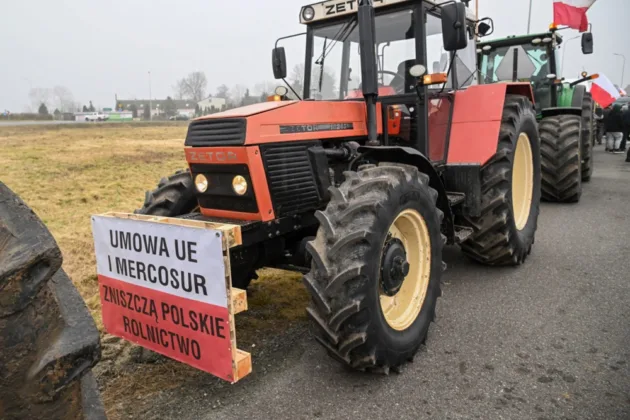
The decision is particularly sensitive because it comes shortly after the EU-Mercosur trade agreement entered its provisional implementation phase.
The agreement is intended to reduce trade barriers between the EU and the Mercosur bloc, comprising Brazil, Argentina, Paraguay and Uruguay, and provides improved access to the European market for agricultural products.
Brazil’s exclusion from the EU’s antimicrobial-compliance list came shortly after the trade agreement’s provisional application began on May1 .
Brazil has disputed the EU’s assessment and is seeking to provide additional guarantees.