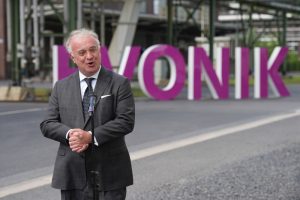






Evonik will cut 3,200 jobs worldwide between 2027 and 2029, 2,150 of them in Germany, the specialty chemicals group confirmed on Tuesday after a strategy meeting of its executive and supervisory boards.
The figures match a plan first set out in June under the “tailor Made” programme.
About 2,800 posts are already due to go by the end of 2026.
Taken together, the two waves remove close to 6,000 roles. Evonik employed 31,053 people at the end of 2025, almost 900 fewer than a year earlier.
Interim chief executive Claus Rettig said the board, the supervisory board and employee representatives shared one view: “We are in a structural and economic crisis in our industry.”
“We will use this polycrisis to change old structures and position ourselves better.”
Growth, the company said, looks stronger in Asia and the Americas, where further investment is under review.
The six large German production sites will each be given a narrower role. The share price rose by almost 5 per cent.
The next phase is meant to run without compulsory redundancies: Vacant posts will not be refilled, staff will be offered early retirement, and voluntary exits will be paid.
Evonik did not put a figure on the cost of the new round.
The first programme, which cut 2,800 jobs for about €400 million a year in savings, cost some €250 million.
Rettig said the latest one would “probably be more expensive”.
The company is also leaving businesses it no longer wants.
Global polyester, with about €150 million of annual sales and years of losses, will stop in 2027.
Witten, which employs 266 people, will close; Marl will lose 45 jobs and Shanghai 35.
Smaller plants in Hamburg and Bitterfeld, together about 90 staff, are also to shut.
Evonik plans to sell Oxeno and Syneqt, which together employ about 4,300 people.
Talks with investors on Oxeno are under way; a Syneqt sale process is due to start in 2027.
If those units leave the group as well as the job cuts land, the payroll could be about 10,000 smaller than at the start of the overhaul.
The German chemical giant’s sales was €14.1 billion in 2025, 7 per cent lower than the year before.
German chemicals have been under pressure from high energy costs, weak European demand and Asian competition.
The chemicals union IG BCE has already said that one savings programme after another creates no prospects. The industry association VCI has spoken of no “sense of departure” for German chemicals as a whole.
In Germany, the chemical and pharmaceutical industry is currently the third largest industrial sector with over 476,000 employees.
The European Commission has proposed slowing the rate at which the EU carbon market forces companies to cut their emissions, easing the pressure on steel, cement and chemical producers that have complained about the cost of the bloc’s climate rules. https://t.co/VIYPikr6ik
— Brussels Signal (@brusselssignal) July 17, 2026