





Iceland’s referendum is not an isolated setback for the pro-European cause. It is yet another wake-up call for the European Union, its institutions and its political leaders to improve the way they communicate.
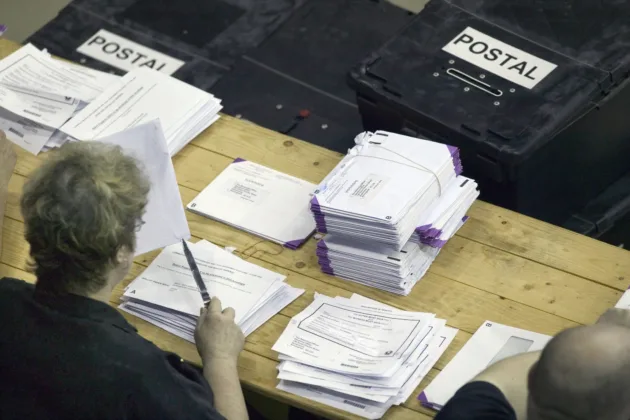
Icelandic voters rejected the resumption of accession negotiations on August 29, 2026 by 52.8 per cent to 47.2 per cent, on a turnout of 82.5 per cent, according to figures reported by the public broadcaster RÚV.
The inability of the pro-European camp in Iceland to secure majority support resulted mainly from the same communication weaknesses that also led to Denmark’s rejection of the Maastricht Treaty in 1992, the defeat of the European Constitution in France and the Netherlands in 2005, Ireland’s rejection of the Lisbon Treaty in 2008 and Brexit in 2016.
All these referendums asked citizens to decide either their country’s relationship with the EU or the future direction of European integration. Despite their different political contexts, these campaigns revealed recurring weaknesses in pro-European political communication.
Pro-European leaders offered abstract arguments and struggled to formulate a message that did not sound elitist. They communicated too late and focused too much on institutional procedures that few people understood, instead of addressing citizens’ real preoccupations and speaking to their hearts.
Their Eurosceptic opponents were more vocal, spoke in plain language and used short, emotionally powerful messages about sovereignty, identity, national control and issues people genuinely cared about.
Pro-European national leaders have also contributed to the problem by allowing Europe to become a scapegoat, a tactic usually associated with Eurosceptics. They have not always acknowledged the EU’s role in successful initiatives and achievements, while allowing Brussels to be associated with unpopular decisions.
The EU’s reputation cannot be rebuilt overnight, and years of negative narratives cannot suddenly be reversed during a short pre-referendum campaign. Yet they wait until a referendum to explain what Europe does, while their opponents have spent years criticising it.
When the campaign finally begins, “Yes” must explain and defend an abstract political project, while “No” needs only to mobilise fears and promise to take back control from Brussels.
Putting complex questions on European integration to a referendum is a bold but risky political choice, particularly when sufficient public knowledge and debate have not been built beforehand.
Citizens cannot be expected to master the technical details of European integration during a short campaign, nor should they have to. Political leaders must instead explain how the choice relates to citizens’ concerns, everyday lives and their country’s future.
Whether referendums should be used to decide on such complex matters, when they are not constitutionally required, is in itself debatable and deserves a separate article. Once political leaders choose to put these matters directly to citizens, though, they have a responsibility to ensure that voters can make an informed decision.
The defeat of the European Constitution in France on May 29, 2005 and the Netherlands three days later provides an example of how a referendum on European integration can become a vote on wider national concerns when the pro-European case is not communicated effectively. French voters rejected the text by 54.7 per cent and Dutch voters by 61.5 per cent.
The debate became dominated by immigration, sovereignty, identity, economic insecurity and enlargement, and most citizens judged their national governments rather than the text of the Constitution itself.
In France, the referendum became closely mixed with domestic political dissatisfaction, making it difficult to separate the vote on the Constitution from opinions about the government. Many citizens treated it as a “sanction vote”.
In the Netherlands, concerns about national influence and identity overshadowed the provisions of the Constitution. The pro-European political elite failed to translate the complex institutional text into a persuasive case relevant to Dutch citizens.
The results demonstrated that providing information was not enough. Without persuasive political leadership and a message connected with citizens’ concerns, other fears and preoccupations defined the outcome.
In Ireland, the “No” campaign connected the Lisbon Treaty with threats to taxation, workers’ rights, neutrality, public services and national identity. Voters rejected the treaty by 53.4 per cent on June 12, 2008.
When the vote was held again on October 2, 2009, a better organised and more convincing “Yes” campaign contributed to a different result, with 67.1 per cent in favour. The treaty had not become simpler, but the political communication had changed.
Brexit again demonstrated the power of a short and emotionally charged message. “Take back control” captured concerns about sovereignty, borders and national identity in three memorable words.
The “Remain” campaign focused on the economic risks of leaving, including lower growth, job losses, reduced investment and damage to trade, though it struggled to explain in an equally memorable and positive way the benefits of keeping the United Kingdom in the EU. Leave won by 51.9 per cent on June 23, 2016.
The referendum in Iceland was another test of whether the EU and pro-European national leaders had learned how to explain what the EU does, why it matters and how it benefits citizens. The outcome showed that they had not.
Citizens of Iceland rejected reopening accession negotiations because the pro-European campaign failed to convince them why taking even the first step towards EU membership was in their country’s interest.
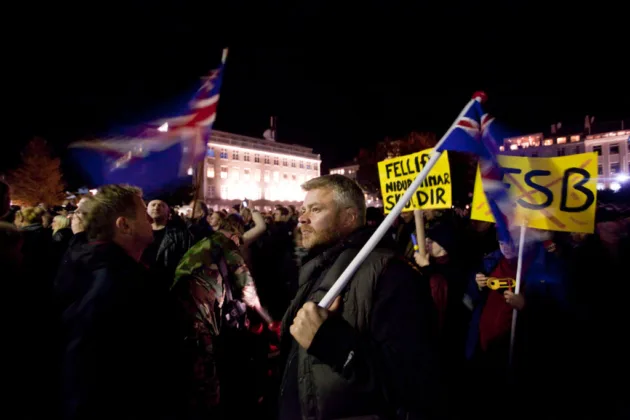
The “No” campaign told an emotional story: Iceland must protect its fishing waters, natural resources and independence. Its message was connected with the country’s history and identity. It was carried by Áfram Ísland, or Forward Iceland, a group set up on July 6, 2026 whose launch meeting was addressed by former president Ólafur Ragnar Grímsson.
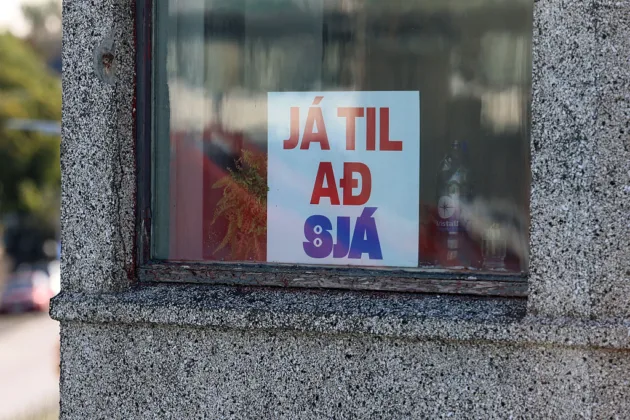
The “Yes” campaign offered “Yes to see” which reflected the procedural purpose of the referendum, but it did not serve as a persuasive political narrative capable of connecting with citizens. The slogan belonged to SJÁ, founded on June 18, 2026, which stressed that it was campaigning only for the negotiations to be completed and not for membership itself.
Grímsson dismissed the slogan as an advertising trick without substance, telling Morgunblaðið that everything about the EU was already known and there was nothing left to see.
They were asked to support a complex and abstract negotiation process without properly understanding what it would involve, while their opponents offered the simpler promise of retaining national control.
Citizens of Iceland needed to know that opening negotiations would not amount to joining the EU and that they would have the opportunity to have their say again on any final agreement.
The pro-European case could not stop at explaining the procedure, though. It also had to show what Iceland could gain and better address concerns about fishing, natural resources and sovereignty.
Through the European Economic Area, Iceland already implements many EU rules without having representatives in the European Parliament, a vote in the Council of the European Union or a commissioner.
The “Yes” campaign missed the opportunity to use this paradox to present sovereignty as the capacity to have a seat at the table, shape the European rules that Iceland already implements and defend the country’s national interests from within the decision-making process.
The recurring lesson from more than three decades of EU-related referendums is that the EU needs timely and more effective pro-European political communication both on the part of national and European leaders and EU institutions.
Information about the EU alone is not enough. European and national political leaders must be able to listen actively, address citizens’ preoccupations and explain persuasively what the EU does, why it matters and what is at stake.
Prime Minister Kristrún Frostadóttir said her government would not take the accession talks forward during the remainder of its term, which runs to 2028, and described the vote as a victory for democracy rather than a setback.
The question now is: Will the EU once again hit the snooze button and sleepwalk towards its next communication failure?