

Lithuania has called on NATO to prepare a joint response to Russian hybrid attacks, arguing the alliance must be able to act in the “grey zone” below the threshold of open war.
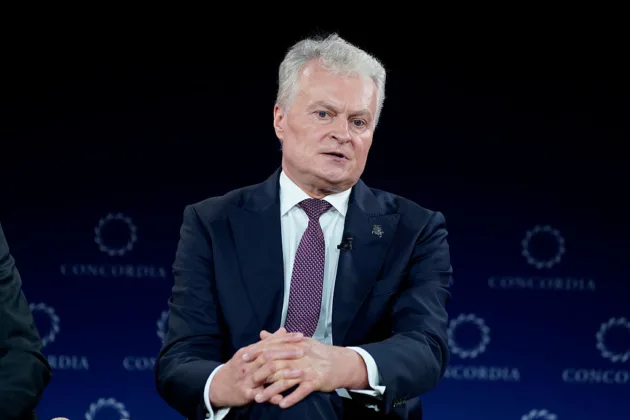
Lithuanian defence minister Robertas Kaunas said on September 2 that the alliance faced a problem it could not negotiate away because “Russia is not going to change”, in remarks carried by dpa.
NATO had to be in a position to counter the grey-zone threats it faced and to answer them with an equivalent response, he said.
Asked why the alliance had not invoked Article 4 of the North Atlantic Treaty over the incident, Kaunas said Germany had clearly identified Russia as the aggressor. Article 4 allows any member that considers its security threatened to call for consultations among allies.
He was speaking a day after the German Government formally blamed Moscow for the failed drone attack at Leipzig/Halle airport on August 4.
German interior minister Alexander Dobrindt said police findings, the pattern of the offence and intelligence gathered by German services and their partners together established Russian responsibility. He said the drone configuration and the explosive were known from other operations attributed to Moscow.
Foreign minister Johann Wadephul ordered the closure of Russia’s consulate general in Bonn, western Germany, from September 18. It was the last Russian consulate general still operating in the country.
Berlin also moved to end the lease on the Russian House cultural centre in Berlin, tighten entry controls for Russian nationals and press for further European Union sanctions listings. Russia’s ambassador was summoned.
Russian President Vladimir Putin rejected the accusation at a summit in Bishkek, Kyrgyzstan, saying the evidence had been planted. He said German leaders were using the case to distract from their own failings.
Wadephul denied on September 2 that the announcement had been timed around regional elections. Voters in Saxony-Anhalt, eastern Germany, go to the polls on September 6, with Mecklenburg-Vorpommern and Berlin following two weeks later.
Lithuania has a thread of its own in the inquiry. Public broadcaster LRT reported in August that Kaunas and the interior minister had been briefed on possible links between the Leipzig incident and a Lithuanian investigation into incendiary parcels sent abroad.
Kaunas confirmed he had received the material though said it was not for public disclosure.
EU foreign ministers meeting in County Wicklow, eastern Ireland, signalled broad support for tighter visa rules for Russian tourists. German media reported that one of two suspects in the Leipzig case had entered the bloc on a Schengen visa issued by Italy.