



US President Donald Trump has said he would “love to see” a united Ireland and that reunification is bound to happen eventually, abandoning the neutral line Washington has held on the constitutional status of Northern Ireland.
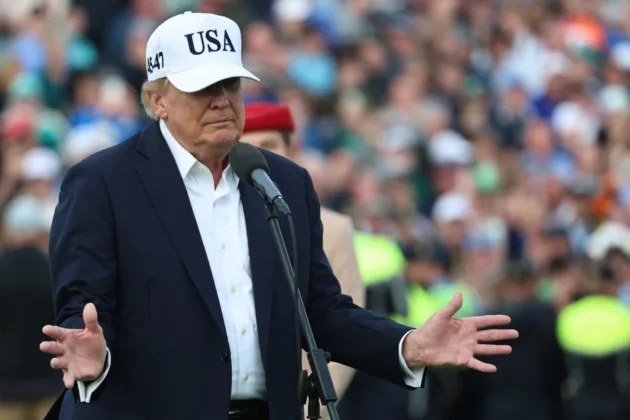
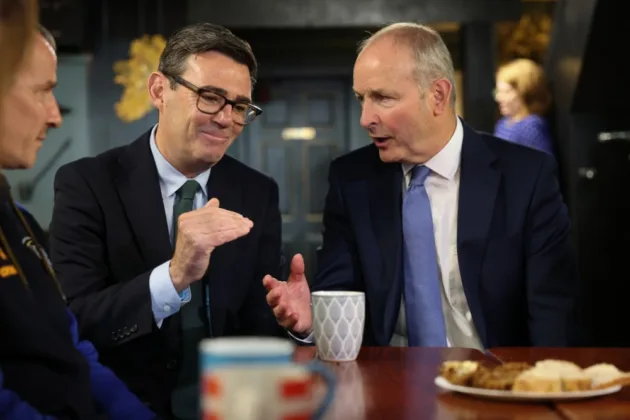
Speaking in Dublin on September 12 alongside Taoiseach Micheál Martin, Trump described unification as a fantastic outcome and said that if it was coming anyway it might as well come now. He accepted that the United Kingdom would have a say in the matter.
He returned to the subject later the same day at the US ambassador’s residence, telling guests the idea appealed to him. Asked about London’s reaction on September 13, he said objections of that kind had a habit of giving way.
Downing Street said the position of British Prime Minister Andy Burnham had not changed and that there was no majority support for a referendum. “Until that changes, there will not be one,” a spokesperson said.
Burnham told MPs on September 9 that he saw no clear basis for believing a majority in Northern Ireland wanted to leave the UK.
The island has been partitioned since 1921. Under the 1998 Good Friday Agreement, which ended three decades of violence that killed about 3,500 people, a poll can be called only if the British Government judges that a majority in Northern Ireland is likely to favour unity, and voters in the Republic of Ireland would have to approve the change as well.
The threshold has not been met. The most recent Northern Ireland Life and Times Survey put support for unification at 36 per cent against 45 per cent for staying in the UK.
American presidents have acted as guarantors of the agreement since it was signed, though none has publicly endorsed either outcome, on the grounds that the question belongs to the people who live there.
Gavin Robinson, leader of the Democratic Unionist Party (DUP), said on X that unionists had no interest in seeing their country destroyed. Irish nationalists welcomed the intervention.
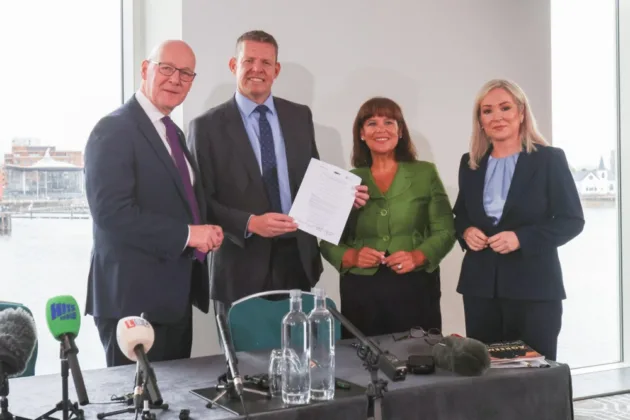
Two days after the remarks, the parties governing Scotland, Wales and Northern Ireland signed a declaration in Cardiff demanding the right to hold referendums on leaving the UK.
For the European Union the question is not hypothetical. Unification would bring Northern Ireland into the bloc through an existing member state rather than through an accession process, a route with a precedent in German reunification in 1990.