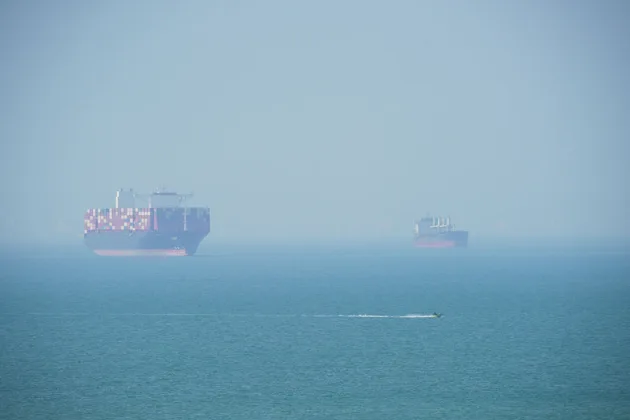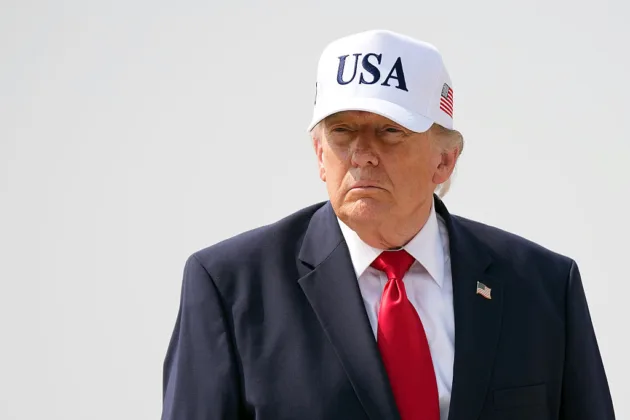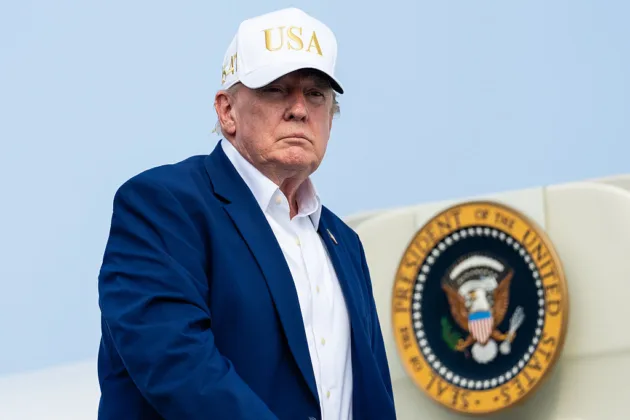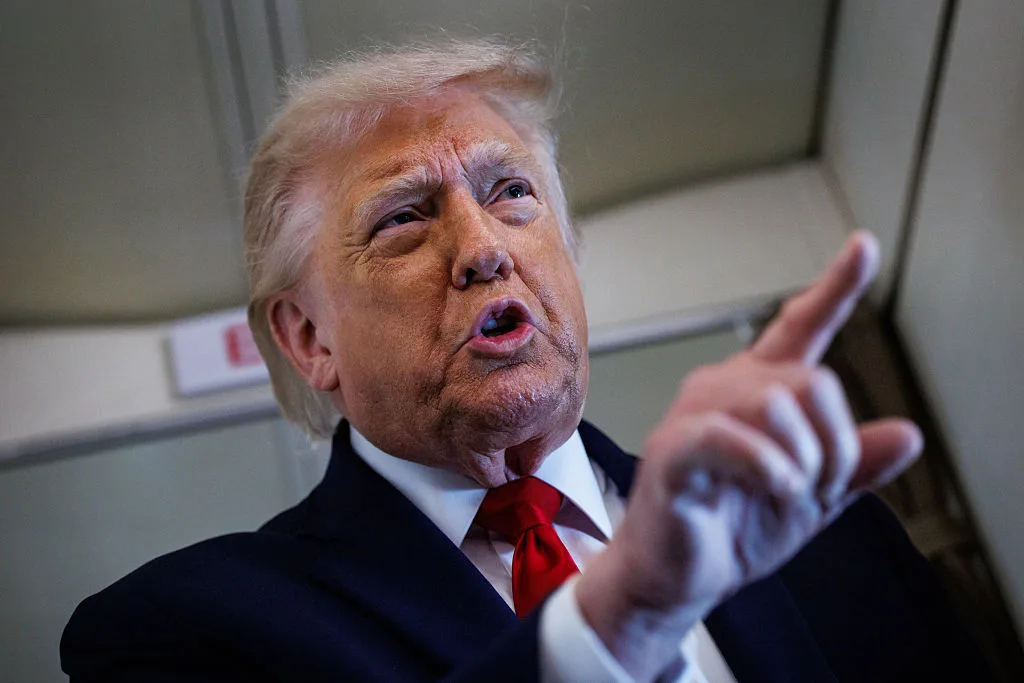



US President Donald Trump has said he is not trying to force Iran back to the negotiating table, claiming Washington now holds almost total control of the Strait of Hormuz.
Writing on Truth Social on September 1, he dismissed a report by ABC News that he was seeking talks. “I couldn’t care less if they sign a worthless, to them, agreement,” he wrote.
Trump said he preferred the current position, with the Iranian economy collapsing, and asked when the Iranian people would rise up and fight.
The message followed a fresh wave of American strikes on Islamic Revolutionary Guard Corps (IRGC) targets across Iran. US Central Command said the operation answered attempted attacks on commercial shipping in the strait and on American personnel in the region.
Iranian officials said one missile hit a house in Kuhestak, in Sirik county of the southern province of Hormozgan, where a wedding was being held. At least five people were killed, including a child, and 63 were wounded, county governor Reza Shahidiyan told state broadcaster IRIB.
US Treasury secretary Scott Bessent used a Group of 20 finance meeting in Asheville, North Carolina, to set out the next stage of Washington’s economic campaign. “We have zero tolerance. We are going to economically asphyxiate this regime,” he said on September 1.
Bessent said another bank sanction was likely within days and a further one the week after. He added that airline leasing companies and anyone doing business with the IRGC could be targeted.
The campaign, launched on August 24 under the name Operation Economic Outcast, took its first step on August 28. The Treasury’s Financial Crimes Enforcement Network proposed cutting the Emirati branches of Egypt’s Banque Misr off from their US correspondent accounts.
Those branches handled about $1.8 billion (€1.55 billion at the European Central Bank reference rate of August 31) for 103 companies potentially linked to Iranian shadow banking networks between January 2024 and June 2026, the Treasury said. The proposal faces a 30-day consultation.
For the European Union the strait remains the central concern. About 8.5 per cent of the bloc’s liquefied natural gas and 7 per cent of its crude oil and petroleum products passed through the waterway before the war, according to European Commission figures.
Brent crude for November delivery rose more than 2 per cent to $96.59 (€83) a barrel on September 2. Eurozone inflation reached 3.3 per cent in August, its highest since September 2023, with energy the main driver.
Trump had made the same claim in August, when Tehran kept the strait shut and set out conditions for reopening it.