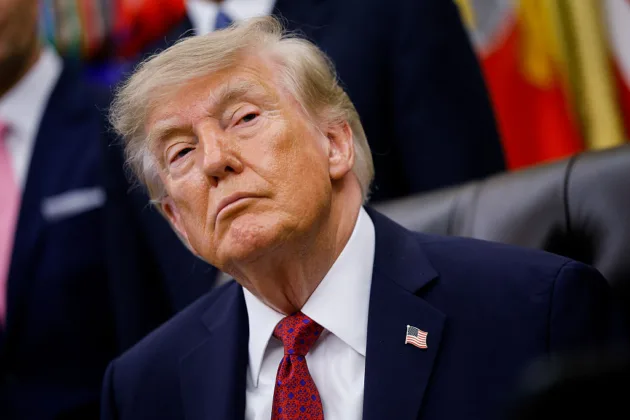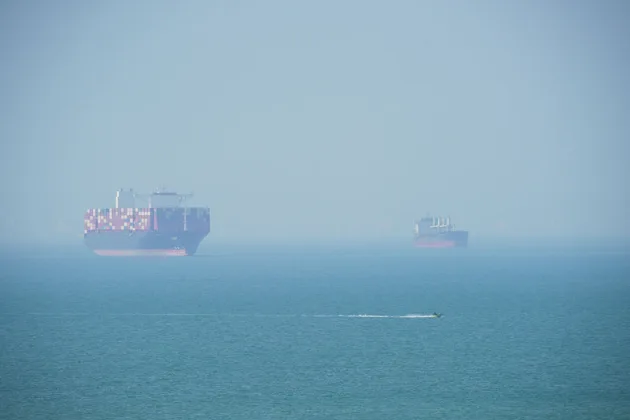



United States President Donald Trump has said his country holds full control of the Strait of Hormuz, rejecting Iranian claims over a waterway that has been largely shut since February 28.
Speaking to reporters at Joint Base Andrews on August 11, he said Tehran no longer held sway over the chokepoint. “We have total control. We own it,” Trump said.
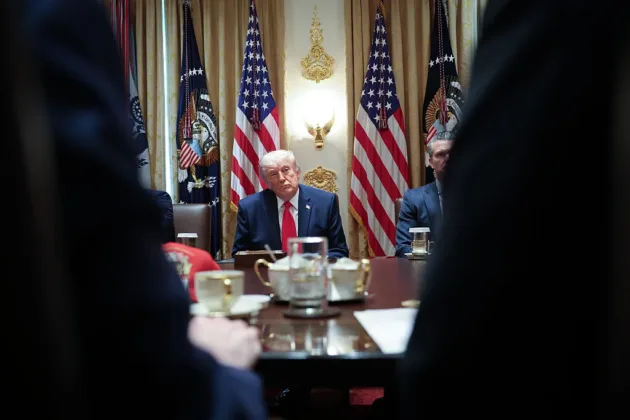
It was the second time in two days that he had made the claim, having told reporters in the Oval Office on August 10 that the US Navy alone controlled the passage.
He added that he did not trust Iran, accusing its leadership of lying to him repeatedly. After some 50 years, he said, the Islamic Republic was no longer the dominant power in the Middle East.
Trump warned that any Iranian move against American forces would draw a heavy response, though he described Washington’s current position as a strong one.
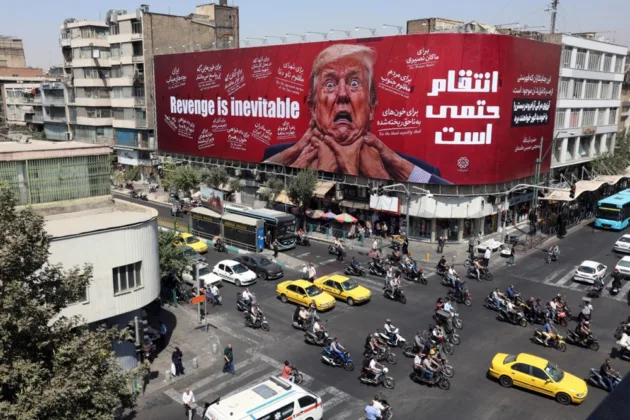
His remarks came hours after Mohsen Rezaei, the newly appointed secretary of Iran’s Supreme National Security Council, restated Tehran’s terms for reopening the waterway. Rezaei, a former commander of the Islamic Revolutionary Guard Corps, took over the post on August 9.
Writing in English on X, he said the strait would stay closed until the United States ended the war and its naval blockade, released frozen Iranian assets and accepted a region-wide ceasefire covering Lebanon and Gaza. “Until all conditions are met, the Strait will remain closed,” he wrote.
Iranian demands reported by Reuters also include about $300 billion (€275 billion) in war compensation and the withdrawal of American forces from the region.
Earlier on August 11, US Central Command said a Navy MH-60 helicopter had fired two Hellfire missiles into the engine room of the Panama-flagged cargo ship Vela Nova in the Gulf of Oman. The strike disabled the vessel’s steering gear after its civilian crew ignored repeated warnings, the command said.
Central Command said it had redirected 55 commercial vessels, disabled three and boarded two since reimposing the blockade of Iranian ports on July 14.
The standoff continues to weigh on European economies. Brent crude held above $89 (€82) a barrel on August 12, roughly 16 per cent up on pre-war levels, after Tehran’s conditions dimmed hopes of an early reopening.
About 8.5 per cent of the EU’s liquefied natural gas and 7 per cent of its crude oil and petroleum products moved through the strait before the war, according to European Commission figures.
The bloc has limited its response to sanctions on Iranian officials and to backing a memorandum signed in June that was meant to end the war and reopen the waterway. Foreign policy chief Kaja Kallas has said this is not Europe’s war.