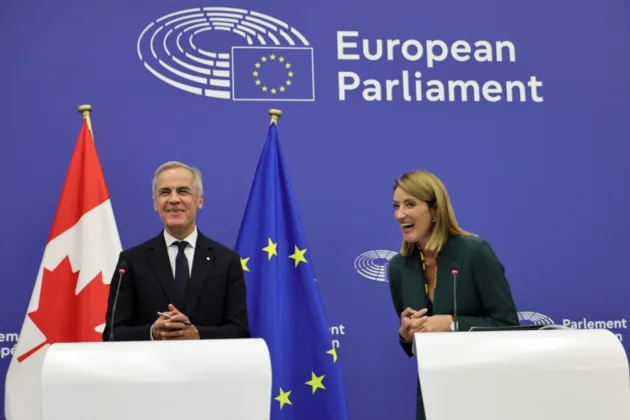



The European Union and Canada have gathered in Montreal to launch what both sides call an “Alliance for the Future”. The summit has been overshadowed by a row among EU capitals over what to call the relationship.
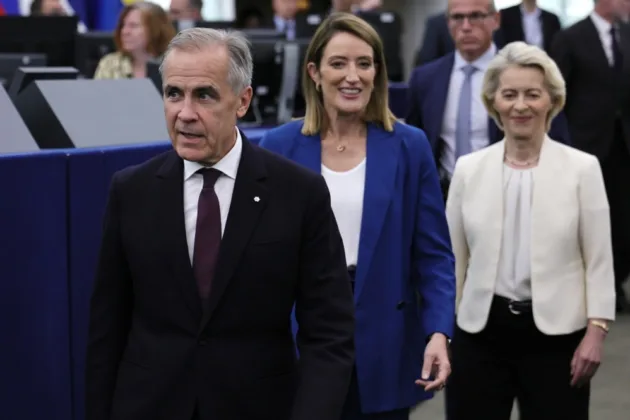
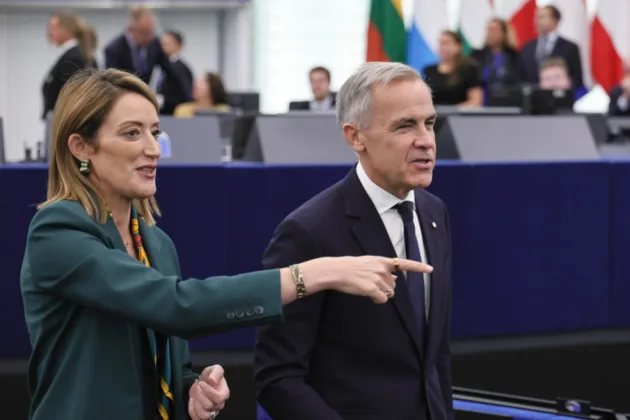
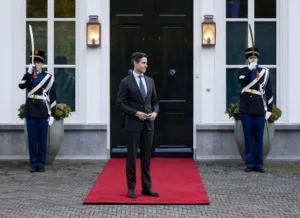
Canadian Prime Minister Mark Carney is hosting European Council President António Costa and European Commission President Ursula von der Leyen at the two-day meeting, which closes on October 30. High Representative Kaja Kallas and nine Commissioners have travelled with them, according to Euronews.
Shortly before the delegation left Europe, Germany led a push to remove all reference to “associate membership” from the joint declaration. France, Italy and Greece also raised concerns about the earlier draft, Euronews reported.
Some six member states in all opposed the term, according to the National Post.
The revised text went to national capitals on October 28 under the silent procedure, by which a document is adopted unless a member state objects. According to a draft seen by the National Post, both sides would work to define their “ever closer association” by the 2027 EU-Canada summit.
Von der Leyen floated the status in her State of the Union speech on September 16, with Carney in the audience. She did so without first consulting national governments, Euronews reported.
Berlin has argued that the substance of the partnership should be settled before it receives a label with potential legal implications. No such status exists under the EU treaties.
The German position has a recent history. Chancellor Friedrich Merz proposed associate membership for Ukraine in May as a way to offer Kyiv security guarantees during its accession process.
Ukrainian President Volodymyr Zelensky rejected the idea and member states never formally discussed it. Berlin has denied any link between that episode and its stance on Canada.
European Commission spokeswoman Paula Pinho acknowledged on October 29 that unity on the original wording would have been preferable. She said there was nonetheless “a strong basis that is agreed”.
Bernd Lange, chair of the European Parliament’s trade committee, said the dispute over names distracted from concrete action.
Von der Leyen has kept to her line. Speaking at the C.D. Howe Institute in Montreal on October 29, she described her plan as “an association without accession”.
She said geography alone prevented Canada from becoming a full member. The new status, she added, would be open only to the bloc’s closest partners outside Europe.
Carney, who ruled out full membership in September, has largely kept out of the naming dispute. “The good news is it doesn’t matter about specific names or nomenclature,” he told reporters on October 27, Reuters reported.
He nonetheless referred to Canada as an associate member of the new alliance, according to Euronews. His own pitch, set out before the European Parliament in Strasbourg in September, was for a partnership strong enough that no outside power could dictate its members’ choices.
At home, the idea has met resistance. Conservative leader Pierre Poilievre told a rally in Brantford, Ontario, on September 20 that Canada would “never be the 28th state” of the European Union, the Canadian Press reported.
He argued that Canada already had a free-trade agreement with Europe and defence ties through NATO.
The summit agenda covers trade, critical raw materials, liquefied natural gas, artificial intelligence, the Arctic and security. It also includes Canadian participation in EU programmes such as Horizon and Erasmus.
The draft declaration commits both sides to new subsea cables linking Canada, Europe and Asia, according to the National Post. It also records the conclusion of substantive talks on a digital trade agreement to supplement the existing free-trade deal.
Canada has separately agreed with the European Investment Bank to ease European investment in Canadian critical minerals, the paper reported. The two sides will also explore linking their instant payment systems to cut the cost of cross-border transfers.
Brussels is considering a joint meeting of the full College of Commissioners and the Canadian cabinet next year, Euronews reported. That format was last used with India.
Ukraine is also on the table. Kyiv faces a €70 billion gap in its 2027 budget, of which the EU is ready to cover roughly two-thirds, or about €46 billion, according to Euronews.
Brussels wants Canada and other allies to fund the rest with new money. Ottawa intends to join the €90 billion Ukraine Support Loan, though that contribution would not count towards its share.
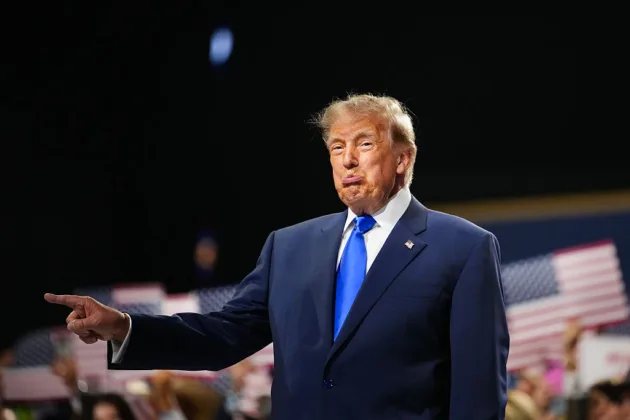
The rapprochement follows US President Donald Trump’s tariffs and his repeated suggestions that Canada should become the 51st US state.
Trump called talk of associate membership “laughable” in September. He warned that if Washington judged it a hostile act, the United States might stop trading with Europe on many goods, Al Jazeera reported.
A senior EU official conceded the alliance was “a tiny bit of uncharted territory”.