






The European Commission has admitted that the “associate member” status proposed for Canada by European Commission President Ursula von der Leyen has yet to be defined, while making clear it would not amount to accession.
Commission spokesman Olof Gill told reporters in Brussels on September 18 that the proposal was for the moment an idea and that the institution would see where the talks led.
He said the Commission would keep working with member states and with Ottawa to give the idea shape and to explore the parameters of a reinforced relationship.
Gill pointed to the EU-Canada summit, which Canada will host on October 29 and 30, as the first real opportunity for substantive political discussions, with technical work continuing in the background until then.
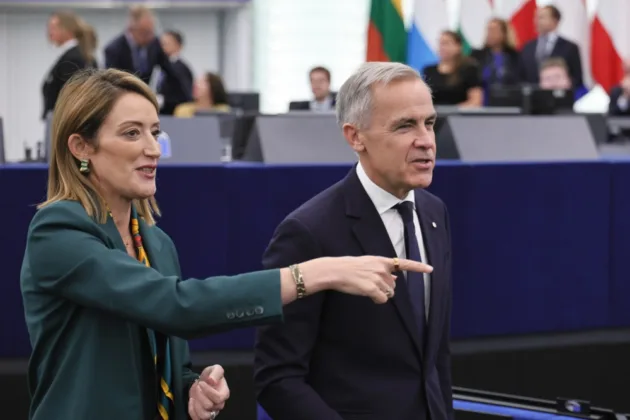
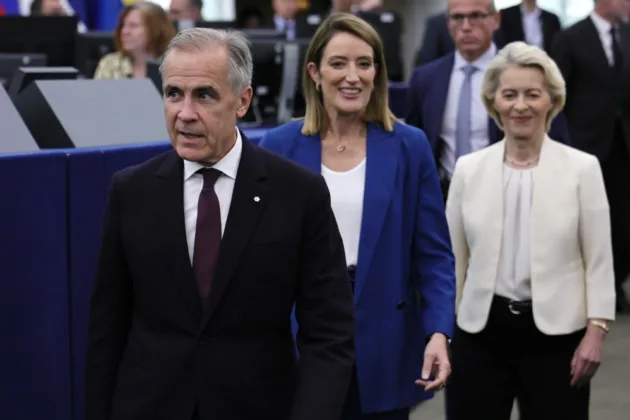
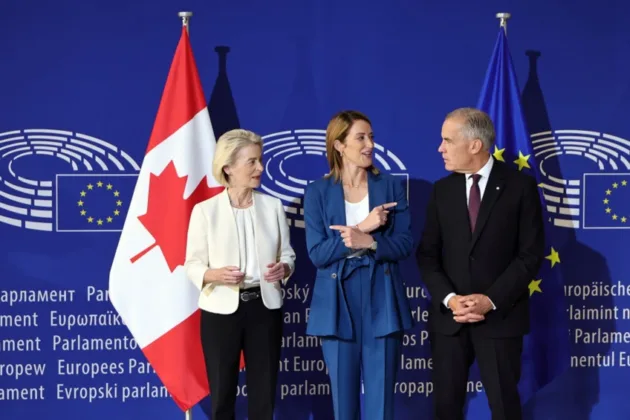
Von der Leyen made the offer in her State of the European Union address on September 16, when she opened the door to Canada becoming the first associate member of the bloc, telling Canadian Prime Minister Mark Carney she wanted to bring the relationship “to the highest level possible”.
Asked whether the 27 had been kept in the dark, Gill said the project was an ambitious one that member states also wanted and that it would be taken forward in coordination with them.
The Commission said the initiative had been discussed with member states on several occasions and rested on months of contacts with the Canadian authorities.
Major changes in the European Union happened only with the agreement of member states and always would, Gill said, adding that European Council President António Costa’s team was helping to prepare the summit.
Reuters reported that some EU diplomats had misgivings about the undefined scope of the plan and about the lack of prior discussion with national capitals.
Gill declined to say whether the same status could later be offered to countries such as Australia or New Zealand.
European Parliament President Roberta Metsola had suggested a day earlier that both countries could follow Canada, describing the untested status as a third way between full membership and candidate status.
The Commission stressed that the formula should not be confused with an eventual Canadian accession, recalling that the treaties reserve that possibility to European states.
Article 49 of the Treaty on European Union allows any European state that respects the bloc’s values and commits to promoting them to apply for membership. A distinction had to be drawn and precision mattered, Gill said.
He described the proposal as one conceived for a partner country that is not a European state.
The exchanges followed a warning from US President Donald Trump, who called the plan laughable and threatened heavy tariffs if he judged it to be a hostile act.