










Misbegotten policies enshrined in law are fiendishly difficult to undo. The oil crises of the 1970s prompted the US to seek energy independence by subsidising the conversion of maize into ethanol fuel. Fifty years later, energy independence was accomplished not by showering the corn belt with cash, but by the deregulation of oil prices and a technological revolution in drilling technology. Yet American farmers are still paid billions of dollars a year for turning their corn into ethanol, which is then blended with regular gasoline. A massive subsidy programme initiated under the Carter presidency remains intact as a fact of electoral politics, despite its minimal contribution to American energy independence.
Today it is the European Union that is concerned with energy autonomy. Cut off from its traditional Russian suppliers, European industry now depends on fossil fuels imported from the US and Qatar. Piped gas from Algeria and Norway makes up just over 40 per cent of total EU gas imports, forcing EU consumers to bid against Asia for its gas. The metallurgical coal needed to produce iron and steel is imported from Appalachia**, in the eastern US**. American refineries are running flat out to meet both domestic and European demand for diesel fuel. Damage to Gulf refineries and maintenance pauses at US facilities will drive prices higher for Europe as it struggles to refill gas reserves and secure diesel for transport and agriculture. Anxieties over the perceived hostility of US President Donald Trump and the actual hostility of Russian President Vladimir Putin have pushed energy sovereignty up Europe’s policy queue.
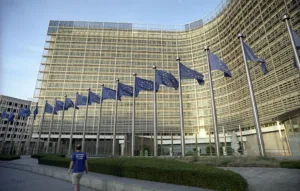
In response, the European Commission unveiled AccelerateEU on April 22, designed to help Europe achieve “… long-term energy autonomy and freedom from volatile markets and geopolitical coercion.” Commission President Ursula von der Leyen cites the need for energy autonomy in defence of her proposed €2 trillion seven-year budget. You might think that this quest for energy independence would encourage Brussels to unlock resources available in Europe. Norway is eager to exploit oil and gas reserves in its Arctic region. European shale formations hold roughly 15 trillion cubic metres of technically recoverable natural gas. The Groningen field in the Netherlands still holds half a trillion cubic metres of gas even after decades of exploitation. Germany has 40 billion tonnes of coal; Poland has more than 30 billion. Will the Commission use these resources to grant Europe greater energy sovereignty?
Sadly, no. Exploitation of these resources is pre-empted by regulatory fiat, presided over by a Commission wilfully blind to any conflict between net zero and energy autonomy. The EU refuses to permit Arctic exploration, despite Norway’s stellar environmental record**; its 2021 Arctic policy committed the bloc to pressing international partners for oil, coal and gas to “remain in the ground” there, a stance the Commission is now weighing reversing in a strategy review due by the autumn**. Exploitation of shale gas is blocked by bans on hydraulic fracturing, a technology long used safely in Texas and Pennsylvania. Dutch authorities are sealing Groningen gas wells permanently rather than use new repressurisation methods that minimise subsidence and tremors**, though 60 per cent of Dutch voters told an April poll that the wells should be kept available for emergencies**. Coal has been designated the Voldemort of fossil fuels and is scheduled for a full phase-out in a matter of years. The precautionary principle embedded in European law prevents the energy exploitation driving down production costs in China and the US.
The mother of all regulatory impediments to energy autonomy is the European Climate Law, which mandates a 55 per cent reduction in carbon emissions by 2030, a 90 per cent reduction by 2040 — written into the law by the Council on March 5 this year — and full carbon neutrality by 2050. According to AccelerateEU this will also serve the cause of energy independence, as mass electrification powered by domestic wind and solar replaces fossil fuels. These weather-dependent renewables will be buffered at some unspecified future date by banks of batteries or hydrogen storage tanks, enabling constant energy supply from highly variable power generation. Mission accomplished, according to the cloistered boffins deep in the Berlaymont.
Some pesky facts stand in the way. Installing battery capacity at a scale sufficient to meet EU electricity demand when renewable production wanes far exceeds global manufacturing capacity. Europe’s attempt to develop battery manufacturing at scale in the heavily subsidised Northvolt facility was an expensive failure**, the company having filed for bankruptcy in March 2025**, and so batteries must be imported from China, Korea or Japan. Why not dispense with the batteries altogether and complement renewables with gas-fired generators alone? Green orthodoxy, which prefers a wishful, fossil-fuel free solution to a proven one.
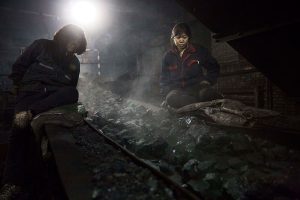
Mass electrification can’t replace key industrial inputs such as the coal needed for smelting iron ore or the gas feedstocks used by the chemicals industry. If Germany’s Duisburg and Ludwigshafen are to survive as going concerns under EU law, their carbon emissions must be offset by reductions elsewhere to achieve carbon neutrality. AccelerateEU volunteers motor vehicles as a prime candidate, yet the immense expenditures needed to electrify the European transport sector have yet to appear on strained national balance sheets. How eager are EU member states to cut pensions and healthcare so that they may replace millions of perfectly serviceable heavy trucks with Tesla Semis or their Chinese equivalents? Not very.
A realistic EU effort to gain energy autonomy would sweep away the climate rules impeding the exploitation of regional energy resources. Well-run fracking operations can unlock gas without threatening groundwater or releasing fugitive methane. Norway should be free to drill in her Arctic waters. New pipelines can lock Algerian and Libyan gas fields into European markets. An expansion of nuclear power serves the aim of mass electrification much more effectively than wind farms. Coal and gas will remain vital sources of cheap power generation and industrial feedstocks elsewhere for decades to come: Energy independence without using these European resources is impossible.
Of course, the repeal of Europe’s sacred climate goals in the name of energy autonomy is politically impossible. A hectoring mob of NGOs, Greens and technophobic neo-Calvinists atoning for the sin of European affluence constitute a blocking majority in Brussels. Europe will nurse its climate delusions while importing its energy from retrograde Texans and authoritarian Arabs. Energy dependence will be a humbling fact of life for the EU for as long as it clings to its economically ruinous climate laws.
Despite happy claims by the Commission, Europe sits squarely at the intersection of contradictory policy objectives. It seeks energy autonomy but prohibits the exploitation of its own fossil fuels with its net zero mandates. It needs gas and oil from Norway but blocks the exploitation of the Arctic. It threatens Qatar with extraterritorial methane and due-diligence rules, driving future cargoes to Asia. It deprives Russia of oil and gas revenues, but creates greater dependence on American fossil fuels. These contradictions stem from the EU’s obsolete faith that it could outsource the dirty business of energy extraction and pay for it with high quality exports. Cheap energy imports would sustain European industry and underwrite the vanity of renewables. War has ended this happy delusion, unleashing a ferocious competition over scarce energy supplies, and threatening the basis of European prosperity. In a painfully ironic way, net zero will reduce the EU’s exposure to energy volatility by reducing demand for imported energy: Shuttered factories and abandoned steel mills need no fossil fuels.
Poverty is the ultimate low-carbon strategy.