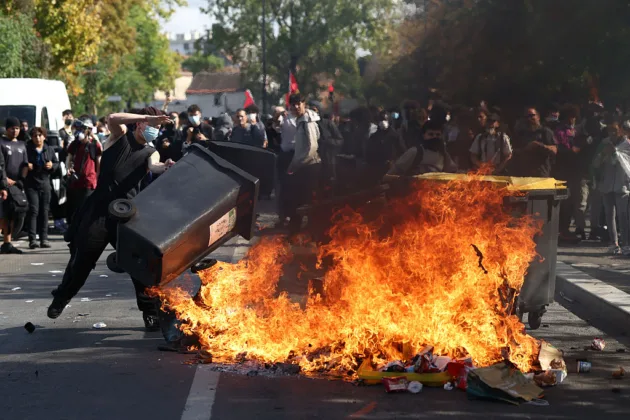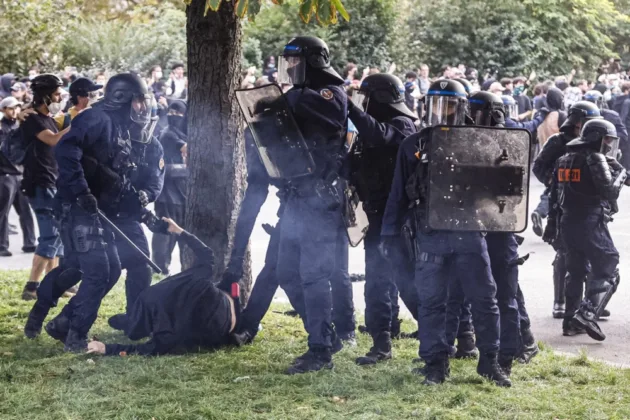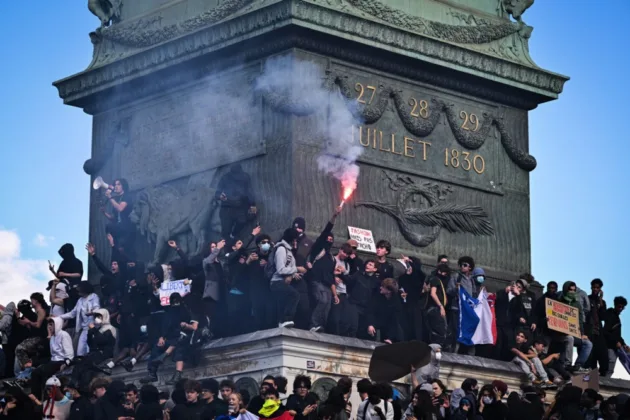






France has suspended secondary-school timetables across the country from October 7, to give head teachers time for what the French Government has called a period of “internal democracy” in each school. The suspension, ordered on the advice of education minister Édouard Geffray, is to run at least until the weekend.
Prime Minister Sébastien Lecornu told the National Assembly on October 6 that 215 pupils and 85 education staff had been injured since the protests began, the worst toll among school personnel in decades. He put the number of injured police officers and gendarmes at 715.
Lecornu blamed what he described as an unacceptable trivialisation of violence. “Lynching a teacher does not help replace teachers,” he said.
He rejected the accusation that his government had ordered a crackdown, saying the phrase “police violence” implied political instructions for repression that did not exist. He called that suggestion a lie.
The Prime Minister then turned on La France Insoumise (LFI), the left-wing party led by Manuel Bompard and Jean-Luc Mélenchon, whose deputies have joined the marches saying they are present to watch for police excesses. He said the party’s stance on violence was ambiguous because plunging the country into chaos before the 2027 presidential election formed part of its political project.
The revolt began on September 21 in the Paris region over dilapidated buildings, overcrowded classes and teacher shortages, and lessons had already been suspended in between 400 and 500 secondary schools on October 5.
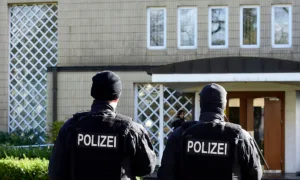
In Paris, the police prefecture said the capital was on maximum alert after about 300 people tried to attack officers near Place de la Nation, the end point of a march that had set out from Place de la République. Riot units answered with tear gas.
In Lyon, a march to Place Guichard drew a crowd the prefecture and unions put at between 20,000 and 25,000, with sporadic violence early on leaving at least 11 people injured, nine of them police. Organisers claimed about 450,000 demonstrators nationwide.
The interior ministry has recorded more than 5,000 arrests since the blockades spread, and said 85 per cent of those held were children. Classes were cancelled in 891 of France’s 3,700 lycées on October 6.
The National Consultative Commission on Human Rights, the country’s independent rights body, expressed “deep concern” at the disproportionate use of force by police. It called on the government to strengthen dialogue with young people and to guarantee the exercise of their rights.
Geffray is due to meet pupil and student representatives to discuss their demands. Justice minister Gérald Darmanin has taken a harder line, urging prosecutors to pursue civil claims so that parents pay for damage caused by their children.