


The European Parliament has called on European Union member states to supply the evidence needed to decide whether people and organisations linked to the Muslim Brotherhood belong on the bloc’s terrorist list.
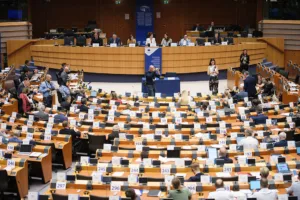
The resolution was carried in Strasbourg on October 8 by 381 votes to 167, with 15 abstentions. Drafted by the European People’s Party, the largest group in Parliament, the text was written by the French MEP Céline Imart.
It calls for a common European strategy against what it terms “Islamist entryism” and the influence of Brotherhood networks. Capitals are asked to pool information on the movement’s leadership, structures and affiliated bodies so that these can be measured against the criteria for terrorist designation.
Where the law allows it, the resolution said, the Council should proceed to list them.
The scope reaches beyond formally constituted organisations to front groups, financing channels, youth bodies and what MEPs called ideological platforms. Parliament also asked the European Commission to draw up a method for spotting signs of infiltration, including opaque funding and the blurring of religion and politics.
The vote designates nobody. Listing under the EU’s counter-terrorism rules requires a decision by a competent national authority and unanimity among the 27 member states in the Council, which is under no obligation to follow Parliament’s view.
The text drew on a French interior ministry report that described the Brotherhood as a threat to national cohesion, as well as on motions adopted by the French National Assembly on January 22 and by the Dutch House of Representatives in March.
Germany’s interior ministry has moved against several Muslim organisations it regards as Islamist, and the United States designated three Brotherhood chapters as terrorist entities in January.
Conservative and right-wing groups claimed the result as their own. The European Conservatives and Reformists had pressed for an outright listing, while Lega MEPs in the Patriots for Europe group tabled a rival text on September 30 demanding that the movement be banned.
Renew Europe negotiated wording making clear the resolution was not aimed at Muslims in general. Left-wing groups opposed it from the start and voted against, arguing that the language of entryism casts suspicion on ordinary Muslim civic activity.
EU money has continued to reach bodies that MEPs accuse of Brotherhood links, among them the Forum of European Muslim Youth and Student Organisations, which denies any connection. Parliament asked the Commission to end such partnerships, though the resolution binds nothing and no spending decision followed the vote.