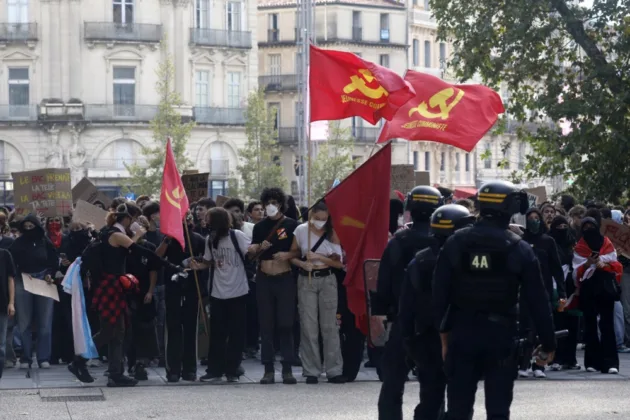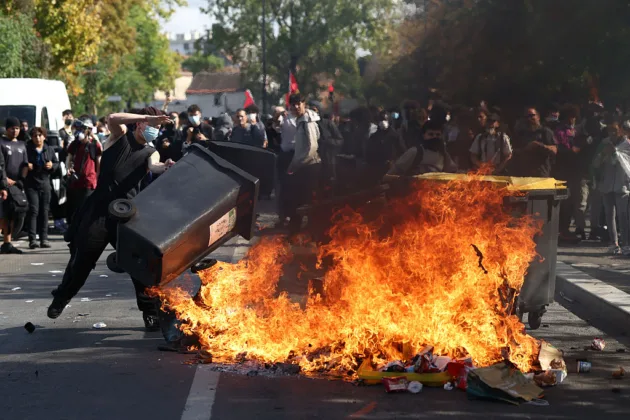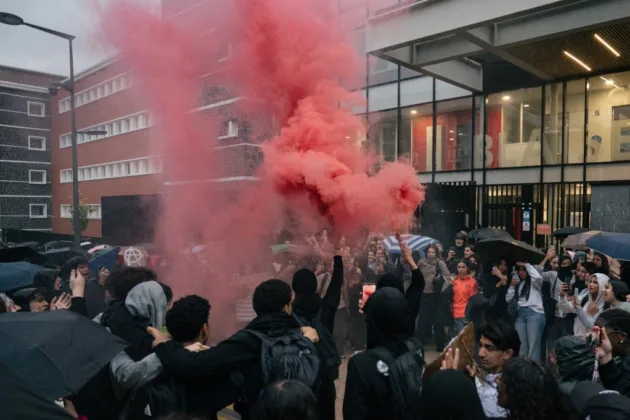




France has ordered 3,000 substitute teachers into its worst-hit secondary schools, the first substantial concession on classroom conditions since a student revolt began spreading out of the Paris suburbs in late September.
French education minister Édouard Geffray said on TF1 on October 8 that the teachers would go from October 9 to 114 schools classed as red for overcrowding and staff shortages, and to another 400 rated orange. Rectors would also be allowed to recruit several hundred teachers beyond their quotas, he said.
He spoke after meeting teaching unions at a school in Reims, northeast France, a day after a televised address by Prime Minister Sébastien Lecornu, who asked protesters to pause and promised decisions only at the end of October or in early November.
That timetable angered union leaders. Sophie Vénétitay, general secretary of the secondary teachers’ union SNES-FSU, said the Prime Minister had produced a blank sheet of paper and was playing for time.
Lecornu welcomed the announcement and said an online consultation run by the ministry had drawn more than 66,000 responses. The government would table amendments to the 2027 budget bill reflecting some of the pupils’ proposals, he said.
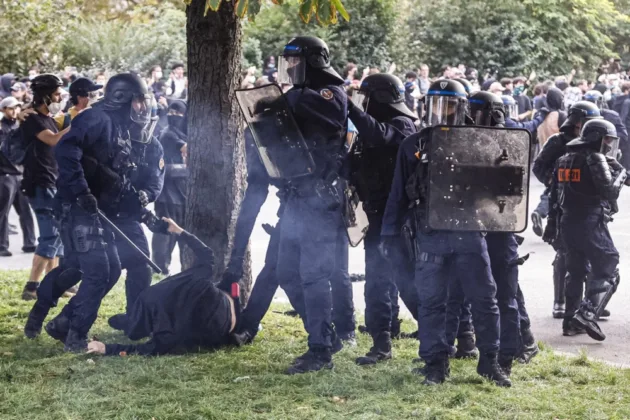
The Interior Ministry put turnout on October 8 at 71,500 across the country, 24,500 of them in Paris, with 504 people arrested and 48 police officers injured. The Education Ministry said 375 schools were fully or partly closed.
More than 6,500 people have been arrested since the movement began, most of them minors. Lecornu’s office has counted 215 teenagers and 85 school staff injured along with more than 700 police officers, and interior minister Laurent Nuñez suspended the use of stun grenades on October 7 after a 15-year-old lost a hand in Lens, northern France.
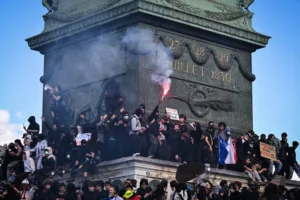
In Paris, riot police turned water cannon on the crowd at the Place de la Bastille. La France Insoumise (LFI) leader Jean-Luc Mélenchon, a candidate in next spring’s presidential election, posted on X that the Bastille had been retaken and called for a bigger turnout on October 13.
The government has accused the left-wing party of encouraging the blockades, a charge it denies. Student and teaching unions have called a day of action on October 13 and a wider mobilisation on October 17.
The concessions land as France prepares a 2027 budget under the European Union’s excessive deficit procedure, leaving little room to buy off the streets. The unrest has drawn attention abroad, with US President Donald Trump linking the school protests to immigration and Iran summoning the French ambassador over the policing.
Nothing has yet been offered on class sizes or on Parcoursup, the university admissions system at the heart of the students’ complaints.