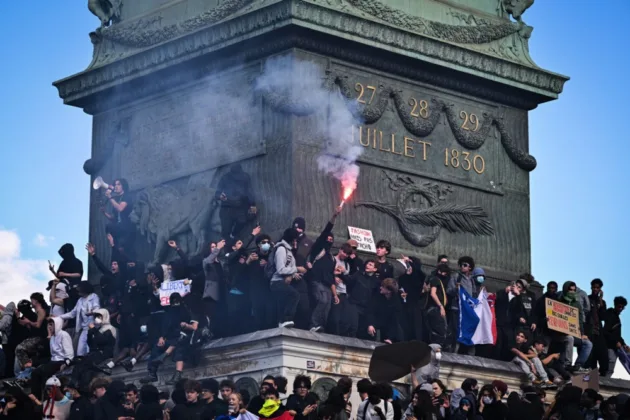





French student leaders have vowed to continue nationwide protests and school blockades, rejecting a package of educational concessions offered by Emmanuel Macron’s government as insufficient to quell mounting social unrest.
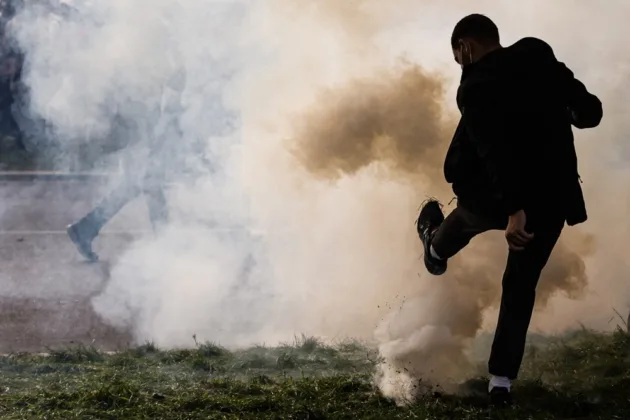
The stand-off comes as French authorities maintain heavy police deployments across major urban centres, seeking to prevent a recurrence of the widespread street violence and vandalism that previously disrupted dozens of cities.
Following talks in Paris between student delegates and ministry officials, held at Matignon, the prime minister’s office, the government put forward measures designed to address long-simmering grievances.
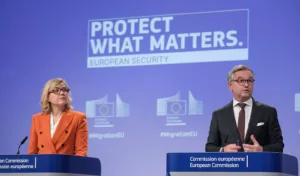
French education minister Édouard Geffray unveiled a package on October 26, alongside higher education minister Philippe Baptiste.
These included €5 billion in funding for school and university renovations, caps on class sizes in secondary schools, and planned reforms to the contentious Parcoursup university admissions platform, which students criticise as opaque and socially unfair.
The money takes the form of interest-subsidised loans: €4 billion for lycées and collèges and €1 billion for universities. Classes in seconde, the first year of lycée, would be capped at 28 pupils from 2027 in the least advantaged schools and from 2028 everywhere. Parcoursup is to be overhauled for the 2027 admissions round and replaced in 2028, with 15,000 extra higher education places.
Student representatives swiftly dismissed the overtures.
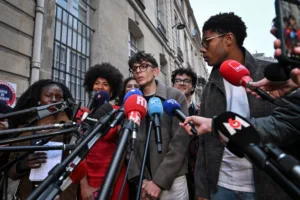
Speaking after the negotiations, Louis Letoublon, a representative for high school pupils and vice-president of the Les Lycéens! organisation, warned that unrest would persist without deeper systemic changes.
“Not all our demands were met. We will go on for as long as it takes,” Letoublon said, demanding further proposals on staffing shortages, learning conditions and higher education access.
Student bodies including the Union étudiante and the Union syndicale lycéenne have set out ten demands costed at €10 billion, among them an end to university selection.
The teachers’ union also reacted negatively, calling the government’s actions unbalanced, especially regarding salaries. Sophie Vénétitay, general secretary of Snes-FSU, said after meeting Geffray on October 27 that no pay measure had been tabled.
The student mobilisation, which began on September 21 at a lycée in Créteil, east of Paris, over timetable pressures and teacher shortages before escalating into widespread blockades, has broadened into a wider political challenge for Prime Minister Sébastien Lecornu’s minority government.
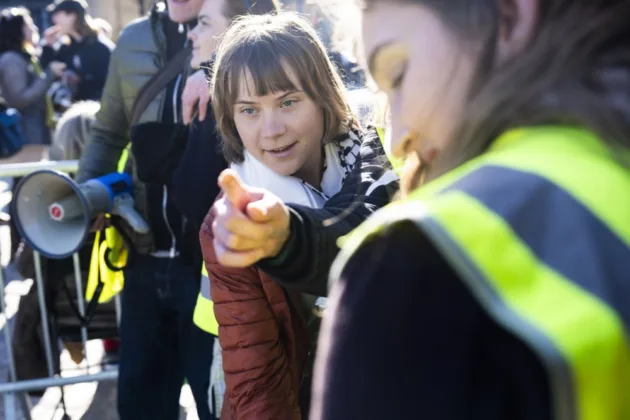
The movement has increasingly converged with trade unions and Yellow Vest (gilets jaunes) activists protesting against the cost of living and broader public spending constraints.
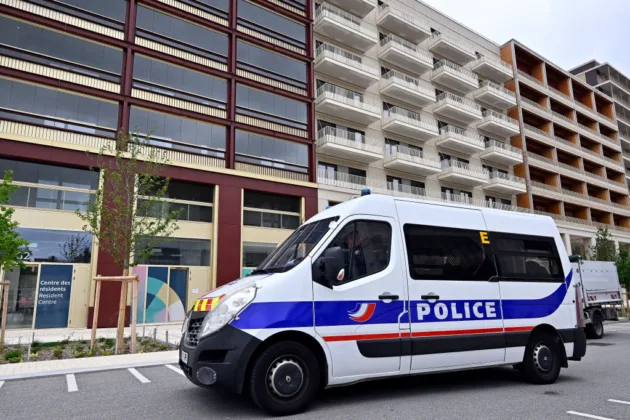
To contain the unrest, the French Interior Ministry has mobilised substantial police and gendarmerie forces, imposing strict security cordons, re-routing declared marches away from commercial city centres and carrying out more than 1,400 arrests on October 24 alone.
Interior minister Laurent Nuñez put that day’s figure at 1,435 arrests, with 267 police and gendarmes injured, after some 70,000 officers were deployed.
Visiting Marseille on October 26 to review damage and meet emergency services, President Macron defended the stringent policing posture, insisting that authorities would maintain firm security measures while working to move demonstrations outside sensitive urban zones to protect local businesses.
He ordered prefects to hold the routes for the October 31 and November 5 marches outside city centres. Some 417 actions are planned for October 31, most of them sit-ins.
Macron admitted that the state had initially failed to anticipate the scale of disorder during earlier clashes, while business associations have warned that continued blockades are taking a severe toll on retail commerce.
The unrest poses acute dilemmas for the Élysée. With France’s public debt approaching 120 per cent of gross domestic product, the government faces narrow fiscal room to finance major public spending pledges without derailing difficult budget negotiations.
INSEE, the national statistics institute, put the debt at 119 per cent of output at the end of the second quarter, a record €3,595.5 billion.
Next to the direct damage of the protests, they also cause many retailers to remain closed, causing sharp falls in sales. CCI France, the chambers of commerce network, counted 2,488 shops hit on October 17 and 50 more on October 24, of which 1,161 were heavily damaged. City-centre traders reported turnover down by 80 per cent on protest Saturdays.
With further youth demonstrations scheduled for the coming days and a larger union-backed strike day set for November 5, authorities are preparing for extended friction on the streets.
The French government is also looking to create an emergency procedure to request the express removal of content calling for “insurrection or arming against the state” published on social networks.