

Israel’s general election has produced no outright winner, leaving both main camps short of a majority in the 120-seat Knesset and the next government to weeks of coalition bargaining.
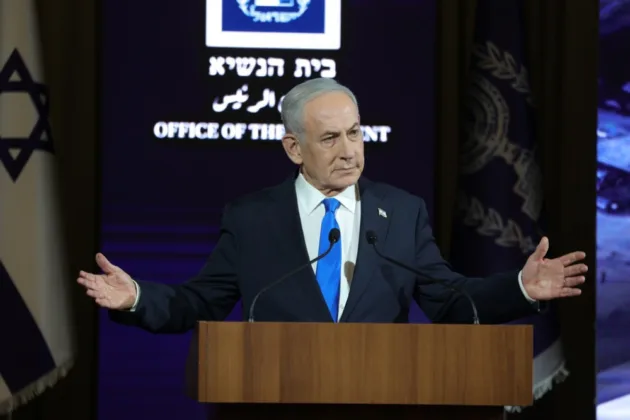
Prime Minister Benjamin Netanyahu and the opposition leader Gadi Eisenkot have each claimed the right to govern, hours apart and on different sets of figures.
With 72 per cent of ballot boxes counted on October 28, partial results published by the Central Elections Committee gave Netanyahu’s bloc of right-wing and religious parties 54 seats and Eisenkot’s camp 48. Arab-led parties, which belong to neither bloc, held 18.
Netanyahu’s Likud remained the largest single party. Turnout reached 77.7 per cent, the highest in a Knesset election in 27 years, and official results are not due until November 4.
Eisenkot, a former chief of staff of the Israeli military, spoke before dawn, when exit polls still showed his camp narrowly ahead. He said the first projections revealed “a complete lack of confidence” in Netanyahu and his government.
The opposition leader said he would seek a broad coalition drawing on the Right, the centre and the Left, and that he would legislate to make military service compulsory for all. That would end the exemptions long enjoyed by the ultra-Orthodox parties propping up the current Israeli Government.
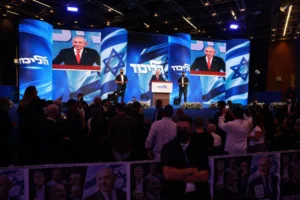
Netanyahu addressed Likud supporters later and insisted the Right had won a decisive majority, dismissing unfavourable exit polls as broadcasters’ propaganda. He ruled out any arrangement resting on the Arab parties, which he described as anti-Semitic and enemies of the State.
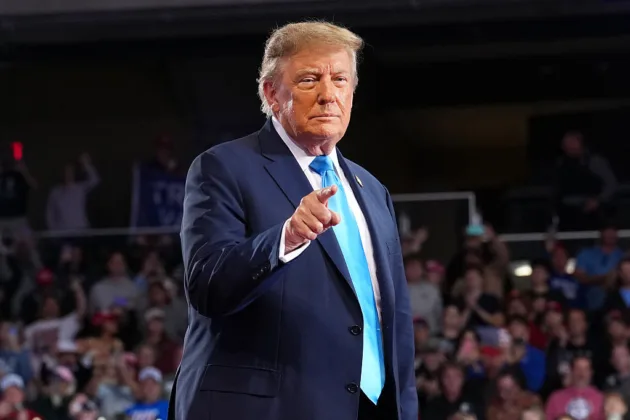
The prime minister said his Government had left Iran weaker than ever and that he would work with United States President Donald Trump to remove what he called an existential threat. Trump had intervened in the campaign nine days before the vote, warning Israelis against picking the wrong leader.
President Isaac Herzog will decide which of the two is given the first attempt at building a coalition once counting ends. Neither man can reach 61 seats without partners from outside his own bloc.
For the European Union, the arithmetic matters more than the personalities. Contacts between Israel and EU foreign policy chief Kaja Kallas have been frozen since June, and proposals to suspend all or part of the EU-Israel Association Agreement have been blocked in the Council of the European Union, with Germany and Italy among the member states opposed.
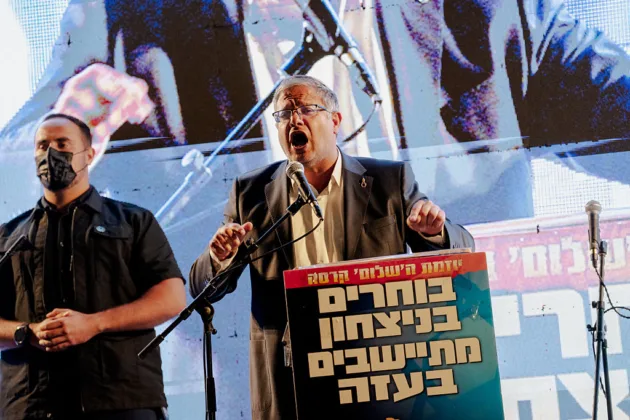
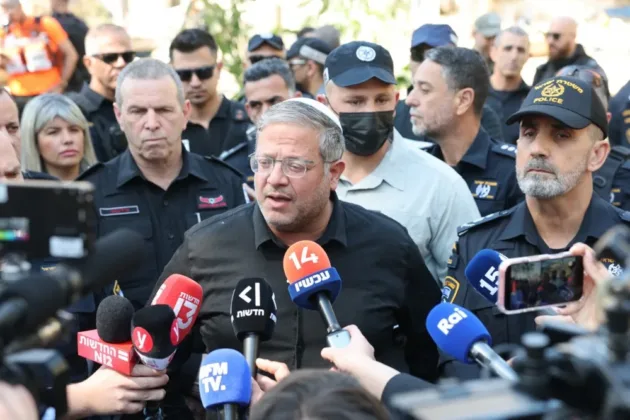
A fourth consecutive Netanyahu government would also revive the question of Itamar Ben-Gvir, the national security minister, who said in October that European foreign ministers had been given private assurances he would not sit in the next cabinet. Several EU capitals have barred him, though a proposal to place him on the bloc’s sanctions list remains stalled.