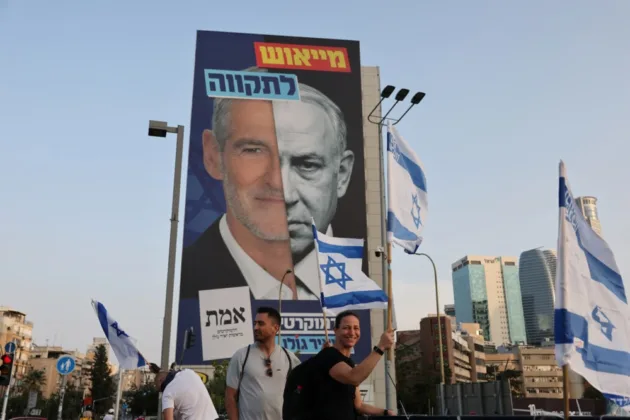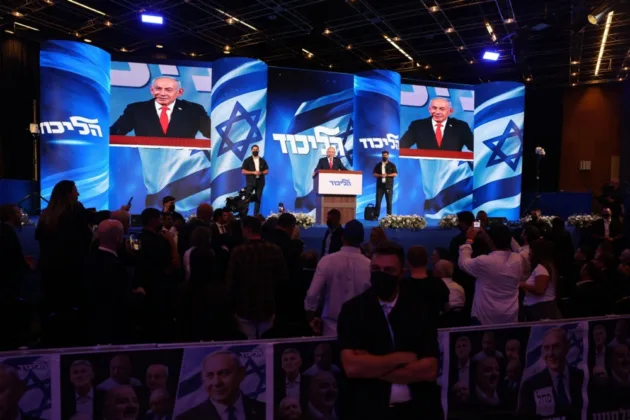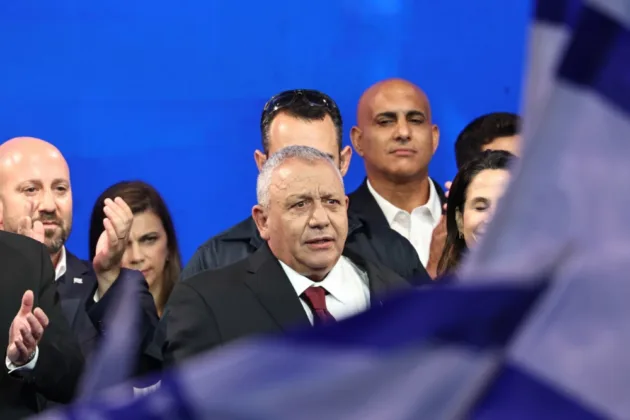









The partial count released on October 28 has produced a deadlock, but not a symmetrical one. Prime Minister Benjamin Netanyahu’s bloc stands seven seats short of a majority and Gadi Eisenkot’s camp is 13 short. What separates them is not the size of the gap but the number of ways each can close it.
With 72 per cent of ballot boxes counted, the Central Elections Committee put the Right and religious bloc on 54, Eisenkot’s camp on 48 and the Arab-led parties, which belong to neither, on 18. Three combinations get to 61 from there, and each one asks a party to undo something it said during the campaign.
The first is the largest. Netanyahu’s 54 plus the Arab seats comes to 72; Eisenkot’s 48 plus the same seats comes to 66. Netanyahu spent election night closing that door, describing the Arab parties as anti-Semitic and as enemies of the State. For Eisenkot it is the one route nobody has shut.
The second runs through Avigdor Lieberman’s Yisrael Beiteinu, a right-wing party sitting inside a bloc assembled to remove Netanyahu. Detaching it would take the Prime Minister past 61 without an Arab vote.
The obstacle is the issue that put Lieberman there in the first place. He walked out on Netanyahu in 2018 over military exemptions for ultra-Orthodox men and then refused to come back, a refusal that fed the cycle of inconclusive elections between 2019 and 2022.
Those exemptions are the load-bearing wall of Netanyahu’s 54. The ultra-Orthodox parties in his bloc are in government to protect them, so Lieberman’s price is the one thing Netanyahu cannot pay without losing seats he already holds. Eisenkot has made the same issue his own, pledging compulsory service for all, which closes that flank to him as well.
The third combination needs nobody else at all. Likud and Yashar together clear 61 comfortably, and Israel has governed that way before, most recently when Netanyahu and Benny Gantz shared power in 2020. What stands in the way is that Eisenkot built his camp around removing Netanyahu personally. The arithmetic works for a Likud under a different leader.
That is why the Arab lists have become the live question rather than a footnote, and why their internal divisions now matter more than their combined total.
Mansour Abbas’s United Arab List joined the Bennett-Lapid Government in 2021, the first Arab party to sit in an Israeli cabinet, and has not ruled out a repeat. The Joint List has consistently refused ministries and offers at most confidence and supply from the opposition benches.
The two postures buy different things. Outside support can pass a budget and keep a minority government breathing; it delivers no portfolios and it fails the first time a security vote goes the wrong way. Unless Abbas agrees to more, Eisenkot would be building on the weaker of the two.
The 18 seats are a trend rather than an accident. The Arab lists won 13 in 2015 and 15 in 2020, then fell to 10 in 2022 on a community turnout of 53 per cent. This time participation is reported to have run above the national figure of 77.7 per cent.
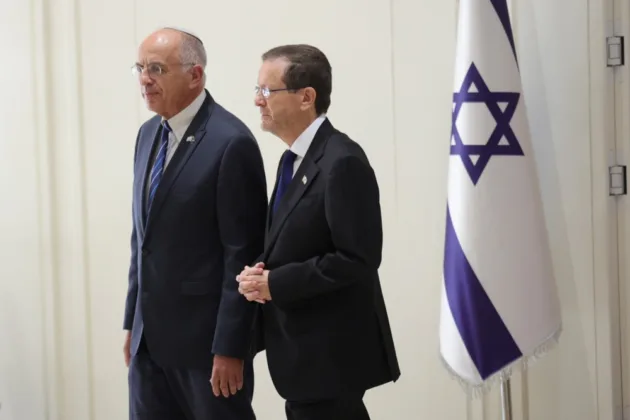
The clock is the remaining variable. Official results are due on November 4, after which President Isaac Herzog consults the parties and hands one leader a mandate. The nominee has up to 42 days to assemble a government, and if none emerges Netanyahu continues in a caretaker capacity and the Knesset can send the country back to the polls.
Brussels reads the same figures with a different interest. Contacts between Israel and High Representative Kaja Kallas have been frozen since June, and proposals to suspend all or part of the EU-Israel Association Agreement have stalled in the Council, where Germany and Italy are among the opponents. The sanction proposed against National Security Minister Itamar Ben-Gvir is stuck in the same place.
What has changed is the route around that blockage. In July the European Commission set out options on settlement goods including import licensing, higher tariffs and a partial or total trade ban, and Kallas has argued that a trade ban could be adopted by qualified majority. The argument matters precisely because unanimity is where the Association Agreement file died.
Member states have not waited for an answer. Ireland’s prohibition on designated settlement imports took effect on September 15, 2026 and a Dutch decree followed on September 22. On September 8, 11 European countries and Canada signed a joint statement of intent to restrict trade with the settlements.
So the EU’s posture is less hostage to Herzog’s decision than the Council deadlock suggests. A fourth Netanyahu government would reopen the Ben-Gvir question and harden capitals already in motion. An Eisenkot government resting on Arab votes would change the tone in Brussels without reversing a single national measure now in force.
Three routes reach 61. Netanyahu has closed the first himself, his own partners close the second and the third asks Likud to change leader.