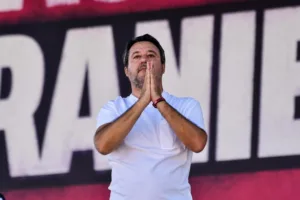

Matteo Salvini has been re-elected leader of Italy’s League (Lega), pledging to challenge the government’s continued support for Kyiv and raising fresh questions about Italy’s position on Ukraine.
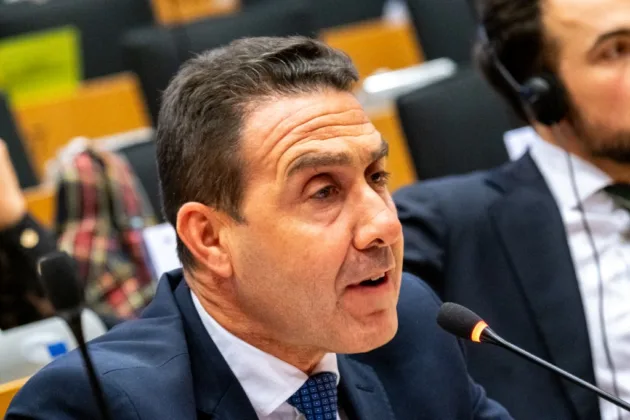
The deputy prime minister secured 465 votes at the party’s extraordinary congress in Milan on October 25, against 146 for challenger Massimo Garavaglia. Following his victory, Salvini reiterated that Italy should stop sending financial and military assistance to Ukraine, arguing that diplomacy should take precedence over further aid.
It was Salvini’s fourth term as federal secretary. Some 619 of the 705 eligible delegates took part, with three blank ballots and five spoiled papers, giving him about 75 per cent of the vote, Il Sole 24 Ore reported.
“We cannot continue to send money to Ukraine,” Salvini told delegates before the vote, according to Italian news agency ANSA. He also questioned whether sending more weapons, money and imposing further sanctions was the best way to achieve peace, saying that “wars do not end on the battlefield but at the negotiating table”, as reported by Corriere della Sera.
The extraordinary congress was called by Salvini in September amid mounting internal tensions and declining electoral support, ahead of Italy’s general election expected in 2027.
The party won 34.3 per cent in the 2019 European Parliament elections, its best national result, but has since suffered a steep decline. It secured 8.8 per cent in Italy’s 2022 general election, while the AGI/YouTrend Supermedia average published on October 22 put it at 5.6 per cent, behind its coalition partner Forza Italia on 7.3 per cent.
Garavaglia, president of the Senate finance committee and a former minister in Mario Draghi’s government, challenged Salvini over the League’s political direction and its failure to regain electoral support. “The League has lost its soul,” he declared on October 18, when he launched his candidacy, telling ANSA that the party should return to the federalist idea of its founder, Umberto Bossi. He also warned that the League’s electoral stagnation could no longer be ignored: “We won 8.8% at the elections and we haven’t grown. We need to wake up.”
Salvini’s new mandate runs for four years, until 2030. The congress also presented a revised party identity, “Lega Italia Federale”, signalling an attempt to reconnect with the League’s northern roots while maintaining its national ambitions. The new symbol keeps the medieval figure of Alberto da Giussano and drops the “Salvini premier” wording.
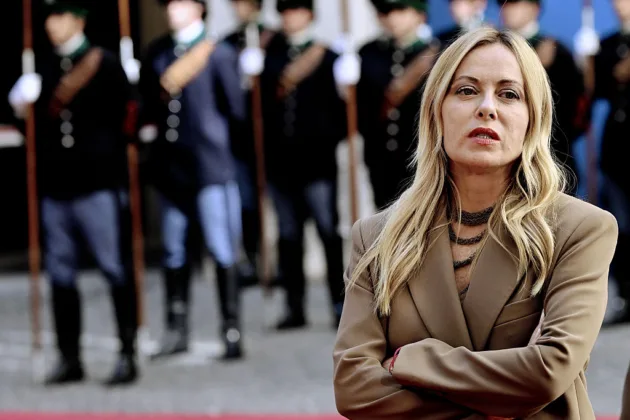
Salvini’s position puts him at odds with Prime Minister Giorgia Meloni, whose government has maintained Italy’s commitment to supporting Ukraine. According to la Repubblica, Meloni called Salvini during a break in the congress to warn that his stance risked complicating the coalition’s position, telling him he was putting her in difficulty.
Salvini subsequently toned down his immediate demands. He is not expected to seek an immediate halt at the next cabinet meeting, but the League is signalling that it will oppose a further Ukraine aid decree for 2027 if the war continues.
Italy’s authorisation to transfer military equipment to Ukraine, approved by decree on December 29, 2025, runs until December 31, 2026 and lapses unless the government issues a new one. Italy has sent 12 military aid packages since 2022, their contents classified, and the Kiel Institute puts the total value of Italian military support to Kyiv at about €1.7 billion.
Salvini told the congress that €90 billion had been sent to Kyiv. That figure corresponds to the loan agreed by the European Council in December 2025 to cover Ukraine’s needs in 2026-2027, financed through EU common borrowing and guaranteed by the EU budget rather than drawn from Italy’s national accounts.
Economy Minister Giancarlo Giorgetti, a League veteran, told the congress he believed in a national party rather than a nationalist one and warned that long spells in government bred complacency.
The dispute could become a significant test for the governing coalition ahead of the 2027 election. Salvini has strengthened his personal control over the League, but turning his anti-aid pledge into government policy would require overcoming resistance from Meloni and other coalition partners.