



Spain has become the country with the most deaths on high-speed trains in the world after the collision near Urda, in Toledo province, central Spain, on October 28, Spanish daily La Gaceta has reported.
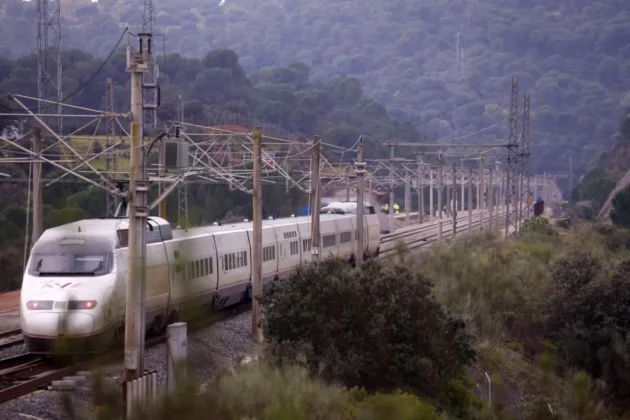
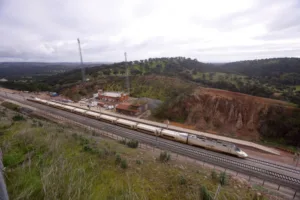
The crash, in which a Renfe AVE train running from Madrid to Seville struck the rear of a stationary Iryo service, has killed at least 68 people, the regional government of Castilla-La Mancha said. More than 100 people were injured.
It was Spain’s second high-speed rail disaster this year. Added to the 46 who died when two high-speed trains collided near Adamuz, in Córdoba province, southern Spain, on January 18, the two accidents have claimed 114 lives in little more than nine months.
That exceeds the 101 people killed at Eschede, in Lower Saxony, Germany, on June 3, 1998, when an ICE train travelling from Munich to Hamburg derailed at around 200kph and brought down a road bridge. A fractured wheel rim was found to have caused the derailment, which had until now been the deadliest accident involving a high-speed train.
Japan, which pioneered high-speed rail when the Tokaido Shinkansen opened between Tokyo and Osaka on October 1, 1964, has not recorded a single passenger death from a derailment or collision on its bullet-train network in more than six decades of operation. Even when a Shinkansen derailed at speed during the Chuetsu earthquake in Niigata in October 2004, none of those on board was hurt.
Before this year no passenger had died on Spain’s dedicated high-speed lines since the first AVE service, between Madrid and Seville, opened in April 1992. The network has since grown to almost 4,000km, the longest in Europe and second in the world only to China’s.
Eurostat figures for 2023 gave Spain the best rail safety record in the European Union, with fewer than one railway death per million inhabitants. The worst Spanish rail accident of recent decades, the derailment of an Alvia train at Angrois, near Santiago de Compostela in Galicia, northwest Spain, in July 2013, killed 80 people but took place on a conventional stretch of line rather than on dedicated high-speed track.
Both of this year’s accidents happened on the Madrid-Andalusia corridor, the oldest high-speed line in the country.
Spanish transport minister Óscar Puente said a computer failure had knocked out signalling along a 63km stretch of that line on October 28, halting six trains. The control centre in Madrid of Adif, the State-owned company that manages Spain’s railway infrastructure, then took manual command and allowed the Renfe train to continue past a red signal, he said, describing the decision as inexplicable.
The train travelled around 25km before hitting the Iryo service at high speed near Urda station. The Renfe train was carrying 397 passengers and the Iryo train 147, regional officials said.
Puente has refused to resign. The CSIF trade union, which represents public sector staff including rail controllers, accused him of making a railway traffic controller a scapegoat rather than accepting responsibility himself.
Hundreds gathered outside the transport ministry in Madrid on the night of October 28 to demand that Puente and Prime Minister Pedro Sánchez step down. Police used batons and tear gas to disperse them.
Sánchez, who faces a general election on November 29, said from Urda that it was unacceptable for a country such as Spain to suffer two high-speed accidents in the same year. The Spanish Government declared three days of official mourning from October 29 to 31 and the opposition People’s Party (PP) cancelled its campaign events for the day.
In the Adamuz crash an Iryo train travelling from Málaga to Madrid with around 300 people on board derailed at about 7.45pm and crossed onto the opposite track into the path of an oncoming Renfe Alvia service bound for Huelva. The driver of the Renfe train was among the dead.
The Iryo train was travelling at about 110kph on a straight stretch of track, well below the 250kph limit, and the Renfe service struck its rear carriages around 20 seconds after it derailed, officials said at the time. Puente called the accident “tremendously strange” and said the derailment alone would probably have killed nobody had the second train not been coming the other way.
Spain’s rail accident investigation commission, the CIAF, has pointed to a fractured rail as the cause and a court in Montoro, Córdoba, is conducting a parallel judicial investigation. Puente said at the time that the stretch of track had been fully renovated in May 2025 and that the Iryo train was less than four years old.
Spain opened its high-speed network to private competition in 2020, as required by European Union rules on liberalising passenger rail services across member states. Iryo, a joint venture between Italian State railway Ferrovie dello Stato, airline Air Nostrum and infrastructure fund Globalvia, began operating in 2022 and has been involved in both of this year’s accidents, first as the train that derailed and then as the stationary train struck from behind.