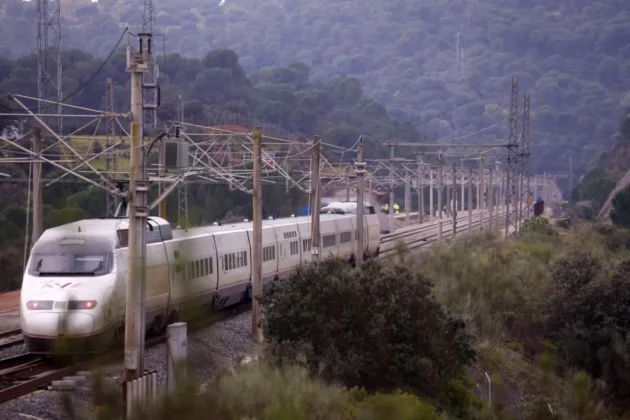




The Spanish Government has insisted that the country’s railways remain safe hours after a high-speed train ploughed into the rear of a stationary service in Toledo province, killing at least 64 people.
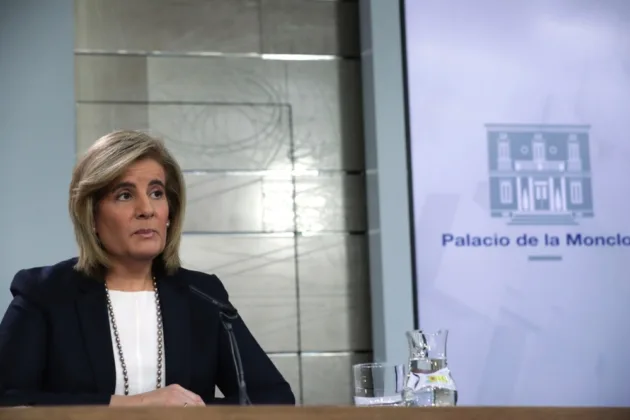
Transport Minister Óscar Puente said he was devastated by a disaster he described as inexplicable, though he defended the reliability of the system when pressed by reporters at a press conference at Adif’s network control centre in Madrid.
He said the Spanish network was comparable to those of neighbouring countries and governed by extensive regulation and clear protocols. Failures could still occur within the limits of rolling stock, infrastructure and human performance, he added, as in road or air transport.
The collision happened at 8.54am at kilometre point 118 of the Madrid-Seville high-speed line, where an Iryo service had come to a halt and was struck from behind by a Renfe AVE.
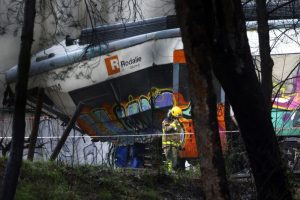
Four carriages left the track and two of them fell down an embankment, according to Guardia Civil sources. There were 544 people on board the two trains, the Castilla-La Mancha regional government said.
Trains on the stretch were running under lateral signalling after a failure in the LZB safety system, according to railway sources. Investigators were examining possible human error, although no cause had been established.
It was the second mass-casualty crash on the same corridor in nine months. Some 45 people died on January 18 when an Iryo train derailed near Adamuz, in Córdoba province, and was hit by an oncoming Renfe service.
CIAF, Spain’s rail accident investigation body, found that a fracture in the rail had preceded that derailment. The case is before the National Court and prompted a three-day national drivers’ strike in February.
Spain operates the largest high-speed network in the European Union and successive governments have presented it as a showcase of State investment. The European Union Agency for Railways said after the January disaster that it was monitoring the situation with the European Commission.
Prime Minister Pedro Sánchez suspended his engagements for the day and Castilla-La Mancha President Emiliano García-Page travelled to the site. The conservative Partido Popular (PP) and other parties called off their campaign events.
European Commission President Ursula von der Leyen said on X that her heart went out to the families of the victims. “Today, Europe mourns with you,” she wrote.
Adif suspended high-speed traffic between Madrid and Andalusia until further notice and Renfe offered passengers free changes and cancellations. Officials said the death toll was provisional, and Spanish media were reporting higher figures by Wednesday evening.