



Spain’s two right-wing parties have agreed to stop running against one another in part of the Senate contest, in a pact that alters the arithmetic of the general election on November 29.
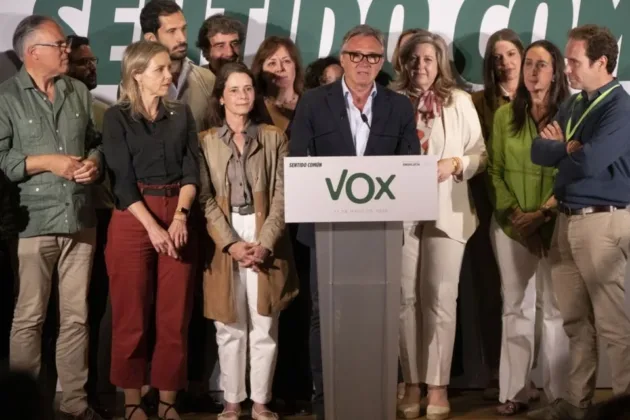
Vox has placed 20 people connected to the party, standing as independents, on Partido Popular (PP) lists for the upper house. They are running in Las Palmas and Santa Cruz de Tenerife in the Canary Islands, Baleares, Cádiz in southern Spain, and Castellón and Valencia on the Mediterranean coast, the party confirmed on October 26, as reported by Europa Press.
In exchange, the PP has dropped out of three provinces where Vox runs alone: Guipúzcoa in the Basque Country, and Girona and Tarragona in Catalonia. Vox has separately cut its own ticket to a single name in 14 other provinces, among them Sevilla, Zaragoza, Navarra and Asturias.
PP secretary general Miguel Tellado announced the agreement at the party’s Madrid headquarters. He called it very good news for Spain.
The Vox names are drawn largely from the party apparatus. Miguel Rovira, communications director of the Fundación Disenso, the party’s think tank, stands third in Castellón, eastern Spain.
José Luis Aguirre, a former deputy in Les Corts, the Valencian regional parliament, is second on the PP list in Valencia. The writer Enrique García-Máiquez is third in Cádiz.
Three of the party’s press staff — Alba Moreno, Yeray Suárez and Belén Bordils — take places in Las Palmas and Mallorca, each accompanied by one or two substitutes also drawn from Vox.
The stand-down is granular rather than blanket. Vox is not contesting Ibiza, Menorca, Fuerteventura, Lanzarote, La Gomera, El Hierro or La Palma, though Vicente Tur heads its list in Formentera.
The Senate is elected by a system that punishes a divided field. Mainland provinces return four senators each and voters may mark only three names, so the leading list normally takes three seats and the runner-up one.
Island constituencies and the North African cities of Ceuta and Melilla return between one and three senators. In all, voters fill 208 of the chamber’s 266 seats; the remaining 58 are appointed by regional parliaments.
Because the ballot rewards concentration, two lists on the same side of the spectrum can take a majority of the vote in a province and still hand seats to a single opposing list. The pact removes that risk in the places where both parties judged it real.
Sources close to the negotiation, cited in the Spanish press, put the combined target at between 125 and 140 senators, and attribute 11 or 12 of them to the withdrawals.
The chamber cannot stop ordinary legislation outright. Congress overrides a Senate veto by an absolute majority, or by a simple majority after two months, so the chamber’s weight lies in delay and amendment.
Its appointments power is harder to get around. A three-fifths majority in the Senate is required to put forward four of the 12 judges of the Constitutional Court and 10 of the 20 members of the General Council of the Judiciary.
Vox leader Santiago Abascal, speaking at an event in Talavera de la Reina, central Spain, pointed to four Constitutional Court seats falling due for renewal in the next parliament. He described his party’s withdrawal as a patriotic gesture.
An absolute majority in the Senate is also the constitutional condition for applying Article 155, the provision invoked against the Catalan government in 2017.
The agreement answers one reached 10 days earlier on the other side of the spectrum. On October 16 the Partido Socialista Obrero Español (PSOE) registered a joint Senate coalition with Frente Amplio, the Broad Front grouping, under the label Senado de Progreso, or Senate of Progress.
It runs a single ballot paper in 47 constituencies and takes in Izquierda Unida, Movimiento Sumar, Más Madrid, Compromís, Chunta Aragonesista, Batzarre, Més and Ceuta Ya. Podemos is not part of it, and it does not apply in Catalonia or the Canary Islands, with the exception of La Gomera.
The PP won 120 directly elected seats in 2023 against 72 for the PSOE, an absolute majority it has held throughout the parliament. Had the Left run on one ballot that year, Infobae calculated, the PP would have taken 81 seats and the two left-wing lists 116 between them.
Prime Minister Pedro Sánchez attacked the pact on X, writing that the PP and Vox amounted to one political project of regression. PSOE organisation secretary Rebeca Torró said the two parties’ colours had become indistinguishable.
Félix Bolaños, Minister of the Presidency and Justice, called their electoral understanding the Spanish branch of what he termed the hard-line international.
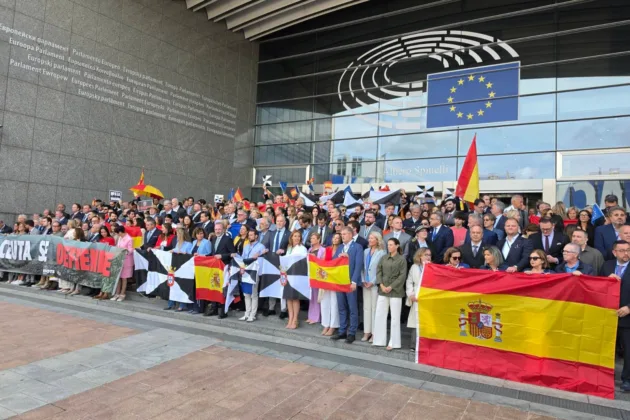
The two parties sit apart in Brussels. The PP belongs to the European People’s Party and Vox to Patriots for Europe, which it joined in 2024 after leaving the European Conservatives and Reformists.
Congress is unaffected by the deal, and there the two run separately. An average of recent surveys compiled by the polling tracker DatosClaros puts the PP on 30.5 per cent, the PSOE on 27.4 per cent and Vox on 18.7 per cent, with no party close to the 176 seats needed for a majority in the lower house.