


The administration of US President Donald Trump has pushed former Hungarian prime minister Viktor Orbán to run for United Nations Secretary-General as a joint candidate of the United States, Russia and China. The Wall Street Journal reported the move on October 25, citing sources in three countries.
The idea began in Washington, where US officials weighing a successor to António Guterres said they wanted “someone like Orbán”. Their Russian and Chinese counterparts agreed and American officials then approached him directly.
A State Department official estimated Orbán could take eight of the 15 Security Council votes comfortably, with 10 within reach. Britain and France were not reported to have taken a position and either could sink the bid with a veto.
Orbán was said to be interested though unwilling to enter a contest he could not win. He declined to comment.
Trump and Vice-President JD Vance are expected to support him, with any announcement held back until after the US midterm elections in November.
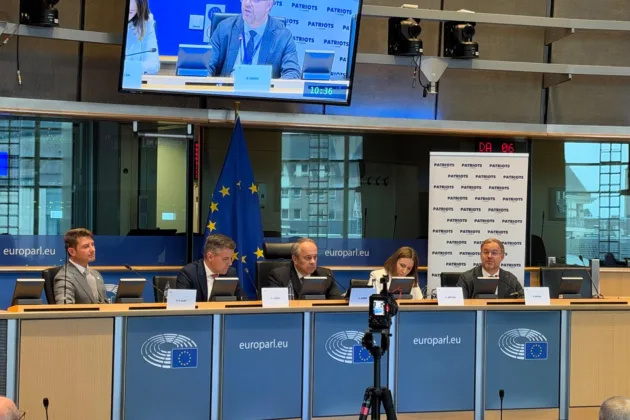
Orbán lost power on April 12 after 16 years in office, when Péter Magyar’s Tisza party took a two-thirds majority in Hungary’s parliament. He remains leader of Fidesz, which sits in the Patriots for Europe group he founded in the European Parliament.
Hungary’s new Government has since amended the constitution to cap prime ministers at eight years calculated back to 1990, a change Fidesz says was drafted to keep Orbán out of office for good. Prosecutors detained two ministers from his governments on September 28 as part of a wider corruption inquiry.
Reporting since May has linked Orbán’s interest in a senior UN post to those investigations. The Secretary-General enjoys full diplomatic immunity under the 1946 Convention on the Privileges and Immunities of the United Nations.
Guterres leaves office on December 31 and his successor takes over on January 1, 2027. An informal rotation points to Latin America and the Caribbean, and Rebeca Grynspan of Costa Rica led the Security Council straw poll of October 16.
Nobody from eastern Europe has ever held the post. Candidates must be nominated by a member state and no country has publicly offered to put Orbán forward, nor have Moscow and Beijing confirmed they would back him.
An Orbán candidacy would test a European Union that spent most of the past decade fighting him over migration, the rule of law and Ukraine. Brussels welcomed his defeat in April, and the Commission has since released some €16.4 billion in funds frozen under his rule.