




The European Commission has proposed lending Ukraine up to €45 billion more for 2027, with Kyiv obliged to repay the principal only once Russia pays war reparations.
The money would cover about two-thirds of the €70 billion shortfall the EC has estimated Ukraine faces in 2027. Partners outside the bloc are expected to supply the remaining third.
Added to the €45 billion still due in 2027 under the €90 billion loan agreed in December 2025, European funding for Kyiv could reach €90 billion over the year.
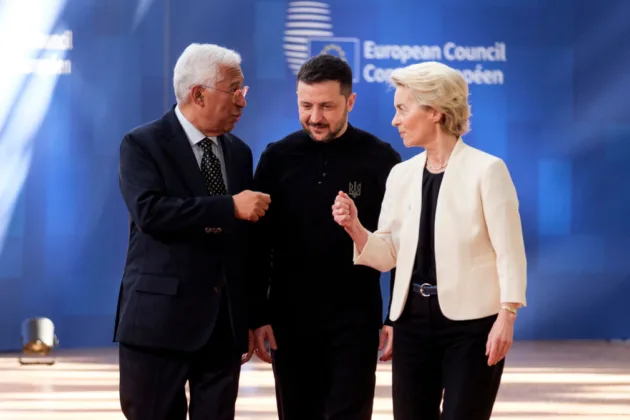
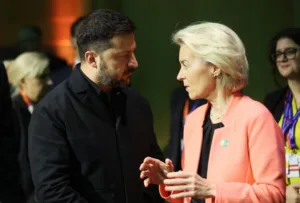
EC President Ursula von der Leyen told reporters in Brussels on November 18 she was confident all 27 member states would agree. She described the loan as “the best way to give Ukraine a strong hand at the negotiation table”.
Four governments have already said they would stay out. Slovakia, the Czech Republic, Hungary and Bulgaria have signalled they would not put further money into Ukraine, and the first three secured exemptions from guaranteeing the existing loan.
Slovak Prime Minister Robert Fico accused German Chancellor Friedrich Merz of blackmail on November 10 after Berlin threatened to block the European Union’s 2028-2034 budget unless every member state helped fund Kyiv.
Bulgarian Prime Minister Rumen Radev has said his country would stay out because of its excessive budget deficit, though it would not block a joint decision.
Von der Leyen backed Merz’s demand that all 27 contribute through the common budget. In July, Merz had called for cuts of several hundred billion euros to that same budget, citing difficult consolidation decisions at home.
Under the plan, up to €25 billion would go on military aid. The remaining €20 billion would support Ukraine’s state budget and public services.
Budget payments would depend on Kyiv continuing reforms, including on the rule of law and corruption.
The money would be raised through EU borrowing on capital markets, backed by the EU budget and rolled over until reparations arrive. Brussels reserved the right to use immobilised Russian assets to repay it.
Defence Commissioner Andrius Kubilius said Russia was expected to use some 20 million drones against Ukraine in 2027, double the 2026 figure. Drones would make up 62 per cent of Ukraine’s weapons needs in 2027, he said.
He said Brussels was preparing €14.4 billion in drone and munitions contracts under the existing loan so payments could begin in January.
Kubilius also described the shortage of interceptors capable of stopping Russian ballistic missiles as a “serious problem”. He urged member states to hand Kyiv Patriot missiles from their own stocks in exchange for those Ukraine has on order for 2028-2029.
Von der Leyen said the EC would present its 22nd sanctions package against Russia in the week beginning November 23.
EU leaders are due to discuss the loan for the first time at their summit in Brussels on November 26, as the Ukraine war nears its fifth anniversary.