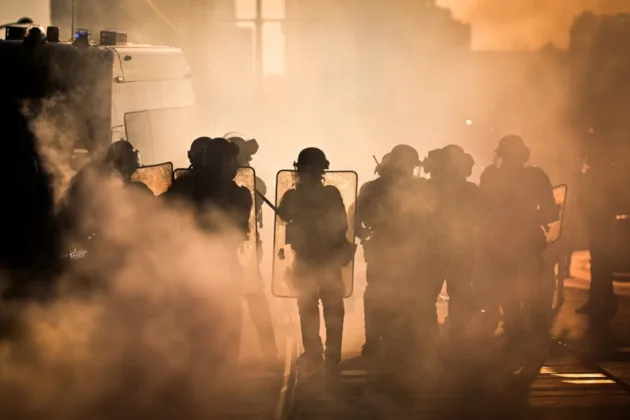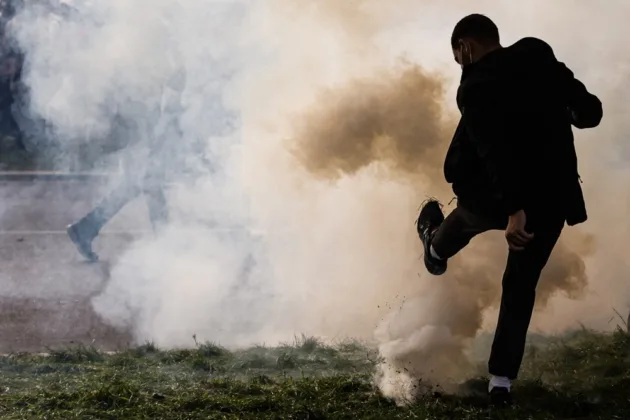






There is a difference between a trigger and a reason: The school revolt that has shaken France since September took off at a lycée in Créteil, which its pupils blockaded the day after their teachers had gone on strike over a lack of staff and resources. Yet nobody will tell the story of this autumn as a story of understaffed schools. After October 17, when 550,000 people marched and, according to Reuters, some 3,000 businesses were ransacked within 24 hours and the town hall of Limoges was set on fire, it had become abundantly clear that the understaffed schools were a symbol of something much deeper.
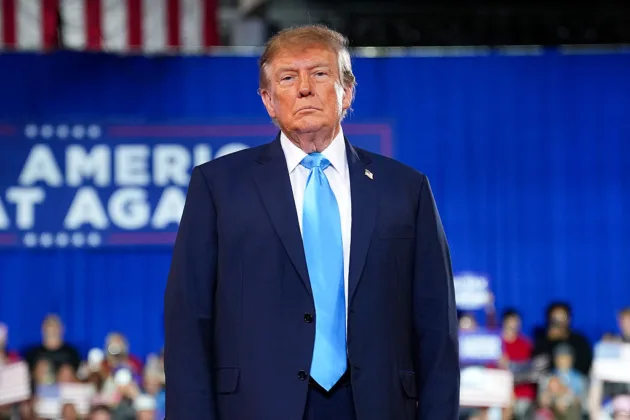
I opened a column with the same sentence in July 2023, after the death of Nahel Merzouk, and added that everyone knows that the powder keg in the French banlieues could go off again at any moment. It took three years, and once again everybody immediately retreated to their usual explanatory frames: Donald Trump declared that what is happening in France is “nothing less than out of control mass migration”, while Emmanuel Macron blamed the ultra-left and the delinquents who had joined it. Unfortunately, both of them are half right and half wrong.
According to the French justice ministry, seven in ten of the first people who were jailed were French nationals, almost all of them born in France, and the rest were foreigners — which is three times their share of the population (and, by the way, roughly their usual share among theft suspects). The ministry’s figures say nothing about origin beyond nationality and place of birth, but one can draw conclusions from names, which is what the political scientist Jérôme Fourquet did, as the Frankfurter Allgemeine reported. In the press coverage of the fast-track trials that followed October 17 he found some 70 defendants with enough biographical detail, and three quarters of them carried a first name of Arab-Muslim or African origin. It is, as Fourquet himself concedes, a limited base, since it covers fewer than one in ten of those sent to a fast-track trial, and French fact-checkers call the figure unreliable. As I said on British television last week, it is not true that these are all migrants, but the migrant component is not something to be ignored either.
In 2023 I also argued that a crisis of identity cannot be solved by a slightly larger government cheque or an additional metro line into the city centre. Alas, even this is no longer an option. A rich country can paper over such problems, but with public debt at 119 per cent of GDP France is one of the first major European countries that is quite literally running out of money. One teaching hour in ten at its public secondary schools was never delivered in the school year before last, and of every nine removal orders the Republic issues it carries out one.
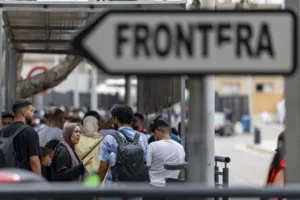
None of this is addressed by the European Union’s migration pact, which regulates arrivals: Who has to register them, who has to examine their claims, and how they are distributed among the member states. Even this is not working, since against a reference figure of 21,000 relocations the member states pledged fewer than 9,000, while Czechia, Croatia, Austria and Poland were granted a total exemption. One could ask how many exemptions it will take for them to become the new rule. It is true that irregular border crossings have more than halved since 2023, but to conclude that the problem is solved is like saying that if your bathtub is flowing over, all you have to do is turn off the tap. If half your bathroom is under water, turning off the tap is simply not enough.
In June 2024 the European Court of Justice ordered Hungary to pay €200 million and a daily fine of €1 million until Budapest follows EU regulations, and by now the bill has passed a staggering €1 billion. Of course, the judges did not punish the border fence but the fact that Budapest had ignored an earlier ruling on access to asylum procedures. Behind the headlines, though, both the European Commission and individual member states are moving closer to the Hungarian position: Poland has suspended the right to claim asylum at its border with Belarus for more than a year and a half, and the migration Commissioner Magnus Brunner called this “correct under EU law”. It is hard to think of a more obvious double standard, but I split my time between Vienna and Budapest, so do not take my word for it. Take the word of Péter Magyar, the man who unseated Viktor Orbán and who complains that Hungary “has to pay a million euros a day for a measure that others are also taking”.
In October 2023 I wrote here that there is no way for Germany, Belgium, Sweden or France to continue their claim that they have a better immigration policy than, for example, Poland and Hungary. They have not said it yet, I added, but Warsaw and Budapest will point out what has become obvious. The day after the town hall of Limoges had burned, they did. Magyar, who was a member of Fidesz until five minutes ago, wrote that “perhaps it is now clear to everyone why Hungary takes the toughest possible stance on migration”. Donald Tusk — hardly a right-wing populist — announced that “Poland will not repeat the mistakes of other European countries, nor will it pay for them”.
The Commission’s own report from earlier this month already speaks of “the review planned for 2027”. It should begin now, and it should ask the question the pact avoids: How many newcomers can a state absorb and still remain one? The answer (fences and external processing included) should be left to national governments, who will be voted out if they get it wrong. European leaders should start to recognise this, because the people did so a while ago.