




French households and businesses could soon see their insurance bills rise to subsidise the cost of recurring urban unrest, as the government prepares to introduce a nationwide 0.8 per cent levy on property, vehicle and commercial contracts to bankroll a State-backed riot compensation fund.
The planned surcharge, framed by authorities as a mandatory “solidarity contribution”, is slated to take effect on January 1, 2027, under secondary legislation that is still to be approved.
The principle was written into France’s 2026 budget law in February. The draft decrees still require the backing of the Council of State and the European Commission.
The mechanism is designed to finance a dedicated mutualisation pool managed by State-owned reinsurer Caisse Centrale de Réassurance (CCR).
Under the framework, primary insurers facing catastrophic damage from riots, civil commotion and looting would be able to cede claims to the fund, which would guarantee reimbursements of at least 90 per cent of ceded losses.
The fund would be triggered only when damage passed set thresholds, such as €700,000 in insured claims, according to Le Journal du Dimanche.
It is similar to the principles covering the damage caused by natural disasters under France’s CatNat regime.
Government estimates reported by Les Échos project the levy would raise roughly €400 million annually, while the fund would benefit from a State guarantee capped at €4 billion a year.
The move follows consecutive waves of severe civil unrest that have battered the French treasury and domestic insurers.
The summer riots of 2023, sparked by the police shooting of 17-year-old Nahel Merzouk, generated a record €793 million across some 16,400 insurance claims, according to industry body France Assureurs.
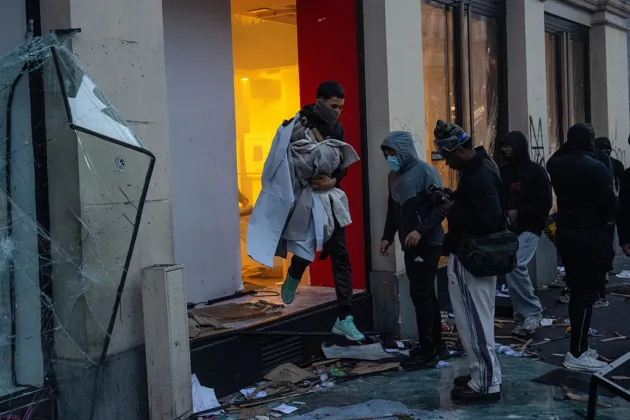
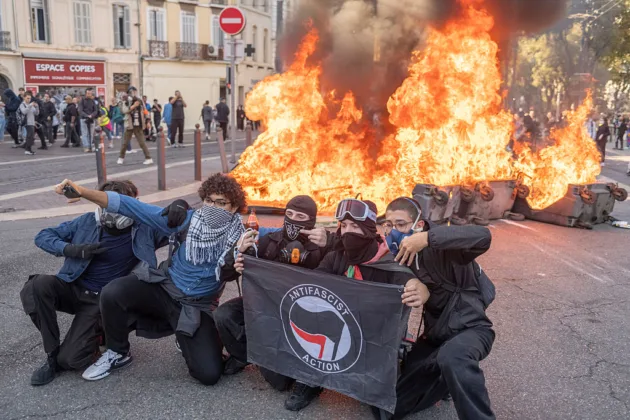
Meanwhile, nationwide strikes and violent demonstrations against the cost of living on October 17 and 18 left a trail of torched vehicles, pillaged retail chains and municipal arson that rating agency Morningstar DBRS has warned could cost the sector up to €1.2 billion.
The new fund would not apply retroactively to that damage.
Faced with escalating compensation costs, French carriers have systematically hiked premiums and widened deductibles and, in many high-risk suburban districts, refused to underwrite small businesses altogether.
By spreading the financial burden across all policyholders, Paris aims to avert an insurance desert in volatile urban zones.
The measure has ignited a sharp public and political backlash though, with critics dubbing it an unfair “riot tax” (taxe émeutes).
Opposition lawmakers and consumer groups argue that law-abiding families and rural businesses, who live hundreds of miles from metropolitan flashpoints, are being forced to foot the bill for the State’s persistent failure to maintain law and order.
One parliamentary amendment, filed by centrist Democratic Movement (MoDem) MPs, described it as “double taxation” imposed on citizens “when the State has failed in its mission”.
The government has argued in parliament that the scheme is not a new tax but a form of solidarity between insurers.
Earlier, the French Government issued a ministerial circular that would allow authorities to cut social welfare benefits for people convicted of looting and rioting during the urban unrest that began on October 17.
This directive aims to deduct the estimated financial gains derived from selling stolen goods directly from State assistance payments. “Rioters, looters, thieves: Welfare benefits are over!” housing minister Vincent Jeanbrun wrote on X on October 19.
Similar legislation was proposed in Italy too. A Brothers of Italy (FdI) bill tabled in the Senate on September 18 would let municipalities suspend benefits for families of convicted minors.
More than 100 police officers have been injured and 54 people arrested after rioting erupted in Frankfurt, Germany’s financial capital and home of the European Central Bank, following a day of youth-led protests across the country.https://t.co/DjRiRzqRmA
— Brussels Signal (@brusselssignal) November 2, 2026