





New wind farms planned for construction off the Belgian coast by 2030 could reduce the electricity output of existing wind farms to the east by up to 15 per cent.
That was according to a study by the Leuven University, which looked at the effects of new wind farms near the cities of De Panne and Koksijde that it said would take wind away from already active offshore wind farms in the east.
The older facilities could see an 8.5 per cent reduction in electricity production, with losses reaching up to 15 per cent on particularly windy days.
Despite these findings, the new wind farms are deemed essential for ensuring a stable power supply and meeting Belgium’s climate objectives.
Professor Nicole van Lipzig, a geography expert at Leuven University, told Belgian media outlet VRT NWS that if the full 3.5 gigawatts of new wind turbines were constructed in the Princess Elisabeth Zone, the existing wind farms would experience a notable decrease in output.
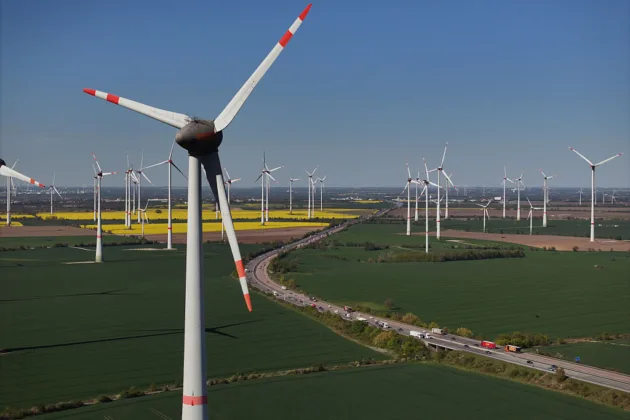
This phenomenon, known as the “wind shadow effect”, occurred when wind turbines were situated too closely together, causing them to intercept wind from one another and thus generate less electricity.
“That effect is felt up to 55 kilometres beyond a wind farm,” Van Lipzig said. “At the closest point, the wind farms, meaning the eastern zone and the new zone, are only 10 kilometres apart. So yes, that effect definitely plays a role.”
Bérénice Crabs, a spokesperson for the offshore wind energy sector, acknowledged the known challenges of wind shadow effects. She emphasised the need to account for these effects in planning and noted the crowded nature of the Belgian North Sea, which hosted numerous facilities.
Dutch consumers could pay three times as much for electricity after an ambitious offshore energy expansion, barring a massive change to the current financing model. https://t.co/QUXLfnK4Z9
— Brussels Signal (@brusselssignal) May 30, 2025
The limited space in this area, which also accommodated fishing, sand extraction, shipping, and underwater cables, further complicated the development of wind energy projects.
The positioning of the Princess Elisabeth Zone to the southwest of the existing wind farms placed it directly in the path of the prevailing winds, which predominantly come from the west and southwest.
This alignment meant the new wind farms would intercept a significant portion of the wind that would otherwise reach the older turbines.
Comparative analysis with other North Sea wind zones showed varying degrees of wind shadow impact.
For instance, one British zone experienced a minimal impact of a 3.3 per cent loss, while a Dutch zone saw a 4.6 per cent reduction. In contrast, two German zones faced more substantial impacts of a 17.3 per cent fall and one of 19.3 per cent, highlighting the severe space constraints and unfavourable wind directions in those areas.
Despite these challenges, the Belgian offshore wind sector remained committed to the new projects. The industry argued that the long-term benefits, including meeting climate goals and enhancing energy security, outweighed the drawbacks.
The newer turbines were more efficient and would help mitigate the losses caused by wind shadow effects, it was argued.
The Belgian Government has considered reducing the number of new wind farms, particularly debating the construction of a third park.
Some researchers, though, have cautioned against this. They argued that all 3.5 GW of new capacity was crucial for achieving climate targets and that scrapping the third park would not significantly reduce the wind shadow effect on existing farms.
Costs for an energy island in the North Sea, connecting offshore wind farms, have turned out to be more than three times as high as expected. https://t.co/jdc3ohnLuY
— Brussels Signal (@brusselssignal) October 25, 2024