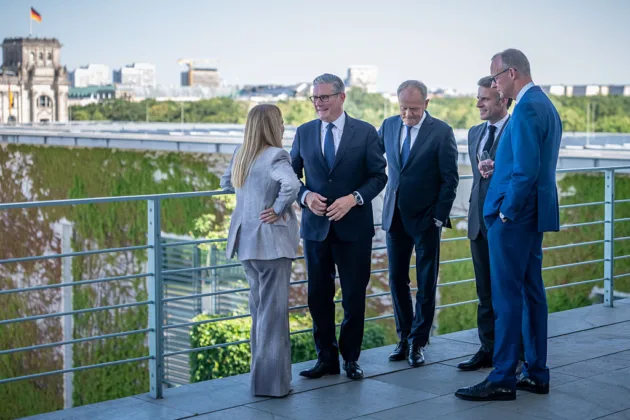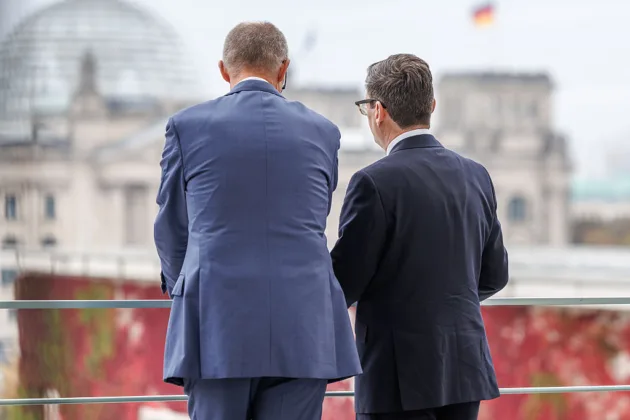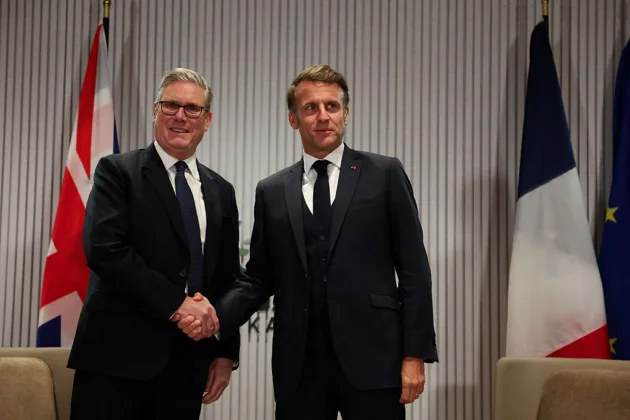


The leaders of Europe’s five biggest military powers have been called to Berlin for a summit on June 24, as the continent seeks a greater role in efforts to end the Ukraine war.
The Italian Government said Prime Minister Giorgia Meloni would attend the meeting alongside her British, French, German and Polish counterparts.
The announcement came shortly before British Prime Minister Keir Starmer said he would step down as Labour Party leader, while remaining as Prime Minister until a successor is chosen.
That timing means Starmer could still travel to Berlin, even as his government is consumed by a leadership contest at home.
The so-called European Group of Five (E5) was formed in 2024 amid mounting calls for European rearmament and closer coordination in arming Ukraine against the Russian invasion.
Until now the format had met only at defence-minister level, making the Berlin gathering its first summit of national leaders.
German Chancellor Friedrich Merz had announced the meeting earlier, though without initially confirming a date.
The talks are also intended to align European positions ahead of the NATO summit in Ankara on July 7-8, as the bloc weighs how to respond to a more sceptical United States under President Donald Trump.
They follow the G7 summit in Évian-les-Bains, eastern France, which ended on June 17 and was attended by Ukrainian President Volodymyr Zelensky.
There, leaders agreed to step up deliveries of air defence equipment to Ukraine and to tighten sanctions on Russia, including on its oil and gas sectors.
G7 leaders also agreed to grant licences for Ukraine-based firms to produce long-range missiles and air defence systems, according to a diplomatic source.
Zelensky has pressed Europe to do more as US-led efforts to halt the fighting have stalled.
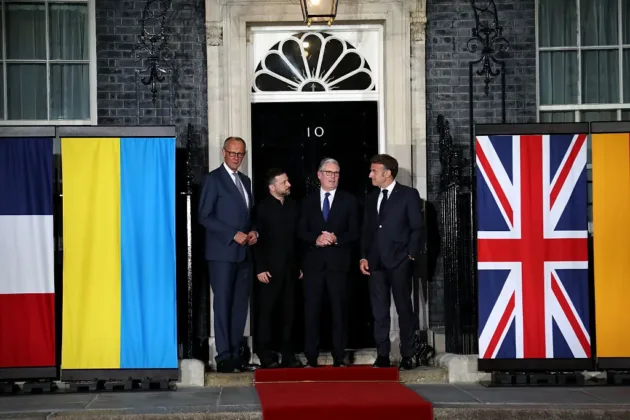
The Berlin talks are also expected to tackle how Europe should deal with Russia, which has divided its capitals. Macron and Merz want any negotiations led by the E3 of France, Germany and Britain, irritating Italy and Poland, which were excluded from preparatory talks with Zelensky in London on June 7.
Attention has also turned to a quieter initiative that has split the bloc. A European Union official said the office of European Council President António Costa had made “brief contacts at diplomatic level” with Moscow to open communication channels.
Costa, who chairs summits of the 27 member states, faced pushback from several capitals wary of any outreach to the Kremlin.
Diplomats said a number of leaders objected to his approach at the European Council summit in Brussels on June 18-19, arguing it had not been coordinated with them.
Costa later defended the move, saying the European Union needed a direct line to Russia to support Ukraine diplomatically as well as militarily.