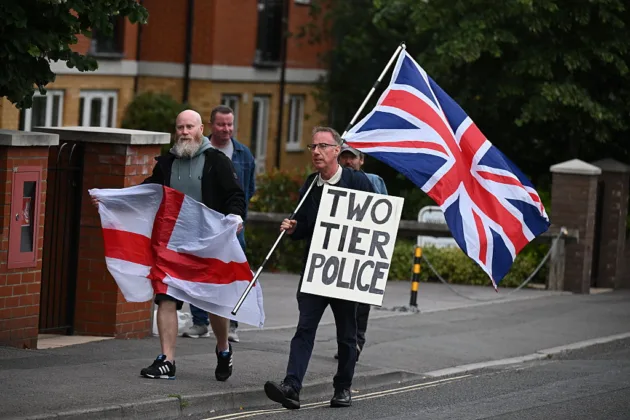



The murder of Henry Nowak has reignited a political fight over the religious exemption that lets Sikhs carry a ceremonial blade in public, with Reform UK pledging to scrap it.
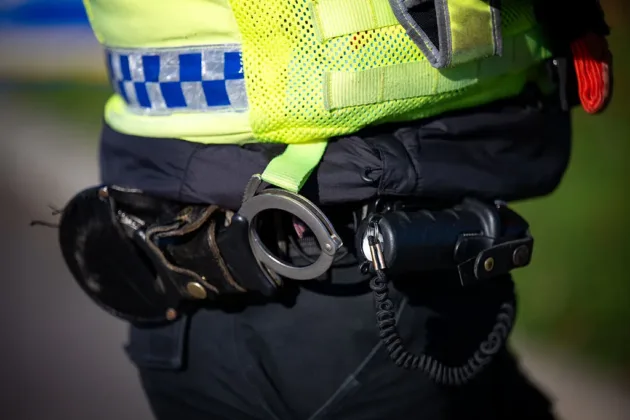
Nowak, 18, was stabbed to death in Southampton, southern England, in December 2025 by Vickrum Digwa, 23, who falsely claimed the student had racially abused him. The bodycam footage of police handcuffing the dying teenager, and the storm around it.
Digwa, a Sikh, killed Nowak with a kirpan. That single fact has now turned attention to a corner of British law that most voters had never thought about.
The kirpan is one of the Five Ks, the articles of faith worn by initiated Sikhs. It symbolises a duty to defend the faith and protect the weak, and is usually a small, sheathed dagger worn out of sight.
Carrying a bladed article in public is generally an offence under section 139 of the Criminal Justice Act 1988. The same act, though, provides a defence for anyone who carries one “for religious reasons”.
That defence is what lets practising Sikhs wear a kirpan from day to day. The Offensive Weapons Act 2019 went further, preserving the possession and supply of large ceremonial kirpans, with blades of 50cm or more, used in worship.
Most everyday kirpans carry a blade of about three inches. The one Digwa used measured 21cm, and reports said he was also carrying a second knife.
THE CASE FOR REPEAL
Reform UK, the anti-immigration party that has been leading national polls, has seized on the case. Reform UK MP Robert Jenrick, who defected from the Conservatives in January, said the party would end the exemption and expand stop and search.
His colleague Zia Yusuf, Reform’s home affairs spokesman, wrote on X: “Reform will repeal the exemption for Sikhs to carry the Kirpan.” The principle at stake, the party argues, is equality before the law.
Jenrick has also written to Home Secretary Shabana Mahmood demanding an overhaul of police “anti-racist” training, calling on the authorities to act in a “colour-blind way”. He has argued that Nowak’s death should be treated as Britain’s George Floyd moment.
Figures in the Conservative Party have echoed the call to revisit the exemption, framing it as one rule for everyone.
The argument lands at a charged moment. Immigration has returned to the top of the public’s worries, with 41 per cent naming it an important issue facing the country in the May Ipsos Issues Index, up nine points in a month.
Among Reform supporters that figure reached 83 per cent. For a party built on immigration and integration, a case that fuses knife crime, policing and a minority religious right is potent material.
RELIGIOUS FREEDOM AND THE LAW’S LIMITS
Sikh organisations have pushed back hard, warning that an entire community is being blamed for one man’s crime. Labour MP Sarah Coombe defended the kirpan, writing that a community “cannot be tarred by the horrendous actions of one person”.
Sikh groups also stress what the blade means. It is a mandatory article of faith, not a fashion choice or a cultural quirk, and tens of thousands of law-abiding Sikhs carry one without incident.
Legal commentators have made a narrower point. The exemption is not unlimited: it protects a blade carried for genuine religious reasons, and a court weighs the carrier’s faith and the surrounding circumstances.
On that reading, the law never sanctioned what Digwa did. He committed murder, and no religious defence covers that, whatever he later claimed about why he was armed.
Critics of a ban add that outlawing the kirpan would not have stopped a killer willing to carry a second, unexempted knife. It would, though, curtail the religious freedom of a peaceful minority over the actions of one murderer.
A WIDER EUROPEAN QUESTION
The row sits on a fault line familiar across Europe: how far the law should bend to accommodate minority religious practice, and where “equality before the law” begins and ends.
The parallels with continental disputes over religious dress, ritual slaughter and the policing of protest are not hard to see. Each sets a claimed universal standard against a specific cultural or religious right, and each has become a proxy for the larger argument about immigration and national identity.
The British Government has not announced any change. Mahmood has faced calls in parliament to address both the policing failures in the Nowak case and the knife-crime laws that frame it.
For now, the kirpan exemption stands. Whether it survives the political pressure unleashed by the death of an 18-year-old is, increasingly, an open question.