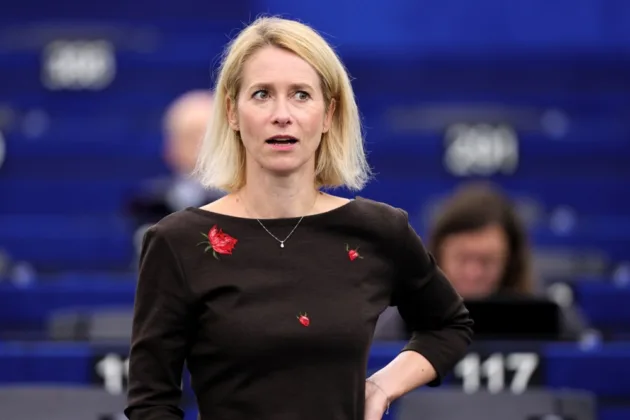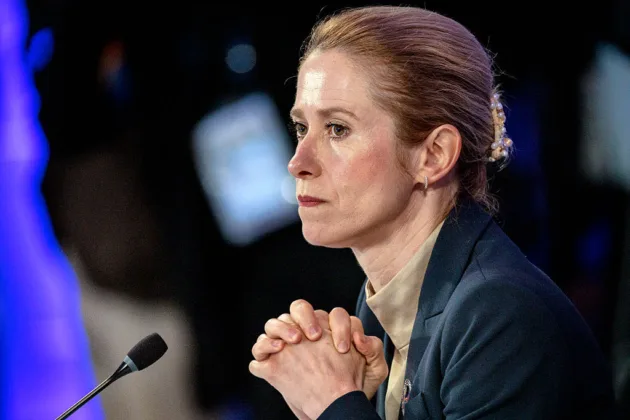




The EU’s top diplomat Kaja Kallas has announced the nominations of 33 European Union ambassadors and seven deputy heads of mission, and the list does not include a single Polish diplomat.
EU delegations, currently 145 worldwide, are the EU’s main representations abroad and play a key role in protecting and promoting EU interests outside Europe. They are responsible for implementing EU priorities and supporting the implementation of its foreign and security policy.
The ambassadorial appointments will be finalised after obtaining the required consent (agrément) from the host countries and after completing the remaining administrative procedures provided for in the 2026 staff rotation exercise.
MEPs from Central and Eastern Europe are reported to be angry over the lack of representation of the region and are preparing to question Kallas in the European Parliament over the list. Slovakia, Hungary, Romania and the Baltic states also failed to land any positions among the EU’s senior diplomats.
Poles are particularly furious because not only is the country the sixth largest economy in the EU and has the fifth largest population of the EU countries it is currently ruled by EU veterans such as the Prime Minister of the country’s centre-left government Donald Tusk and foreign minister Radosław Sikorski.
Tusk has been Polish PM for almost ten years, serving between 2007 and 2014 and in a second spell since 2023. On top of that he was the President of the European Council between 2014 and 2019 and leader of the European People’s Party, the European Parliament’s largest party, between 2020 and 2023.
Sikorski has like Tusk served in his position for almost ten years in the same period as Tusk and is one of the most visible and widely quoted foreign ministers in Europe who is also influential in US and British policy making circles having studied at Oxford and been employed by US think tanks.
Tusk himself said on becoming Polish prime minister again in 2023 that “no one will mess with us in the EU while I am in charge”. The fact that Poland is today smarting from getting as many EU ambassadors in the latest batch of appointments as Britain normally gets in votes in the Eurovision Song Contest is an embarrassment to him.
In fact the result was even worse than zero as Poland lost two recalled EU ambassadors and gained none.
Former Polish ambassador to the US Marek Magierowski commenting on the matter for portal Wirtualna Polska said that he believes Tusk-Sikorski “should consider what they did wrong or what they failed to do to avoid this embarrassment”.
“Perhaps it’s time to admit that the political camp currently ruling in Warsaw doesn’t know any better about diplomacy and is no more effective in this field than were the Conservatives (PiS)”, argues Magierowski.
Magierowski points out that the Germans, French, Italians, Spaniards and Portuguese are most active and successful in securing positions in the European External Action Service.
“The Spanish Belén Martínez Carbonell will go to Mexico, where she will replace the Portuguese Francisco André, who in turn will take over the delegation in Brasilia. London went to the Finn, Beijing to the Dutch, Moscow to the Swede, and New Delhi to the French. The Italians received two prestigious embassies: In Japan and Qatar,” Magierowski lists.
“None of these places were beyond the reach of a Polish candidate (except perhaps the Russian Federation, where there would most likely be a problem with the agrément). The problem is that you have to seek it and have a system in place to promote your candidates. Apparently, Donald Tusk and Radosław Sikorski don’t know how to do this,” he concludes.
Igor Zalewski, commentator for popular YouTube broadcaster Kanał Zero said that Poland was “outplayed in spectacular fashion” and that this was done “to show it its place in the pecking order in the EU”, even more so than in the time of the unpopular, in Brussels, PiS administration.
During the time of the last PiS government several Polish diplomats were nominated as EU ambassadors, albeit to missions such as Zambia, Sierra Leone, Tajikistan and Panama. After Tusk took over power and its allies took power two more joined the ranks and were sent to more significant places for the EU, the candidate states of Georgia and Moldavia.
Poland currently has fewer EU ambassadors than Portugal, despite Poland having nearly four times its population and it is way behind France and Germany who have over twenty ambassadors each.
A cursory glance at the new nominations announced by Kallas shows France and Italy with seven appointments each, Belgium with six and Germany and Spain both with four.
According to Zalewski the list of appointments shows that Poland is still behind the curve in terms of exercising real influence in Brussels.
“The distribution of ambassadorial appointments reveals two things, and both are sad. The first is our real influence in the European Union, and denying reality won’t change that. Poland is a secondary player, even with Tusk and Sikorski at the helm. A player who is disproportionately weak compared to its position, as measured by population or economic strength” said Zalewski adding that “the second, perhaps even sadder, thing is the reputation of our diplomats. It’s not the highest”.
However Poles who have worked for the EC take a rather different view. A former high level staffer who worked for the EC President told Brussels Signal that the problem did not lie in the quality of Polish candidates.
“It’s partly to do with the fact that the ‘Old Union’ is so entrenched in the system of recruitment and appointment that it is hard for the newer member states to break through. However, it is also partly to do with the fact that Poland under governments of all political hues did not create a system in place for promoting Poles in international organizations such as the EU and the UN”, he said.
The ex-EC staffer also told us that “some Poles who worked or work for the EC, even in relatively high positions, have got there despite having no support from the Polish government” but accepted that “for the very top jobs that support remains essential”.
Some commentators in Poland point to the fact that Poland is still a net beneficiary of EU funding and that things may improve when it becomes a net payer into the EU budget. However, others point out that southern Europeans did not seem to have had that problem when they joined and attained a relatively high level of appointments despite being net beneficiaries of the EU.
Domestic political divisions are not a convincing explanation either, as many member states have them and yet are able to secure a higher rate of top jobs in the EU.
The former EC staffer however believes that his country has found it hard to build alliances within the EU, sometimes because, as in the case of the PiS government being politically isolated and in others because it was too focused on doing the bidding of the major powers in the EU. This focus on the “high politics rather than the nitty gritty” of actually negotiating detail and appointments has often, says the staffer, been Poland’s “Achilles heel”.