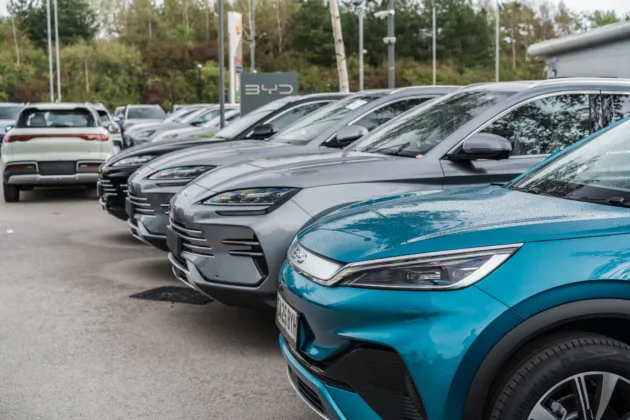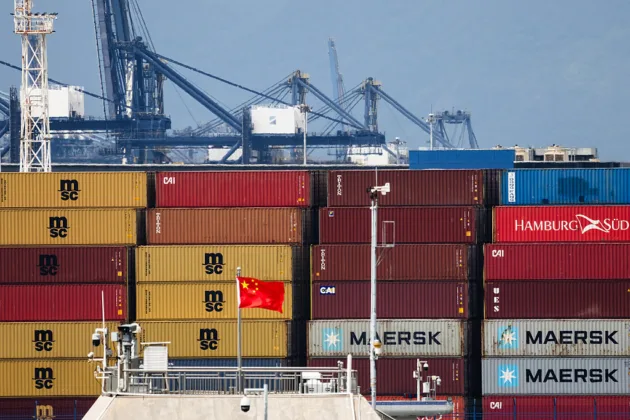








As the trade deficit between the European Union and China rockets to a record of €1 billion per day (up 9.4 per cent year on year in the first four months of 2026, according to Eurostat), the technocrats in Brussels have suddenly stumbled upon an ancient geopolitical axiom. On July 14, Denis Redonnet, the European Commission’s chief trade enforcement officer, issued a clear warning to the European Parliament’s trade committee. China’s relentless pursuit of “industrial dominance”, he observed, is rapidly creating a situation where “dependencies can be weaponised”.
For the Eurocrats who have spent decades worshipping global markets in an almost metaphysical manner, this realisation comes with the shock of facing the consequences of a gross miscalculation. Before us lies a strategic vulnerability that is entirely self-inflicted. For 30 years, the European project was built on the comfortable, progressive delusion that trade is the perfect means for global peace. The prevailing wisdom in Brussels was that economic interdependence would naturally civilise authoritarian regimes, turning strategic rivals into fair play partners. The only studio album by the Sex Pistols comes to mind.
Putting this utterly idiotic theory into practice, Europe gladly exported its industrial manufacturing base to the Far East, trading self-reliance for cheap goods, from kettles and smartphones to nuts and electric vehicles (EVs), . Successive treaties and trade agreements were signed on the naive assumption that Europe could survive as a somehow leading post-industrial society, a region of expertise, design, concept, refinement, quality, regulation and services, while outsourcing the dirty, heavy work of physical production to Beijing. This theory has now collided with a brutal reality, proving to be a stupidity of historical proportions.
China’s share of global manufacturing is projected to climb from the 37 per cent Redonnet told MEPs it already commands, against 13 per cent of global consumption, to 45 per cent by 2030, according to the United Nations Industrial Development Organisation (UNIDO). While European factories are being destroyed by regulatory and energy transition costs, Chinese state-subsidised industries are flooding the market. European leaders are now waking up to a terrifying reality: They no longer possess the industrial capacity to produce fundamental components for their own economy and defence.
The response from the Commission is as predictable as it is inadequate. Brussels has promised trade defence instruments, tariff adjustments and a new “dedicated” diversification tool. Redonnet openly admitted that “dialogue alone will not suffice” and that reducing these dependencies would require direct state intervention in the economy. Yet, all this talk and bureaucratic initiatives arrive as too little, too late. The genie is out of the bottle.
Europe’s regulatory framework has made manufacturing so excruciatingly expensive and legally complex that any attempt to repatriate production on a scale that makes a difference is futile. Worse still is the fundamental chasm in philosophy. The European Union operates on the naive assumption that trade is almost separate from politics, whereas Beijing treats market and supply chain control, as well as technological dependency, as obvious instruments of policy.
So, while China applies textbook realpolitik, treating economic dominance as a projection of power, the European Union is still playing by some free-market manual that nobody else is reading. Unfortunately, paperwork and politeness do not cut it when your adversary controls the factories, rare earths and daily life supply chains. And this means that, until European leaders understand that true sovereignty requires industrial capacity, we will remain at the mercy of the very dependencies they so desperately now warn against.