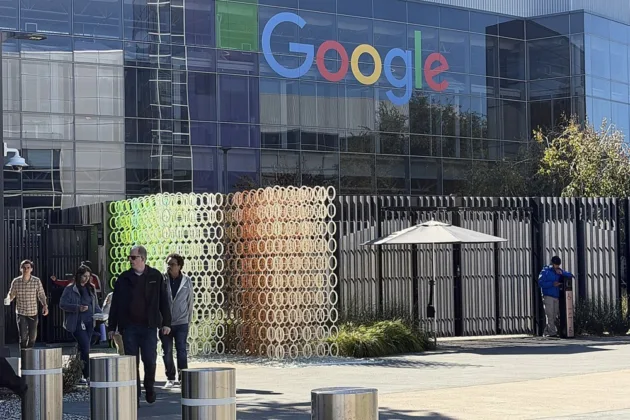











The European Union’s highest court has upheld a record antitrust fine against Google, dismissing the technology company’s final appeal in a case that has run for almost a decade.
The Court of Justice of the European Union (CJEU) on July 2 rejected in full the appeal brought by Google and its parent company Alphabet. The ruling confirmed a €4.125 billion penalty and left no further avenue for challenge.
The fine was first imposed by the European Commission in 2018, which found that Google had abused the dominant position of its search engine through the Android mobile operating system. It originally stood at €4.34 billion.
The Commission concluded that Google had required smartphone makers to pre-install its Search app and Chrome browser as a condition of licensing the Play Store. It also barred manufacturers from selling devices that ran rival versions of Android.
A lower EU court, the General Court, trimmed the fine to €4.125 billion in 2022 while leaving the core findings intact. Alphabet remains jointly liable for €1.52 billion of that sum.
The Court of Justice said the appeal was dismissed, “thereby confirming the penalty imposed on them […] for their anticompetitive practices relating to the Android operating system”.
Google rejected the reasoning behind the decision. A company spokesperson said the judgment “fails to recognise our significant investment to ensure Android remains open, interoperable and free”.
The company said it had adapted its agreements to comply with the original 2018 decision and would remain focused on openness for users, partners and developers.
The judgment is among the largest competition penalties ever confirmed in the EU. Google has accrued close to €11 billion in fines across the bloc over the past decade.
It follows a CJEU decision in September 2024 to uphold a separate €2.42 billion fine in the Google Shopping case. In 2025 the Commission imposed a further €2.95 billion penalty over the company’s advertising technology business, which Google has appealed.
The case, C-738/22 P, closes one of the last major competition actions from the first wave of enforcement against large technology firms. Brussels has since shifted much of its oversight onto newer tools such as the Digital Markets Act (DMA) and Digital Services Act (DSA).
Reuters reported that the outcome was likely to strengthen the bloc’s wider drive against so-called Big Tech, at a time of mounting trade friction between Brussels and Washington.