



Poland’s main opposition Law and Justice (PiS) party has lost more than 30 parliamentarians after they were deemed to have resigned their party membership having refused to accept a ban on participating in an organisation perceived to be a rival to PiS by party leader Jarosław Kaczyński.
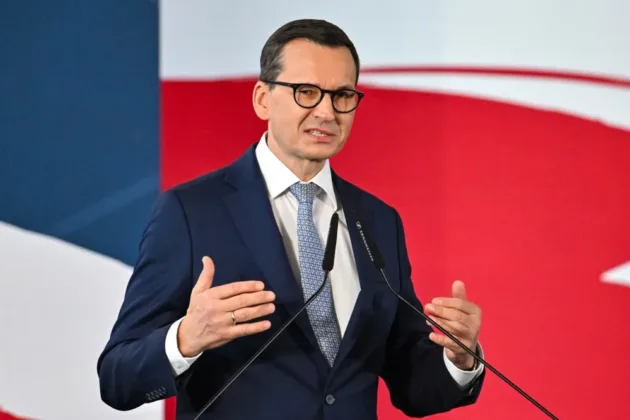
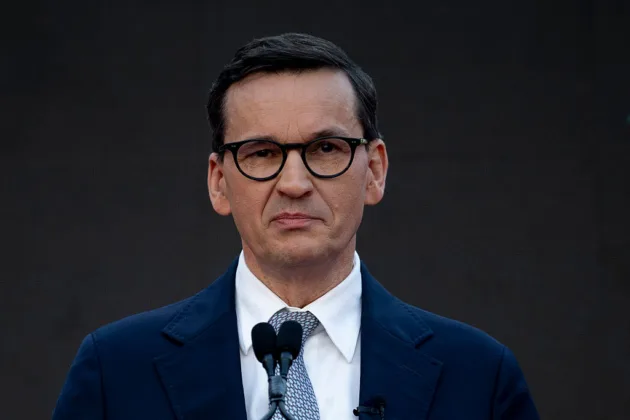
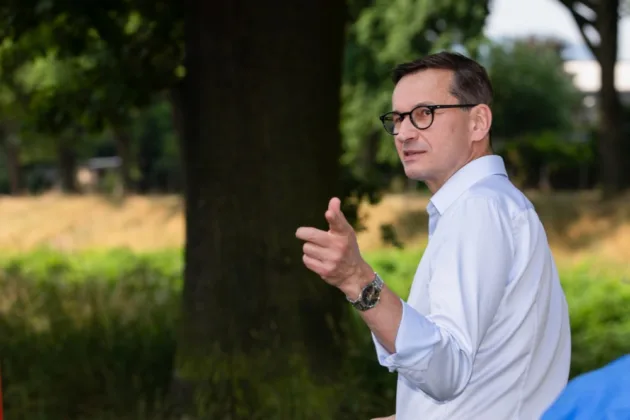
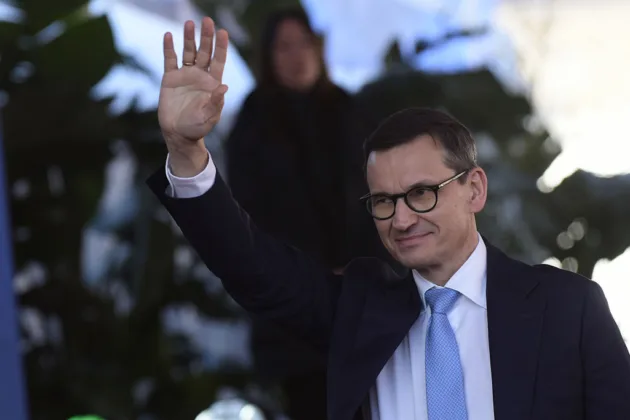
The dispute centres on a political association founded by former Prime Minister Mateusz Morawiecki, one of the party’s most prominent figures, which attracted more than 40 MPs and MEPs to its ranks.
After PiS issued a resolution on July 15 requiring that its parliamentarians pledge to withdraw from any such associations, most of its 186 MPs quickly complied but Morawiecki’s supporters would not budge.
“Everyone knew what they were supposed to sign, and knew the consequences of not signing. And so they made the decision they did,” said Kaczyński on July 24, adding that the party’s political committee would meet on July 28 to formally acknowledge the resignations.
“In this situation, we cannot view the Development Plus association as anything other than a component of a plan to split our party. However, although its supporters will now leave PiS, we want to part ways without any animosity,” added Kaczyński.
The announcement followed a July 23 midnight deadline for PiS parliamentarians to declare that they did not belong to any outside political associations or face expulsion from the PiS party.
Two politicians linked to the group signed the declaration after talks with the leadership, according to PiS spokesman Rafał Bochenek: MEP Daniel Obajtek and MP Anita Czerwińska, who had backed the association in writing without being a member.
Kaczyński claimed that the dispute involved not only Morawiecki’s Development Plus association but also what he described as proposals made by the ex-PM several weeks ago to divide that party into two separate organisations.
“In these circumstances, we could only view the association as part of a plan to divide our party,” explained Kaczyński.
He added that parliamentarians had been made aware of the consequences of refusing to sign a declaration renouncing membership in outside associations.
According to Kaczyński, the party leadership made significant concessions, including dropping its demand that the Development Plus association be dissolved, proposing instead for the association to suspend its activities until after the 2027 parliamentary election, but Kaczyński said the offer was rejected.
Morawiecki said that he had refused to sign what he called a party “loyalty declaration” and offered to step down as one of PiS’s deputy leaders in order so that he could continue developing his association, which he saw as a vehicle for strengthening the PiS appeal to a more liberal-minded electorate.
The former PiS PM had told conservative broadcaster wPolsce24 that a “group of schemers” was turning Kaczyński against him and trying to push him and his allies out of the party. He claimed that during a meeting with Kaczyński on July 23 he had “proposed a framework for the association’s operation that would add value to the party”.
According to Morawiecki ally Piotr Müller, an MEP and the last PiS government’s press spokesman, no one in the Development Plus association had resigned their PiS membership. They had simply refused to sign the declaration.
In April Morawiecki announced the formation of a standalone association, Development Plus, known in Polish as Rozwój Plus. Jacek Sasin, a Kaczyński loyalist and former deputy prime minister, dissolved his own association almost immediately after the July 15 resolution.
The group was seen as both a power base for the moderate Morawiecki and a vehicle to push PiS away from conservative nationalism and draw voters away from Tusk’s governing coalition. It was also perceived as a challenge to the authority of party leader Jarosław Kaczyński.
Morawiecki rejected the July 15 demand and announced that his association would continue and hold a major event on July 31.
The departure of Morawiecki and his allies marks the latest sign of growing internal tensions within PiS, the party which governed Poland from 2015 until losing power in the October 2023 parliamentary election.
According to Tomasz Sakiewicz, the head of conservative broadcaster Telewizja Republika and a close ally of the PiS leader, the decision confirms that Morawiecki and Kaczyński will not be in the same party, but it does not exclude future cooperation between the political entity Morawiecki will be forming in the next few weeks and PiS.
Sakiewicz believes that Poland’s electoral system, which is proportional but which favours large parties and includes a 5 per cent electoral threshold for single parties and 8 per cent for coalitions, could encourage Morawiecki and Kaczyński to form an electoral alliance for the 2027 parliamentary elections.
But Sakiewicz believes that it is Morawiecki who is likely to be in a weaker position than PiS.
“If someone divides the party while knowing it will make it harder to win elections, reduce its result, and increase Prime Minister Donald Tusk’s chances of staying in power, then they bear responsibility for that, regardless of who they are,” he said, adding that PiS voters had cast their ballots for a single party and associated the politicians they elected with that party.
“If someone no longer wants to be in PiS or contributes to splitting the party, they take responsibility for disappointing those voters. Of course, there are also voters who may welcome what has happened, but I believe that group is relatively small,” concluded Sakiewicz.
Morawiecki has not hidden his ambitions for the future. He wanted to be the party’s presidential candidate in the 2025 election and has gone on the record declaring that he wanted to be the leader of PiS when Kaczyński retires.
But Kaczyński has not retired and has the support of most of the party’s membership. This, according to Morawiecki’s critics, gave Morawiecki the incentive to strike out on his own rather than wait for developments inside PiS.
The fact that Morawiecki was passed over when Kaczyński took the decision on appointing former education minister Przemysław Czarnek as PiS candidate for PM on March 7 was the final straw for the ex-PM.
But there is little evidence of significant electoral demand for a party led by Morawiecki. Neither the leaders nor the voters of other right-wing parties such as Confederation and the Confederation of the Polish Crown have any sympathy towards Morawiecki.
A United Surveys by IBRiS poll for Wirtualna Polska conducted on July 16-17 put a Morawiecki list on 6.9 per cent, while internal PiS research cited by Newsweek Polska put the figure at 2.8 per cent.
The divisions within PiS are not focused on leadership alone. Differences of view have emerged over Ukraine and the EU as well as whether to emphasise economic or cultural identity issues.
While those on the right of the party such as former justice minister Zbigniew Ziobro and the PM nominee Czarnek have become more sceptical of both the EU and support for Ukraine, Morawiecki has maintained that his former government’s stance in supporting Ukraine and being pragmatic on the EU was still the right approach.
PiS has over the last 12 months lost around 10 per cent in opinion polls while support for other right-wing parties has risen. A CBOS survey carried out in early July put PiS on 19.1 per cent, with Confederation on 15.2 per cent and the Confederation of the Polish Crown on 8.2 per cent.
This means that although the combined right is expected to win a majority in the next parliament, PiS, the dominant party over the last two decades, is likely to lose control of events.
Morawiecki’s departure means that the right will become even more fragmented and conflicted making the formation of a future governing coalition even harder.
Morawiecki’s departure from PiS may also pose a problem with regard to his continuing leadership of the European Conservatives and Reformists (ECR) Party, a political grouping which has a caucus in the European Parliament and which was previously led by Italian Prime Minister Giorgia Meloni. PiS MEP Anna Zalewska is already on the record saying that Morawiecki should no longer be the leader of the ECR.
Morawiecki was elected ECR president on January 14, 2025. Ryszard Legutko, a former ECR chairman, has said that removing him against his will would require a formal procedure that could take a year or more.
According to Robert Mazurek, senior political commentator for popular broadcaster Kanał Zero, it is President Karol Nawrocki, a PiS ally who is popular with other right-wing parties too, who will have to bring the right back together again.
On July 22 Mazurek reported that it had been agreed between Nawrocki and Kaczyński that the President’s chief of staff Zbigniew Bogucki would replace Czarnek as PiS’s candidate for prime minister in the 2027 parliamentary elections.
This was denied by Bochenek but Kaczyński was widely reported before appointing Czarnek to have wanted Bogucki for the role, but had failed to reach an agreement with Nawrocki over making that happen.
The President may now be sending a signal that he is ready and willing to give a lead in efforts to unite the right and build a future government that would support the head of state.
Nawrocki’s relations with Prime Minister Donald Tusk are fraught and he has made it clear he does not wish the present cohabitation to continue beyond the next election.