




Prominent international human rights lawyer Robert Amsterdam says Spain’s tax system has become a tool of coercion, corruption and political control. All with little reaction from the European Union.
Robert Amsterdam, known for representing political dissidents and business leaders across the globe, has spent years examining what he describes as the erosion of the rule of law in Spain—particularly through the country’s tax authority, Hacienda.
Amsterdam told Brussels Signal that Spain faces a crisis that extends far beyond it’s woes on taxation.
“The Spanish government has become a RICO enterprise,” he said, referring to the US anti-racketeering statute. “The level of institutional corruption is unlike anything the European Union should tolerate.”
According to Amsterdam, European institutions have been willing to criticise governments in countries such as Hungary and Poland over rule-of-law concerns while remaining largely silent about Spain.
“They condemn Viktor Orbán, they criticise Poland, but they say virtually nothing about Pedro Sánchez,” he said.
“Meanwhile, you have investigations or indictments involving members of the prime minister’s inner circle, his wife, his brother, his predecessor, the Attorney General, senior aides, and deep dysfunction across multiple institutions.”
He also pointed to the resignation of numerous senior officials within Spain’s tax administration as evidence that the system is under strain.
Amsterdam described Spain as suffering from what he called a “lava pit of corruption.”
“In its current state,” he argued, “Spain would not begin to qualify for EU membership if it were applying today.”
While Hacienda is often regarded as one of Spain’s most effective public institutions because of its ability to generate revenue, Amsterdam believes that effectiveness comes at a heavy cost.
“There have been roughly a hundred tax increases under the Sánchez government,” he said. “The pressure placed on ordinary Spaniards is extraordinary compared with much of Europe.”
His criticism is not that Spain collects taxes, but how it does so.
Amsterdam argued that Spain’s tax enforcement system contains structural incentives that encourage aggressive assessments.
“It begins with the auditor,” he said. “If the auditor benefits from the outcome, you’ve created an inherently corrupt incentive structure.”
He criticised the requirement that taxpayers often pay disputed assessments before obtaining meaningful judicial review.
“Spain is one of the few countries where a taxpayer must effectively pay first and fight later,” he said. “Because the state already has your money, litigation can drag on for years, even decades.”
He cited long-running disputes involving both businesses and celebrities, including singer Shakira, as examples of how prolonged tax litigation can become.
“The system is merciless,” Amsterdam said. “By the time you get justice, if you ever do, they’ve already had the benefit of your money for years.”
One of Amsterdam’s strongest criticisms concerned the use of criminal investigations during tax disputes.
“The methodology resembles organised crime,” he said. “You receive threats, enormous pressure, and then an offer you can’t refuse: A discount if you don’t appeal.”
He argued that criminal sanctions are used as leverage to encourage settlements rather than solely to prosecute genuine fraud.
According to Amsterdam, another controversial practice is the use of legal doctrines such as “simulation,” under which tax authorities may disregard the taxpayer’s explanation of a transaction.
“They essentially say, ‘We don’t believe you,'” he said. “Then the burden shifts to the taxpayer to prove a negative.”
He believes this reversal of the traditional burden of proof disproportionately affects sophisticated taxpayers and entrepreneurs.
Amsterdam also criticised Spain’s publication of lists naming alleged tax debtors.
“The government can freeze your assets, access your bank accounts, and publicly shame you before your case is resolved,” he said.
The result, he argued, is widespread fear.
“Many Spaniards live in constant fear of Hacienda.”
According to Amsterdam, that fear extends into the legal profession itself.
“Very few lawyers are willing to challenge the system,” he said. “I’ve been told repeatedly: ‘If I represent these clients, I’ll be audited. My family will be audited. My clients will be audited.'”
Amsterdam said Spain was marked by a complete loss of institutional integrity, which, according to him began under the Partido Popular (PP).
While international headlines often focus on wealthy foreigners facing Spanish tax disputes, Amsterdam believes the greatest victims are ordinary Spaniards.
“The narrative that this is only about rich expatriates is false,” he said.
He pointed to cases involving disabled citizens who, he said, lost life savings because of what he described as double taxation.
“They go after the poor and the underrepresented.”
Amsterdam warned that artificial intelligence could significantly expand Hacienda’s powers.
He argued that Spain is deploying algorithmic profiling without sufficient transparency or safeguards and questioned whether current practices comply with Europe’s new AI regulations.
“The danger is a black-box system where citizens don’t know how they’re being profiled,” he said.
He believes Spain risks becoming “an emblem of Orwell’s 1984,” where government accumulates unprecedented amounts of information about citizens.
“The state will know everything about everyone.”
He also expressed concern about increasing compliance burdens on businesses, arguing that Spain’s regulatory environment has become one of Europe’s most obstructive for entrepreneurs.
Asked why European institutions have remained largely silent, Amsterdam acknowledged one important limitation.
“Domestic taxation is primarily a national competence,” he said.
However, he believes the issue extends well beyond tax policy.
“This is about the rule of law, judicial independence and human rights.”
According to Amsterdam, those issues clearly fall within the European Union’s mandate.
Amsterdam said meaningful reform is possible without dismantling Spain’s tax administration.
His primary recommendation is removing financial incentives that reward aggressive tax assessments.
“End bonuses. End pay-for-performance inside the tax authority,” he said.
He believes changing those incentives would improve the behavior of both tax authorities and the courts.
“The courts would begin functioning much more normally once the incentive structure changes.”
Amsterdam is now working with an international team that includes former Chief Adviser on tax reform to the UK Treasury Chris Wales, Spanish lawyers, academics and activists.
He said they are preparing new publications, including a white paper and an expanded edition of their work on AI and taxation.
The campaign also seeks support beyond legal circles.
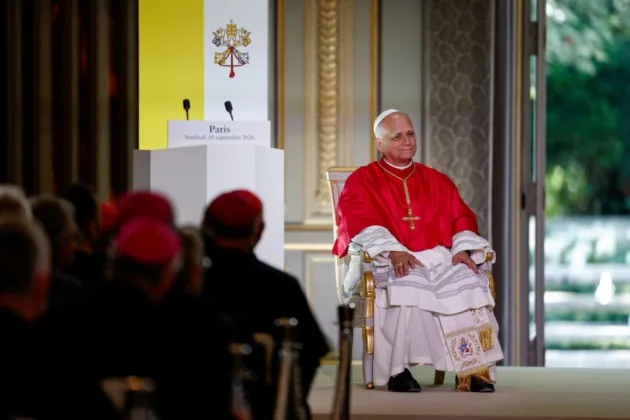
One unexpected ally, Amsterdam suggested, could be the Catholic Church, citing Pope Francis’s warnings about artificial intelligence and human dignity.
“The Church has an important moral voice on AI.”
Amsterdam has been speaking throughout Spain. Next week he’ll go to Marbella, Málaga, Córdoba and Almería. He says public frustration is growing.
“A political movement is emerging out of taxpayer disillusionment.”
Despite fierce criticism from some lawyers and commentators, Amsterdam says he intends to continue.
“We’re determined to make this political and get it done.”
For Amsterdam, Spain’s tax system has become the central battleground in a much larger fight over democracy, accountability and the rule of law.
“The underlying issue,” he concluded, “isn’t simply taxation. It’s what happens when the institutions meant to protect citizens begin working against them.”
Almost three-quarters of Spaniards have said they want an early general election, according to polling that has piled fresh pressure on Prime Minister Pedro Sánchez as corruption investigations close in on his party. https://t.co/FFGvF2TSTw
— Brussels Signal (@brusselssignal) June 3, 2026