



German police have raided properties linked to two Alternative for Germany (AfD) candidates for the September 6 Saxony-Anhalt State election, just 10 days before voters go to the polls.
The two men are among 15 people suspected of supporting or continuing the activities of a banned neo-Nazi organisation.
The raids, launched early on August 27 across five German states, concern people suspected of continuing the activities of Artgemeinschaft, a right-wing organisation banned by Germany in 2023. Searches took place in Saxony-Anhalt, Berlin, Brandenburg, Lower Saxony and North Rhine-Westphalia.
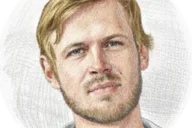
Among those whose properties were searched are Simon Lansmann and Sebastian Koch, both AfD candidates for the Saxony-Anhalt State parliament.
The investigation, though, is not directed against the AfD as a party. It concerns the alleged continuation or support of an organisation that has already been prohibited.
The investigation centres on a gathering held on June 20 at Lansmann’s property in Ipse, near Gardelegen in the Altmark, northern Saxony-Anhalt. According to Spiegel, people from the milieu of the former Artgemeinschaft attended a summer-solstice celebration there.
The magazine reported details including Germanic-style rituals involving animal horns and the singing of a Hitler Youth marching song. taz, citing the Halle Public Prosecutor’s Office, reported that the June 20 gathering was the central point of suspicion behind the searches.
The prosecutor’s office said the case concerned an alleged breach of the ban on the association.
Lansmann has confirmed that the gathering took place. Through his lawyer, he rejected the suggestion that it constituted an illegal continuation of Artgemeinschaft, while distancing himself from the organisation and Nazi songs.
The presence of the two AfD politicians makes the case particularly sensitive.
Lansmann, born in 1982, is an electrical engineer who breeds cattle with his partner and sits as an AfD member of Gardelegen city council. He stood unsuccessfully for mayor of the town in March 2022.
Sebastian Koch is an established AfD figure in the Altmark region, running for the State parliament on the party list. He also organises summer gatherings at Roxförde used for networking by the right-wing youth scene, according to CORRECTIV.
Koch is number eight on the AfD’s State list, while Lansmann is number 19.
The investigation also brings back into focus the history of Artgemeinschaft. Founded in 1951 by former Nazi Wilhelm Kusserow, the organisation combined a Germanic neo-pagan worldview with the idea of preserving a supposedly Germanic ethnic community.
According to German authorities, its ideology drew heavily on National Socialist racial thinking. It also maintained contacts with Germany’s wider right-wing and neo-Nazi milieu.
Germany banned Artgemeinschaft in 2023, under an order signed by the then interior minister Nancy Faeser. She called it a sect-like, deeply racist and anti-Semitic association.
The legal basis is particularly important because the organisation was not accused of acts of violence, nor was every one of its members held to have committed a criminal offence.
Article 9(2) of the German Basic Law protects freedom of association. It also permits associations to be prohibited when their aims or activities are interpreted to be directed against the constitutional order or the principle of peaceful relations between peoples.
That applies even where the case is not based on a pattern of violent criminal acts by its members.
In the case of Artgemeinschaft, the authorities argued that its racist, anti-Semitic and anti-democratic objectives were incompatible with the principles of Germany’s constitutional order. The ban was subsequently challenged in court and upheld by Germany’s Federal Administrative Court in Leipzig on April 29, 2026.
The judges accepted that the group was a worldview community but found its beliefs could not be realised within the Basic Law.
That does not mean that everyone who was once associated with Artgemeinschaft automatically commits a crime. Nor does a police search amount to a conviction.
The current investigation is focused on whether individuals continued the organisation’s activities after it had been banned.
This distinction is crucial for Lansmann and Koch. The raids do not establish that either candidate is a member of Artgemeinschaft, nor do they mean that either man has been convicted or charged.
Investigators are searching for evidence that could establish whether the June gathering and other activities represented an attempt to continue the banned organisation.
What happens next will depend on the evidence obtained during the searches. The Halle Public Prosecutor’s Office said that no arrest warrants were issued and that the material seized would first have to be examined before any decision on charges.
If prosecutors find insufficient evidence, the investigation could eventually be dropped. If they establish sufficient suspicion, further investigative measures and potentially criminal proceedings could follow.
For now, there is no automatic legal mechanism removing either candidate from the ballot simply because his property has been searched. The immediate consequence is therefore investigation, not disqualification.
But the political consequences could be considerably more serious.
Saxony-Anhalt votes on September 6. The latest Infratest dimap poll for public broadcaster ARD puts the AfD at 42 per cent, compared with 22 per cent for the Christian Democratic Union (CDU) of Minister-President Sven Schulze.
The survey was conducted on August 24-25 among 1,511 voters and published on August 26. The Left stands at 11 per cent, the Social Democratic Party (SPD) at 8 per cent and the Greens at 6 per cent.
That is the highest reading the institute has recorded for the party, roughly double the 20.8 per cent it won in 2021, when the CDU took 37.1 per cent.
If repeated at the ballot box, the figure would give the AfD its strongest result ever in a German State election and make it by far the largest parliamentary group. It would not, though, give the party an outright majority.
That makes the timing of the raids impossible to ignore. They come 10 days before an election in which the AfD is not merely competitive but overwhelmingly ahead in the polls.
Yet there is currently no evidence that the authorities timed the operation for electoral reasons. Nor has the AfD publicly accused the judiciary of deliberately launching a politically motivated operation to derail its expected victory.
According to taz, the AfD’s regional organisation and lead candidate Ulrich Siegmund left a request for comment unanswered.